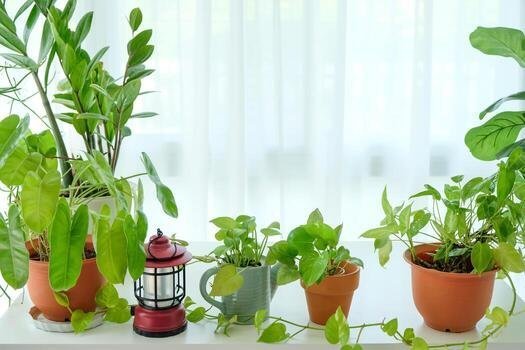
Quick answers
- Humidity that helps
- Plants transpire constantly; a plant-filled room holds several percentage points more humidity: kinder to skin and airways in winter. Ferns and peace lilies are the busiest humidifiers; their thirst makes sense now, per the watering rules in our houseplant watering guide.
- The focus effect
- Studies repeatedly find plants in view reduce stress markers and improve concentration: the benefit even a single desk succulent delivers. Consider it the cheapest office upgrade available.
- Which plant cleans air fastest?
- By surface area and uptake studies: peace lily and spider plant lead among common picks, both easy growers if watering follows our finger-test rules.
- Are "air purifying" plants safe for bedrooms?
- Yes, snake plant and aloe release oxygen at night and are excellent bedside plants. Skip lilies in homes with cats; they are toxic to them.
Key takeaways
- Absorb formaldehyde, benzene, xylene through leaves & roots
- Release moisture, natural humidifiers in heating season
- Boost focus & mood, the strongest-documented effect
- Reality check: effect scales with number of plants & airflow
Table of contents18 sections
Can houseplants clean your air? Yes: with honest asterisks. A single pothos will not replace ventilation, but the research is clearer than the internet suggests: plants measurably reduce certain pollutants, raise humidity, and, the least hyped, best proven benefit, measurably improve how you feel and focus.
The Proven Performers
The classic NASA-era research and later reviews keep crowning the same plants: peace lily, spider plant, snake plant, pothos, philodendron, English ivy, chrysanthemum and bamboo palm for chemical uptake; snake plant and aloe for the rare night-time oxygen release that makes them bedroom candidates. Most of these are also stars of the low-light list: practical, because air-cleaning rate tracks leaf health, and leaf health tracks light.
Size and Numbers Matter
The effect is real but scales with biomass: two small plants in a living room are decoration; a cluster of six to eight healthy medium plants across a room is a measurable contribution. Place them where air moves past, near (not blocking) windows and doors, the same placement logic as our styling guide.
Where most people go wrong
- Dusty leaves: dust blocks the very stomata doing the work; wipe monthly.
- Overcrowding without airflow: stagnant humid air invites fungus gnats; see problem diagnosis.
- Expecting plants to offset smoking or heavy solvent sources, ventilation does that job; plants assist.
Reader questions answered
Finish the hub beautifully: arrange it all with styling with indoor plants, or revisit the indoor plants hub.
The Window Map for air-purifying plants
Every collection is organized by its windows, so map them once, honestly: south (bright most of the day), succulents, cacti, ficus, and the sun-hungry herbs; east (gentle morning): the broad middle of houseplants: pothos, philodendron, peperomia; west (hot afternoon): sun-tough foliage with a step back from the glass; north (soft steady): ZZ, snake plant, cast iron, parlor palm. Then the honest category: rooms lit by lamps alone, which even survivors eventually refuse.
The map decides purchases before beauty does. A plant that thrives is beautiful; a plant that survives badly is furniture on its way to the bin.
The Salt-Flush Ritual for air-purifying plants
Months of fertilizing and tap water leave dissolved salts that concentrate at the root zone, the hidden author of crispy tips that humidity cures never touch. The quarterly ritual: carry the plant to the sink or shower, water slowly and thoroughly until several pots’ worth drains through, let it drip-dry, and return it. Mark the calendar quarter-by-quarter; big floor plants get the same treatment with a hose outdoors when weather allows.
The ritual costs ten minutes per season per plant and quietly prevents the most common slow decline in houseplant keeping.
Deep Dive: What Experienced Growers Know About air-purifying plants
The honest math of plant air-cleaning: studies showing dramatic VOC removal used sealed chambers; homes exchange air continuously, diluting plant effects. The realistic benefit scales with biomass, a plant per few square meters, healthy and dust-free, plus the well-documented humidity and focus effects. Buy plants for the room, keep them thriving, and ventilate the building: plants polish air that ventilation cleans. The desk plant’s proven gift remains attention and mood, no filter claims that.
Words worth knowing
- Fluoride Sensitivity: Leaf-tip burn in dracaena, spider plant and calathea from treated tap water.
- Transpiration: Water vapor leaving leaves; the plant's cooling and transport engine.
- Photoperiod: Day length; some plants bloom or sleep by it.
- Etiolation: Extreme stretching in darkness: pale, weak, space-seeking growth.
Which plants work hardest per pot?
Peace lily and spider plant top uptake-per-biomass studies; snake plants add night oxygen. All three are easy keepers, health sustains the benefit.
Do plants remove dust?
Indirectly: humidified air settles dust faster, and broad leaves capture what wipes off monthly. The vacuum does more.
Are any air-purifying plants toxic to cats?
Peace lily and pothos are, skip them with chewers. Spider plant and parlor palm are the safe pair that still performs.
What's the best first plant for a total beginner?
Pothos: it communicates clearly (droops thirsty, yellows soggy), roots from cuttings in weeks, and forgives nearly every beginner crime.
How do I clean very large leaves?
Shower the whole plant in lukewarm water, or wipe with a damp cloth monthly. Leaf shine products clog stomata, plain water does the work.
How many plants is too many for one room?
When care quality drops below what each already owns, the collection grows faster than the minutes that tend it. Count your weekly minutes honestly.
Can I use garden soil for houseplants in a pinch?
No; it compacts, drains wrong, and imports fungus gnats and fungi to a pot with no ecosystem to resist them. Coir and perlite travel well instead.
Where most people go wrong
- Leaving pots standing in full saucers overnight.
Why is my plant's new growth smaller than the old?
Light drop (seasonal or moved), root congestion, or hunger. Check all three in order; new growth is the plant's honest report card.
Do plants need to be near other plants?
They benefit, shared humidity microclimates are real, but spacing for airflow prevents the gnat and mildew trade. Group loosely, not shoulder to shoulder.
More in Indoor Plants
Styling with Indoor Plants: The Designer’s Playbook
Height triangles, odd-number groupings, the shelf-cascade trick and statement plants, arrange your houseplants so your home looks curated, not crowded.
Humidity for Houseplants: What Plants Need and What Actually Works
Learn the right humidity for common houseplants, how to measure it, and which methods genuinely help (humidifiers, grouping, location) and which are myths such as misting.
Pet-Safe Houseplants: Non-Toxic Options for Dog and Cat Owners
A practical list of houseplants that are generally non-toxic to cats and dogs, the common ones to avoid, and what to do if your pet chews…