A pollinator garden is the rare case where beauty and function are the same decision. Plant a continuous nectar supply and you get more fruit set on every vegetable within reach, free pest control from hoverflies and ladybugs, and a garden that hums from morning to dusk.
The Pollinator Menu
- Bee favorites: lavender, borage, salvia, sunflower, marjoram
- Butterfly magnets: lantana, zinnia, milkweed, verbena, marigold
- Night shift: evening primrose, night-blooming jasmine (moths)
- Golden rule: blooms in every season, clusters not single plants
Think in Seasons, Not Snapshots
Pollinators need food the day they emerge until the day they sleep. Map your year: cool-season herbs in flower (cilantro, dill) cover spring; summer belongs to lavender, zinnia and salvia; autumn’s asters and marigolds fuel the last generation. The sequencing method is identical to our planting calendar — apply it to nectar instead of vegetables.
Plant in Landing Zones
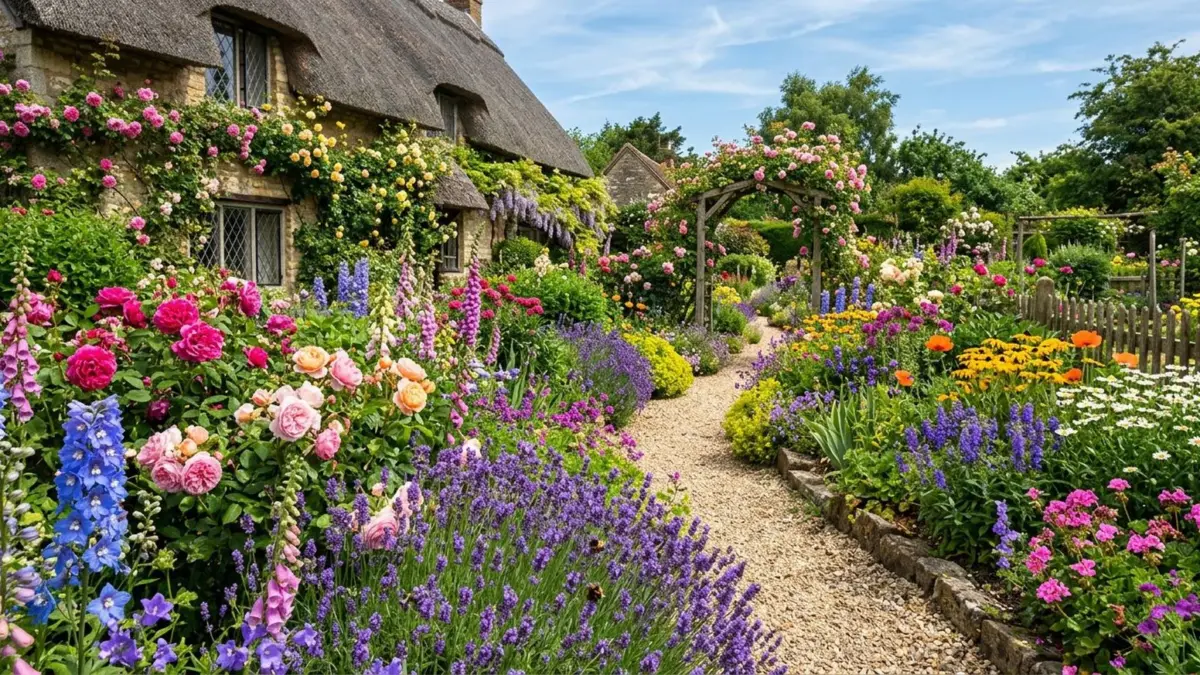
One marigold is a signpost; a meter-wide drift is a destination. Plant in clusters of the same species, 3×3 feet or larger, and flatten part of the menu: flat-topped flowers (yarrow, dill) serve butterflies, tube flowers (salvia, penstemon) serve long-tongued bees. Variety of shape equals variety of visitors — a design principle straight from our color and design guide.
The Two Habits That Multiply Results
Let some herbs flower
Basil, mint, cilantro and dill left to bloom feed more pollinators than any ornamental — and their predators graduate to pest patrol, the alliance explained in our beneficial insects guide.
Provide water and shelter
A shallow dish with pebbles gives bees a landing pad to drink without drowning; a small brush pile or bundle of hollow stems shelters native solitary bees. Skip the fancy bee hotels — messy corners beat cute ones.
Common Mistakes to Avoid
- Systemic pesticides on pollinator plants — the poison lives in the nectar itself; choose the organic toolkit from natural remedies.
- “Double” flowers bred for looks — many are nectar deserts; singles feed more.
- Tidying every stem in autumn — hollow stems overwinter next year’s bees.
Frequently Asked Questions
Will attracting pollinators attract wasps too?
Some, but wasps are mostly hunters of caterpillars and aphids — welcome them. Balance comes from diversity, which is why this guide pairs with beneficial insects.
What single plant attracts the most pollinators?
Across climates, lavender and borage tie — long bloom, open shape, endless nectar. Start with a drift of each and watch your garden’s traffic change in one season.
Finish the hub in style: design it all with low-maintenance flower borders, or return to the flower gardening hub.
The Bloom-Sequence Planner for pollinator flowers
Continuous bloom is a scheduling problem solved on paper: list your plants with their bloom months, then hunt the empty months. The standard gaps and their fills: early spring — bulbs and hellebores; late spring lull — biennials (foxglove, sweet william) and late tulips; midsummer — the perennial workhorses and annual sowing; the September silence — asters, sedums, and grasses; winter structure — seedheads, evergreens, and the deciduous drama of decorative bark.
One planning evening with a twelve-column table ends the boom-and-bust cycle permanently. The border stops being an event and becomes a broadcast.
Feeding Flowers Without Feeding Leaves for pollinator flowers
The bloom-leaf trade is nitrogen arithmetic: high N grows foliage factories at flower expense. The working schedule: balanced feed as growth starts, then low-N (tomato-type) formulas at first bud, repeated lightly at half the packet’s enthusiasm every three to four weeks. Compost top-dressing covers the baseline; liquid feeds only answer specific demands — bud set, post-deadheading recovery, container leaching.
The visual test outranks any schedule: dark lush mounds without buds are being fed like lawns; pale stunted plants are being fed like cacti. Both corrections are one application away.
Deep Dive: What Experienced Growers Know About pollinator flowers
Bloom-shape matching doubles the visitor list: flat landing pads (yarrow, dill, alyssum) serve butterflies and small native bees; tube flowers (salvia, penstemon) feed long-tongued specialists; open bowls (poppy, wild rose) serve the generalists. A garden offering all three shapes feeds all three guilds — and the guilds discipline each other, since hoverfly larvae and parasitic wasps arrive with the very nectar bar that feeds their adults. Diversity of shape, not quantity of any one flower, is the design variable that matters.
Key Takeaways
- Dead Spot: The nectar gap in a border's season — design it out with relay planting.
- Interveinal Yellowing: Yellow between green veins, signaling nutrient or pH lockout.
- Corm: A solid bulb-like stem base (gladiolus, freesia), usually one-season.
- Rhizome: A creeping horizontal stem (iris, canna) that must ride near or above soil.
More Questions About Pollinator Flowers
Do marigolds really repel pests?
Their real value is feeding hoverflies and parasitic wasps — indirect control that works. The nematode-repelling claims are weak science.
When should I stop deadheading for the bees?
Late summer: let final blooms go to seed. Finches eat the seed, hollow stems winter the bees, and the border closes its accounts kindly.
Are native plants really better for pollinators?
Generally yes — local specialists co-evolved with them. A mix of natives plus proven long-bloom exotics like lavender covers both abundance and specialization.
Field Questions Answered
Can I plant flowers in the same bed as vegetables?
The best beds do — marigold and alyssum feed pollinators and hoverflies, chard and chili are genuinely ornamental. Mixed beds outperform pure ones ecologically.
How do I stop tall flowers flopping?
Grow-through grids installed when stems are knee-high, the Chelsea chop in late spring, and less nitrogen. Staking after the flop fixes nothing.
How do I keep containers blooming all summer?
Weekly weak feeding — daily watering leaches everything — plus relentless deadheading. Container color is a feeding discipline, not a plant choice.
Why do my perennials bloom less each year?
Congestion. Most clumps peak at year three, then need division — lift, split, replant the vigorous outer sections, compost the center.
Common Mistakes to Avoid with Pollinator Flowers
- Choosing plants for tag-color while ignoring the light numbers on the same tag.
- Wet leaves overnight — the standing invitation to mildew and black spot.
- Cutting bulb foliage six weeks early, shrinking next year's bloom.
- Planting one of everything; borders need repetition, not variety shows.
- Crowding new plantings for instant fullness and harvesting a mildew factory.
Further Field Questions
How do I keep containers blooming all summer?
Weekly weak feeding — daily watering leaches everything — plus relentless deadheading. Container color is a feeding discipline, not a plant choice.
Why do my perennials bloom less each year?
Congestion. Most clumps peak at year three, then need division — lift, split, replant the vigorous outer sections, compost the center.
Is morning or evening the time to cut flowers?
Morning, after dew dries — stems are turgid and hydrated. Condition in deep cool water for hours before arranging.
What's the fastest way to fill a new border?
Nursery-pot perennials for structure, then sow fast annuals (zinnia, cosmos) in every gap — the annuals cover year one while the bones grow.
Can I plant flowers in the same bed as vegetables?
The best beds do — marigold and alyssum feed pollinators and hoverflies, chard and chili are genuinely ornamental. Mixed beds outperform pure ones ecologically.
How do I stop tall flowers flopping?
Grow-through grids installed when stems are knee-high, the Chelsea chop in late spring, and less nitrogen. Staking after the flop fixes nothing.
Further Field Questions
How do I keep containers blooming all summer?
Weekly weak feeding — daily watering leaches everything — plus relentless deadheading. Container color is a feeding discipline, not a plant choice.
Why do my perennials bloom less each year?
Congestion. Most clumps peak at year three, then need division — lift, split, replant the vigorous outer sections, compost the center.
Is morning or evening the time to cut flowers?
Morning, after dew dries — stems are turgid and hydrated. Condition in deep cool water for hours before arranging.
What's the fastest way to fill a new border?
Nursery-pot perennials for structure, then sow fast annuals (zinnia, cosmos) in every gap — the annuals cover year one while the bones grow.
Can I plant flowers in the same bed as vegetables?
The best beds do — marigold and alyssum feed pollinators and hoverflies, chard and chili are genuinely ornamental. Mixed beds outperform pure ones ecologically.
How do I stop tall flowers flopping?
Grow-through grids installed when stems are knee-high, the Chelsea chop in late spring, and less nitrogen. Staking after the flop fixes nothing.
Further Field Questions
How do I keep containers blooming all summer?
Weekly weak feeding — daily watering leaches everything — plus relentless deadheading. Container color is a feeding discipline, not a plant choice.
Why do my perennials bloom less each year?
Congestion. Most clumps peak at year three, then need division — lift, split, replant the vigorous outer sections, compost the center.
Is morning or evening the time to cut flowers?
Morning, after dew dries — stems are turgid and hydrated. Condition in deep cool water for hours before arranging.
What's the fastest way to fill a new border?
Nursery-pot perennials for structure, then sow fast annuals (zinnia, cosmos) in every gap — the annuals cover year one while the bones grow.
Can I plant flowers in the same bed as vegetables?
The best beds do — marigold and alyssum feed pollinators and hoverflies, chard and chili are genuinely ornamental. Mixed beds outperform pure ones ecologically.
How do I stop tall flowers flopping?
Grow-through grids installed when stems are knee-high, the Chelsea chop in late spring, and less nitrogen. Staking after the flop fixes nothing.
Further Field Questions
How do I keep containers blooming all summer?
Weekly weak feeding — daily watering leaches everything — plus relentless deadheading. Container color is a feeding discipline, not a plant choice.
Why do my perennials bloom less each year?
Congestion. Most clumps peak at year three, then need division — lift, split, replant the vigorous outer sections, compost the center.
Is morning or evening the time to cut flowers?
Morning, after dew dries — stems are turgid and hydrated. Condition in deep cool water for hours before arranging.
What's the fastest way to fill a new border?
Nursery-pot perennials for structure, then sow fast annuals (zinnia, cosmos) in every gap — the annuals cover year one while the bones grow.
Can I plant flowers in the same bed as vegetables?
The best beds do — marigold and alyssum feed pollinators and hoverflies, chard and chili are genuinely ornamental. Mixed beds outperform pure ones ecologically.
How do I stop tall flowers flopping?
Grow-through grids installed when stems are knee-high, the Chelsea chop in late spring, and less nitrogen. Staking after the flop fixes nothing.
Further Field Questions
How do I keep containers blooming all summer?
Weekly weak feeding — daily watering leaches everything — plus relentless deadheading. Container color is a feeding discipline, not a plant choice.
Why do my perennials bloom less each year?
Congestion. Most clumps peak at year three, then need division — lift, split, replant the vigorous outer sections, compost the center.
Is morning or evening the time to cut flowers?
Morning, after dew dries — stems are turgid and hydrated. Condition in deep cool water for hours before arranging.
What's the fastest way to fill a new border?
Nursery-pot perennials for structure, then sow fast annuals (zinnia, cosmos) in every gap — the annuals cover year one while the bones grow.
Can I plant flowers in the same bed as vegetables?
The best beds do — marigold and alyssum feed pollinators and hoverflies, chard and chili are genuinely ornamental. Mixed beds outperform pure ones ecologically.
How do I stop tall flowers flopping?
Grow-through grids installed when stems are knee-high, the Chelsea chop in late spring, and less nitrogen. Staking after the flop fixes nothing.
Further Field Questions
How do I keep containers blooming all summer?
Weekly weak feeding — daily watering leaches everything — plus relentless deadheading. Container color is a feeding discipline, not a plant choice.
Why do my perennials bloom less each year?
Congestion. Most clumps peak at year three, then need division — lift, split, replant the vigorous outer sections, compost the center.
Is morning or evening the time to cut flowers?
Morning, after dew dries — stems are turgid and hydrated. Condition in deep cool water for hours before arranging.
What's the fastest way to fill a new border?
Nursery-pot perennials for structure, then sow fast annuals (zinnia, cosmos) in every gap — the annuals cover year one while the bones grow.
Can I plant flowers in the same bed as vegetables?
The best beds do — marigold and alyssum feed pollinators and hoverflies, chard and chili are genuinely ornamental. Mixed beds outperform pure ones ecologically.
How do I stop tall flowers flopping?
Grow-through grids installed when stems are knee-high, the Chelsea chop in late spring, and less nitrogen. Staking after the flop fixes nothing.