
Quick answers
- How long until my garden "balances"?
- One to two seasons of diverse planting and minimal spraying. The first year predators trickle in; by year two, aphid explosions self-correct within weeks.
- Are wasps in my garden good or bad?
- Paper wasps hunt caterpillars and rarely sting unless nested in traffic; yellowjackets at picnics are the nuisance. Nest removal is a people-space decision, not a garden one.
- Should I buy ladybugs?
- Most fly away; what stays are eggs and larvae. Better: nectar plants and a water dish to recruit locals who overwinter and stay.
- What do hoverflies actually do?
- Adults pollinate; larvae eat up to 50 aphids each. They're your garden's stealth aphid division, and they need flat flowers to feed the adults.
Key takeaways
- Ladybug larvae, alligator-patterned, eat 400+ aphids each
- Lacewings, "aphid lions" as larvae, gentle adults
- Hoverflies, bee-mimic flies; larvae hunt aphids
- Parasitic wasps, aphid mummies' tiny architects
- Earthworms & soil microbes, the underground workforce
Table of contents17 sections
- Learn to See Them
- Recruit Them With Planting
- Stop Evicting Your Staff
- Buying Insects: When It Helps
- Mistakes to head off early
- Quick answers to common questions
- The Threshold Ladder for beneficial insects
- The Tool Hygiene Protocol for beneficial insects
- Deep Dive: What Experienced Growers Know About beneficial insects
- Terminology made simple
Your garden already employs a security team; you may have been spraying them. Ladybug larvae, lacewings, hoverflies and tiny wasps consume staggering quantities of aphids, mites and caterpillars, free of charge, if you can recognize them and keep them fed and unpoisoned.
Learn to See Them
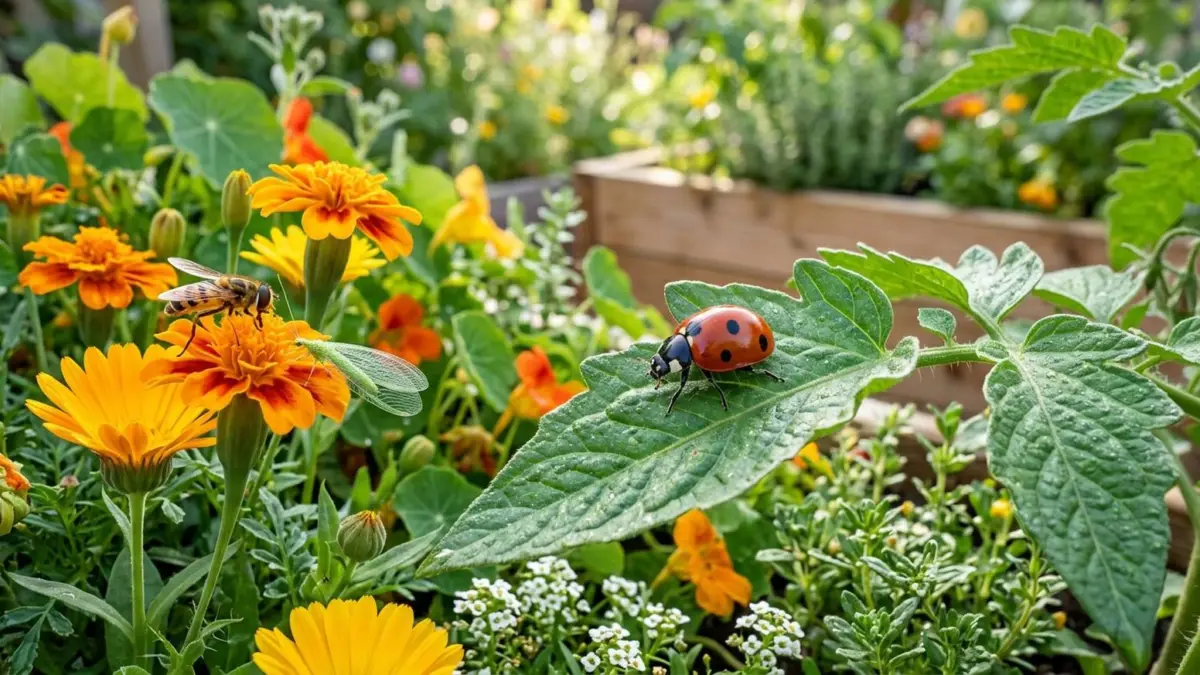
The tragic comedy of gardening: ladybug larvae get squashed as “pests” while they are mid-feast. Alligator-bodied, dark with orange spots, often covered in aphid remains; they are your best employees. Aphid shells turned brown and swollen (“mummies”) mean parasitic wasps are already at work. Hoverflies hovering motionless over flowers are hunting, not stinging. The diagnostic habit is the same one taught in our problem guide: observe before acting.
Recruit Them With Planting
Predators need two things: prey and nectar. Small-flowered plants, dill, fennel, alyssum, yarrow, cosmos, feed adult lacewings and hoverflies whose larvae then hunt. The planting plan is identical to our pollinator garden guide: one design serves both armies. Leave some aphids as “guard bait”: a colony with ladybugs patrolling outperforms a sterile plant that pest moths find first.
Stop Evicting Your Staff
Broad-spectrum sprays kill allies far faster than pests, pests rebound in weeks, allies in seasons. If you must spray, use the targeted tools from our remedies toolkit, apply at dusk when allies rest, and skip blooms. Provide the habitat: a shallow water dish, a log pile, and unmown edges, messy corners are staff housing, and even a small water feature with a stone beach recruits birds and insects alike.
Buying Insects: When It Helps
Released ladybugs often fly away; what stays are their eggs and larvae. Nematodes for soil grubs and lacewing larvae releases genuinely work in greenhouses and dense gardens. For open gardens, planting for recruitment beats purchasing: habitat is permanent, releases are temporary.
Mistakes to head off early
- Spraying first, identifying never, the costly default.
- Tidying every corner: bare, weed-free yards are deserts for allies.
- Expecting zero pests: a working ecosystem keeps pests low, not absent; thresholds are part of our prevention guide.
Quick answers to common questions
Arm yourself next: mix the toolkit in natural remedies, or see the whole hub.
The Threshold Ladder for beneficial insects
Response scales with evidence, not emotion. Level 1: scattered pests, no spread: observe; note in the log; squish by hand. Level 2: damage visible on a quarter of the plant: targeted treatment at dusk, water blast, soap, neem, repeated on the 5-7 day cycle. Level 3: spreading daily, allies absent: escalate to the stronger tool the pest’s biology allows (BTK for caterpillars, netting, removal). Level 4: structural plant at risk: every option on the table, targeted and timed to spare pollinators.
Most gardeners live at the wrong level, acting at 1 (wasting allies) or waiting past 3 (losing crops). The ladder prices each decision honestly.
The Tool Hygiene Protocol for beneficial insects
Tools move disease faster than wind: pruners between blighted and healthy stems, the shovel between infected beds, even the watering can’s spore-laden rim. The protocol is thirty seconds of discipline, isopropyl wipes or 10% bleach dip between sick plants, a dedicated bucket for diseased clippings (never the compost), gloves washed after handling mildew, and blades sharpened clean so cuts seal fast.
Outbreaks traced backwards so often end at a tool that the protocol is prevention’s cheapest line item: a wipe that saves a rose, a bucket that saves a bed.
Deep Dive: What Experienced Growers Know About beneficial insects
The aphid mummy is your garden’s status report: bronze, swollen aphid shells mean parasitic wasps are working right now. Learning five ally signs, mummies, ladybug larvae, hoverfly adults hovering, lacewing eggs on stalks, tachinid fly eggs on pests, turns the weekly walk into a census. Decisions follow the census: allies present means patience; allies absent and pests climbing means targeted action. The census is IPM’s entire monitoring department, staffed free.
Terminology made simple
- Btk: Bacillus thuringiensis kurstaki: biological caterpillar control, nothing else touched.
- Damping Off: Seedling collapse at the soil line; prevented by airflow, cinnamon, careful water.
- Honeydew: Aphid and scale excretion: the sticky shine that also grows sooty mold.
- Mummy: An aphid parasitized by wasps, turned bronze and swollen; a good-luck charm.
Do wasps belong in the garden?
Paper wasps hunt caterpillars relentlessly and sting only when nests sit in traffic. Yellowjackets at picnics are the nuisance; the hunters are staff.
How do I know a spray actually worked?
Count, don't guess: mark three leaves, count pests before, recount at day 5 to 80% down means the cycle worked; otherwise change tool, not just dose.
Can I prevent mildew entirely?
In most gardens, yes: morning soil-level water, air-spaced planting, resistant varieties, and weekly bicarbonate before symptoms. Prevention is the whole game.
What's worth buying versus making?
Buy: neem, BTK, netting, sticky traps, copper, precision products. Make: soap spray, garlic-chili, compost tea, fresh, cheap, effective. Buy the hard, make the fresh.
When do I call a professional arborist?
Trunk decay, large-limb work, anything near power lines, and any tree you value showing internal rot. Arborists are cheaper than funerals and lawsuits.
What should I do the moment I see unknown damage?
Photograph it, note the pattern (leaves? stems? fruit?), check for allies, and wait one day before acting, unless the pest is visibly migrating. Twenty minutes of identification beats a week of wrong treatment.
Is it true that healthy plants resist pests better?
Documented and dramatic: properly watered, fed and spaced plants emit different chemistry and physically resist what stressed neighbors surrender. Prevention is plant health.
More in Pests & Diseases
7 Natural Remedies Every Gardener Should Know How to Make
Insecticidal soap, neem oil spray, baking-soda fungicide, garlic-chili deterrent and more: tested recipes with exact ratios, plus when NOT to use each.
Protecting Your Garden from Birds, Deer, Cats & Critters
Humane barriers, scent deterrents, netting done right and companion strategies, keep birds, deer, rabbits and neighborhood cats out without war on wildlife.

Preventing Garden Problems Before They Start (The Master Guide)
The 10-point prevention checklist professionals run: spacing, sanitation, rotation, resistant varieties, watering discipline and seasonal scouting, cheaper than any cure.