Quick answers
- How can I test my soil at home?
- Squeeze a moist handful to judge texture, dig a hole and time how fast water drains, count earthworms in a spadeful, smell the soil and use a pH test kit. Together these tell you most of what you need.
- What does healthy soil look and smell like?
- Dark, crumbly and moist with an earthy, sweet smell, plenty of earthworms and fine roots. A sour or rotten-egg smell means waterlogging and poor air.
- How often should I test my soil?
- Do the simple physical tests once a year. Test pH and nutrients every two to three years, or when plants struggle for no obvious reason.
- Are home pH test kits accurate?
- They give a good indication, but a lab test is more precise. Kits are fine for deciding whether your soil is acidic, neutral or alkaline.
Key takeaways
- Your hands are the best soil tool. A squeeze test reveals texture in seconds.
- Drainage matters most. Water that sits for hours points to compaction or heavy clay.
- Earthworms are a health report. Ten or more per spadeful is excellent.
- Test pH before adding lime or sulphur. Never adjust blind.
- Smell tells you about air. Earthy is good; sour or sulphurous is bad.
- Take notes and photographs; soil changes slowly and records show progress.
Table of contents13 sections
- Test 1: the squeeze (feel) test
- Test 2: drainage
- Test 3: structure and compaction
- Test 4: life (worms and roots)
- Test 5: smell and colour
- Test 6: pH
- Test 7: let weeds and plants talk
- Test 8: soil temperature
- When to send a sample to a lab
- What to do with the results
- Where most people go wrong
- Tips that make it easier
- What to read next
Soil is the most important and least understood part of a garden. Plants can tell you a lot about it, but so can a few minutes with a spade, a jar and your senses. Reading your soil lets you fix problems at their source, whether that is drainage, structure, acidity or fertility, rather than guessing and adding fertiliser that does not help.
This guide gives you a set of simple tests that anyone can do. It is part of the Soil, Water & Fertilizer pillar and works with Understanding Your Soil Type, Soil pH Explained and Preventing Soil Compaction.
Test 1: the squeeze (feel) test
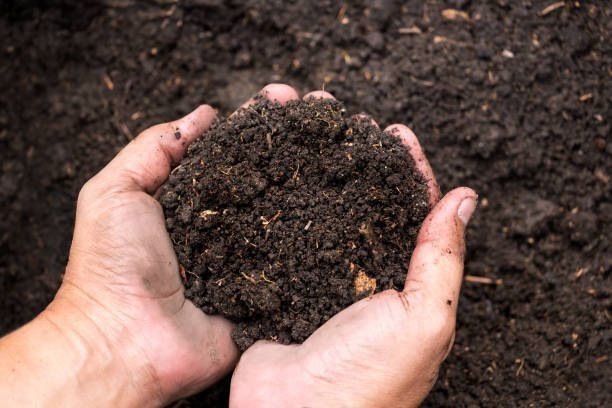
Take a handful of moist (not wet) soil from 10 cm down, squeeze it into a ball, then try to make a ribbon between thumb and finger.
| What happens | Soil type | What it means |
|---|---|---|
| Will not hold together; feels gritty | Sandy | Drains fast, low in nutrients; add compost and mulch |
| Holds a ball, breaks easily; feels silky | Loam or silty loam | The ideal garden soil; maintain with compost |
| Forms a long, sticky ribbon over 5 cm | Clay | Holds water and nutrients but compacts; add organic matter, avoid working wet |
For a more precise result, try the jar test in Understanding Your Soil Type.
Test 2: drainage
- Dig a hole about 30 cm deep and wide.
- Fill it with water and let it drain completely (this wets the surrounding soil).
- Fill it again and measure how far the water level drops in one hour.
- Over 12 cm per hour: very fast (sandy); plants need frequent watering.
- 2.5–5 cm per hour: ideal.
- Under 1 cm per hour: poor; expect waterlogging, root rot and compaction. Consider raised beds or improving structure.
Test 3: structure and compaction
Dig out a spadeful and look at it. Good soil breaks into small, crumbly aggregates held together by roots and fungal threads. Dense blocks, grey or rusty-orange mottling, and horizontal layers mean poor structure or waterlogging. Push a screwdriver into the soil; hard resistance within 10 cm signals compaction.
Test 4: life (worms and roots)
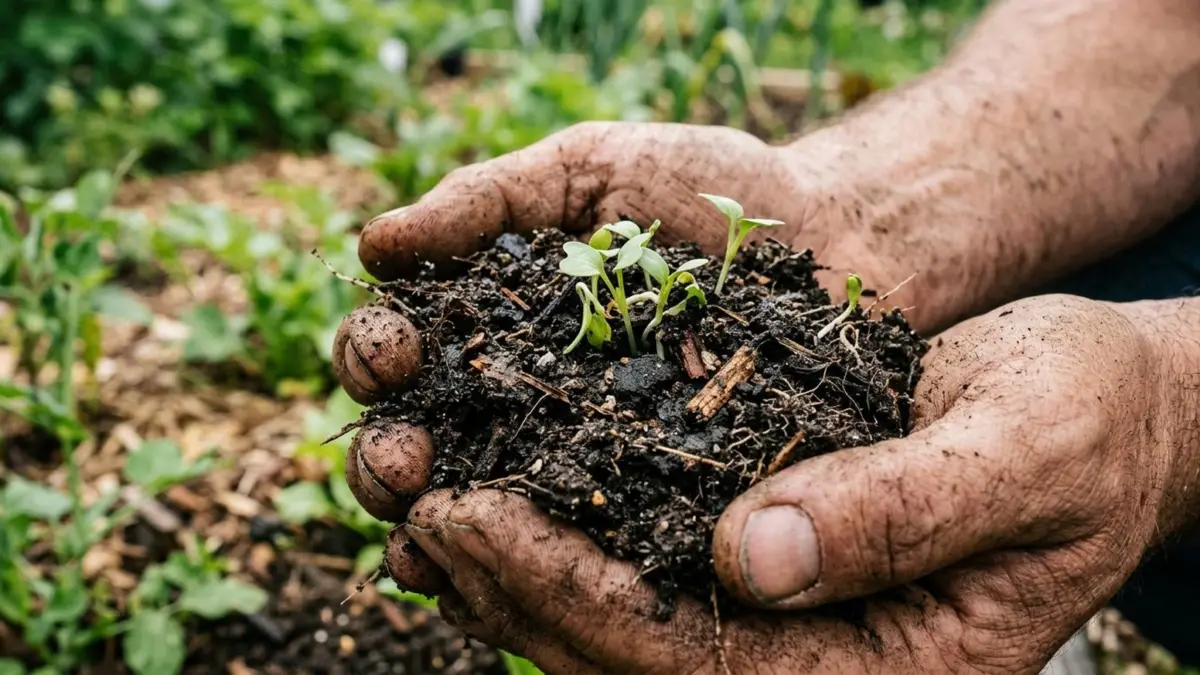
Dig a 30 cm cube of soil in spring or autumn when it is moist and warm, and count the worms. Ten or more is excellent; fewer than five suggests poor health. Look for fine, white roots and signs of fungal threads. Healthy soil is full of life you can see.
Test 5: smell and colour
- Earthy and sweet: healthy, well-aerated soil.
- Sour, rotten egg: anaerobic, waterlogged soil; improve drainage.
- Dark brown to black: usually rich in organic matter.
- Pale, grey or yellow: low in organic matter or poorly drained.
Test 6: pH
Soil pH controls how easily plants can take up nutrients. Most vegetables and flowers prefer pH 6.0–7.0. Home pH kits, probes and indicator powders give a useful reading. A quick kitchen test: if soil fizzes when vinegar is added, it is alkaline; if it fizzes after water and baking soda are added, it is acidic. For accuracy, use a kit or lab.
| pH range | Soil | Typical action |
|---|---|---|
| Below 5.5 | Strongly acidic | Add lime if growing vegetables; choose acid-lovers (blueberries, rhododendrons) |
| 6.0–7.0 | Ideal for most plants | Maintain with compost |
| Above 7.5 | Alkaline | Add sulphur or acidic compost; use chelated iron for yellowing plants |
Test 7: let weeds and plants talk
Weeds hint at conditions, although they are indicators, not proof. Dandelions and plantain often grow in compacted soils; moss in damp, shady, acidic conditions; docks in heavy, fertile clay; nettles in nitrogen-rich ground. Pale, stunted plants often point to poor soil or nutrient problems (see Reading Plant Signals).
Test 8: soil temperature
A soil thermometer pushed 5 cm into the ground tells you when to sow. Most seeds need at least 10–15°C (see How to Plant Seeds Step by Step).
When to send a sample to a lab
A professional soil test (a few dozen dollars) measures pH, organic matter, major nutrients (phosphorus, potassium, magnesium) and sometimes contaminants. It is worth doing when you start a new garden, grow food on urban land that might be contaminated, or suspect a nutrient problem. Collect samples from 6–8 places, 10–15 cm deep, mix them and send a cup of the mixture.
What to do with the results
- Improve structure first. Add compost and mulch, avoid compaction (see Preventing Soil Compaction).
- Correct pH if needed. Use lime to raise or sulphur to lower, in small amounts, and retest after a few months.
- Feed deficiencies. Use targeted organic fertilisers based on lab or plant signs (see Organic vs Synthetic Fertilizers).
- Choose plants to suit. Work with your soil and select species that thrive in it.
- Retest annually to track the improvement.
Where most people go wrong
- Adding lime or fertiliser without testing
- Testing a single spot and assuming the whole garden is the same
- Judging soil when it is frozen, waterlogged or just limed
- Ignoring drainage problems and blaming plants
Tips that make it easier
- Test different areas separately: the vegetable patch, borders and lawn often have different soils.
- Keep a soil notebook with test dates, results and what you added.
- Take photos of your spadeful each year to compare structure.
What to read next
Feed your soil with Composting at Home and Compost Tea, protect it with Mulching Mastery, and manage water through Drip Irrigation. Back to Soil, Water & Fertilizer.
More in Soil, Water & Fertilizer
Understanding Your Soil Type: The Jar Test and Beyond
Sand, silt, clay or loam? Identify your soil in 10 minutes with a jar and water, then apply the exact watering, planting and amendment strategy for…
Soil pH Explained: Why It Unlocks (or Locks) Your Garden
The 6.0-7.0 sweet spot, why yellow leaves can mean locked iron, testing methods and safe ways to raise or lower pH, the master switch of plant…
Organic vs Synthetic Fertilizers: The Honest Comparison
NPK decoded, slow vs fast release, what each does to soil life long-term, and the hybrid feeding schedule professionals actually use.