Quick answers
- Fast shade with good manners
- Similar families keep appearing on every continent's list: moringa for edible speed, melia/neem for tough shade and pest resistance, silver oak for upright elegance. All grow 1.5-3 m a year in warm climates. Expect softer wood: plan structural pruning early with our pruning guide.
- Long-lived legacy shade
- Oaks, mahogany, jacaranda and mature ficus species grow slower but live generations and cool whole streets. Give them room: never less than 6-8 m from foundations. Their deep, thirsty root systems also appreciate the deep-soak habits in our tree watering guide.
- Small-garden shade
- Under 8 m? Think multi-trunk and airy: olive, crape myrtle, frangipani, or a grafted multi-fruit tree. They cast dappled rather than solid shade, enough to sit under, gentle enough to garden beneath. Pair them with the layering ideas in our garden design hub.
- Which shade tree won't damage my house foundation?
- Choose deep-rooted, non-invasive species, olive, crape myrtle, mahogany, and plant at least half the mature canopy width away from walls. Keep the root flare exposed per our planting method; buried flares grow sneaky surface roots.
Key takeaways
- Mature height & spread, imagine it in 20 years, not at the nursery
- Root habit, keep aggressive roots 6 m+ from pipes and paving
- Leaf litter, evergreen for year-round shade, deciduous for winter sun
- Speed vs. strength: fastest growers are usually the weakest wooded
Table of contents16 sections
- Match the Tree to the Job
- What usually goes wrong
- Reading Tree Stress Before It Shows for shade tree selection
- The First-Year Calendar for shade tree selection
- Deep Dive: What Experienced Growers Know About shade tree selection
- Terminology made simple
- Fastest respectable shade tree?
- Which trees wreck pipes and paving?
- Small garden, real shade, possible?
- Do trees need fertilizer every year?
- Can I plant under an established tree?
- How much does a tree actually drink?
- When is a tree officially 'established'?
- How close can I plant a tree to a wall?
- Should I prune a newly planted tree to 'balance' it?
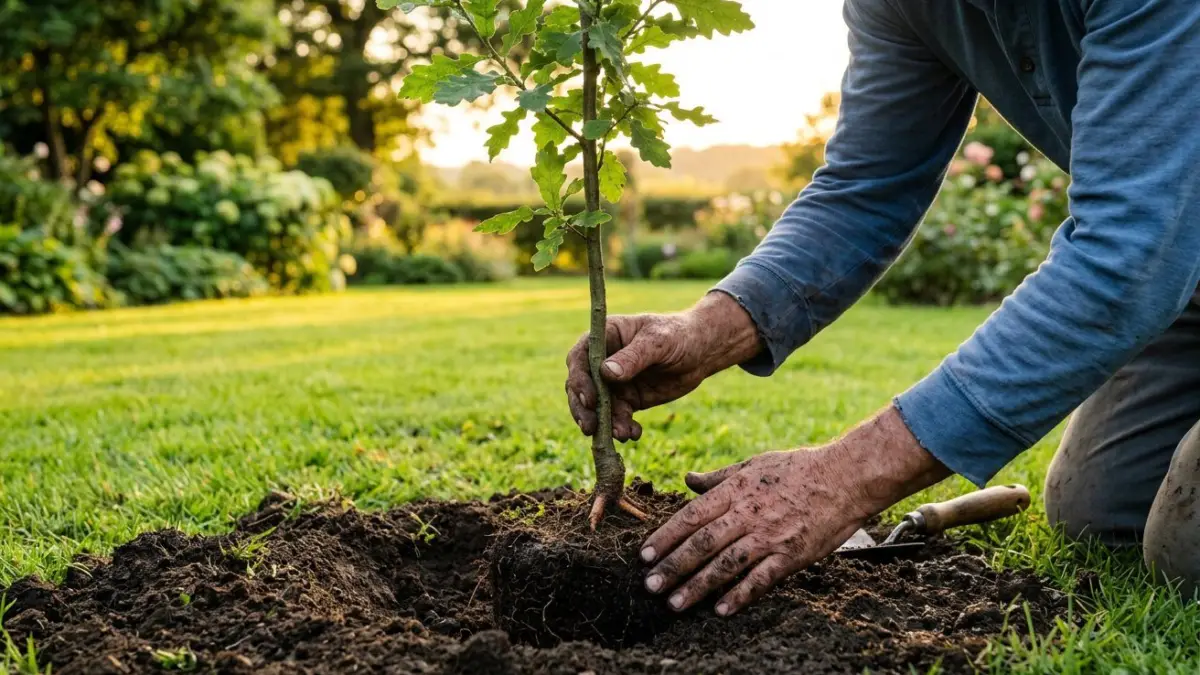
A shade tree is a five-year promise with a fifty-year payoff, and a fifty-year consequence if you choose badly. The trick is matching three things: your space, your climate and the tree’s mature personality.
Match the Tree to the Job
Shade the afternoon-sun side of the house (west) for maximum cooling; shade paved areas to cut reflected heat; and keep full morning sun on vegetable beds, sunlight budgeting is a design skill, and our small garden design guide shows the planning trick.
What usually goes wrong
- Planting a banyan or gulmohar in a 4 m courtyard, size is destiny.
- Choosing purely on nursery-row beauty instead of mature form.
- Ignoring water needs: a river-red-gum in a small dry yard is a decades-long argument.
How long until real shade?
Fast species give dappled shade in 2-3 years and real shade in 5; slow legacy trees take 8-10 but repay you for a lifetime. Many gardeners plant one of each, quick comfort now, legacy later.
Keep exploring: the full trees hub, or start an orchard with fruit trees for beginners.
Reading Tree Stress Before It Shows for shade tree selection
Trees telegraph trouble a season early to anyone reading: smaller-than-normal leaves mean roots struggling; early autumn color in late summer means stress banking; sparse bud set in spring announces last summer’s drought; epicormic shoots (sprouts along the trunk) mean the canopy is failing to feed itself. Walk each tree monthly with those four signals in mind, ten seconds per tree, and problems arrive as adjustments rather than emergencies.
The one signal that overrides everything: the flare. Soil or mulch creeping over it undoes years of health silently, so the monthly walk ends where the tree begins.
The First-Year Calendar for shade tree selection
New trees run on a twelve-month contract. Months 1-3: root ball moisture checks twice weekly; berm basin watering deep; zero fertilizer; mulch ring maintained. Months 4-6: weekly checks; first flush of growth inspected for pests; stakes inspected and loosened if tight. Months 7-9: heat is the exam: deep soaks at the first morning wilt, never daily sprinkles; no pruning beyond broken wood. Months 10-12: taper watering to train roots outward; remove stakes; first formative corrections only if a leader or crossing branch demands it.
The calendar’s quiet genius is subtraction: every month you successfully do less, the tree does more.
Deep Dive: What Experienced Growers Know About shade tree selection
The utility-planting rule pays the cooling dividend fastest: shade the west and southwest walls, not the south, and afternoon air-conditioning loads drop measurably. Deciduous over evergreen for house-adjacent planting: winter sun through bare branches is free heating. For paving and patios, dappled canopies (olive, crape myrtle, mesquite-types) cool without creating the mold-and-moss shade that solid canopies breed. One tree placed by climate logic outperforms three placed by looks.
Terminology made simple
- Girdling Root: A circling root that strangles the trunk as both widen; prevented by root spreading at planting.
- Dripline: The ground circle under the outermost foliage where feeder roots concentrate.
- Branch Collar: The swollen junction tissue holding the tree's sealing chemistry; cuts go outside it.
- Compartmentalization: The process by which trees wall off decay behind chemical barriers.
Fastest respectable shade tree?
Moringa in frost-free climates: edible, airy, 3-4 meters a year. Where winters bite, hybrid poplars work but plan their short lifespans honestly.
Which trees wreck pipes and paving?
Water-hungry aggressive roots: willows, poplars, ficus, silver maples. Keep any thirsty giant at least 6-8 meters from lines.
Small garden, real shade, possible?
Yes: multi-trunk olive, crape myrtle or frangipani cast sitting-height dapple under 6 meters, and underplanting survives beneath them.
Do trees need fertilizer every year?
Healthy trees in mulched soil usually feed themselves; feed only on a diagnosed deficiency. Fertilizer on stressed trees delays the real fix.
Can I plant under an established tree?
Only tough dry-shade plants, in raised pockets of compost, never dig into the root zone or the canopy's feeder roots pay for it.
How much does a tree actually drink?
A mature shade tree can transpire 200-400 liters on a hot day, the case for deep, infrequent watering that reaches, not sprinkles that tease.
When is a tree officially 'established'?
When it survives a normal dry spell without supplemental water: usually two to three seasons after planting.
How close can I plant a tree to a wall?
Half the mature canopy width, minimum, closer only with proven deep-rooted, well-mannered species like olive or crape myrtle.
Should I prune a newly planted tree to 'balance' it?
No: leaves feed the roots that establish it. Remove only broken or crossing wood; shaping waits for year two or three.
More in Trees
Fruit Trees for Beginners: 7 That Almost Grow Themselves
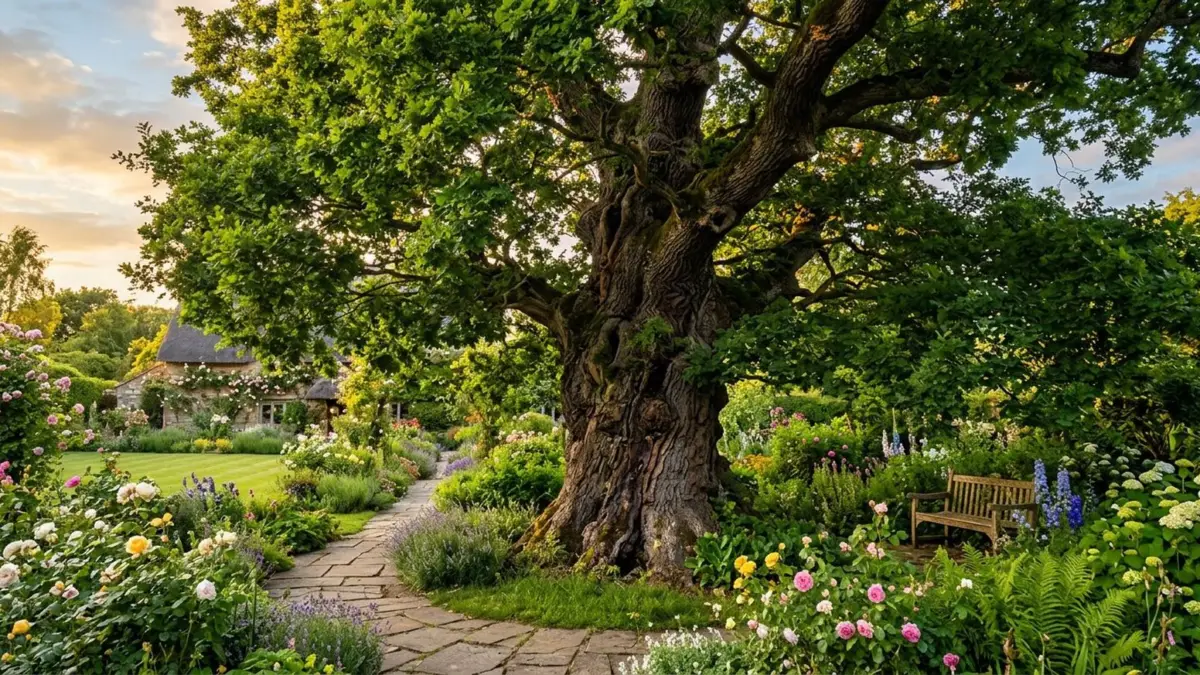
Which fruit trees forgive beginner mistakes, how many years to first harvest, chill hours and pollination decoded: start your orchard the smart way.
How to Prune Trees Safely: Cuts, Timing and Tools
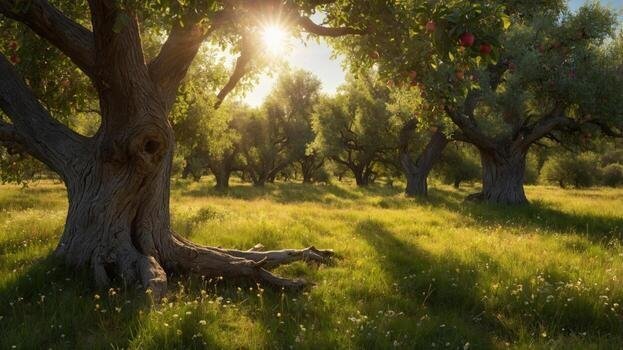
Where to cut, when to cut and the three-cut method for big branches, prune like a professional without killing your tree or yourself.
Palm & Tropical Tree Care: Fertilizing, Fronds and Frost
Palms and tropical trees are a different species of gardening. Correct feeding, frond rules, transplanting tips and frost rescue, the tropical plant-care playbook.