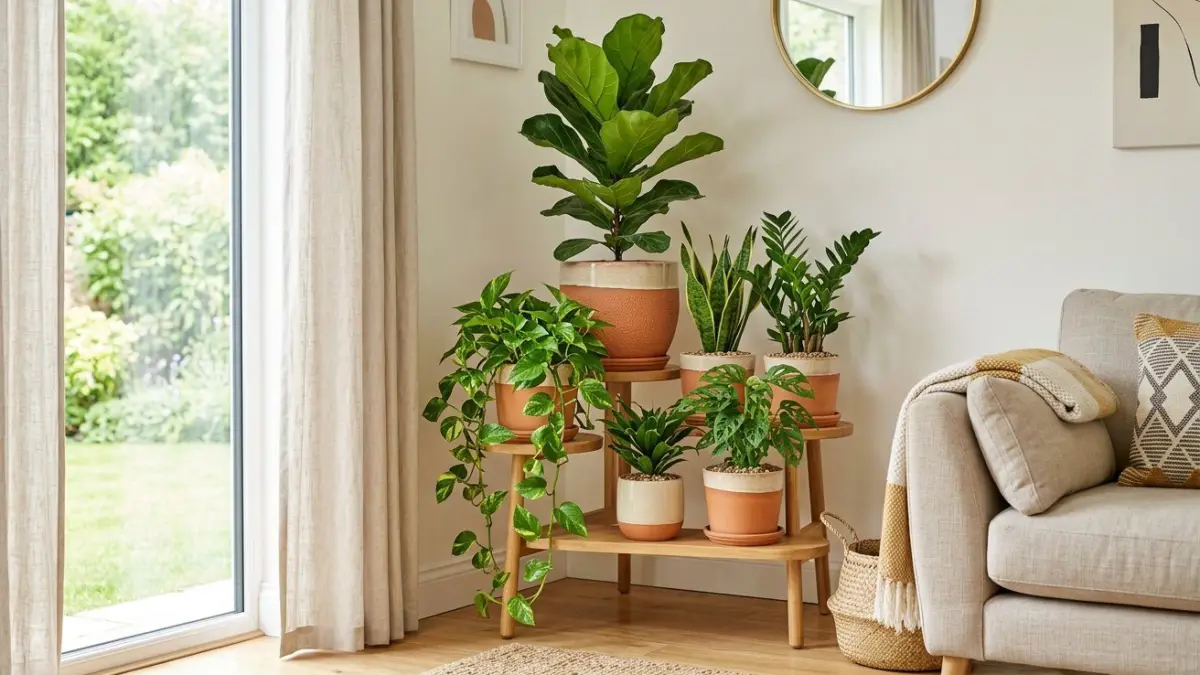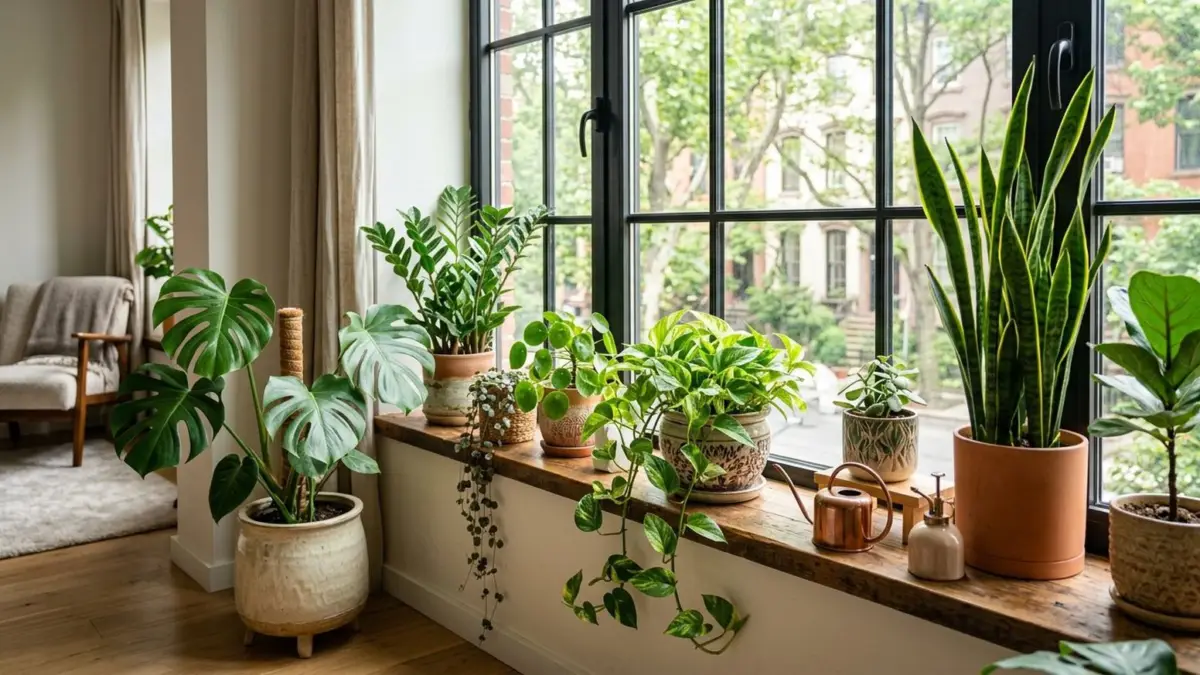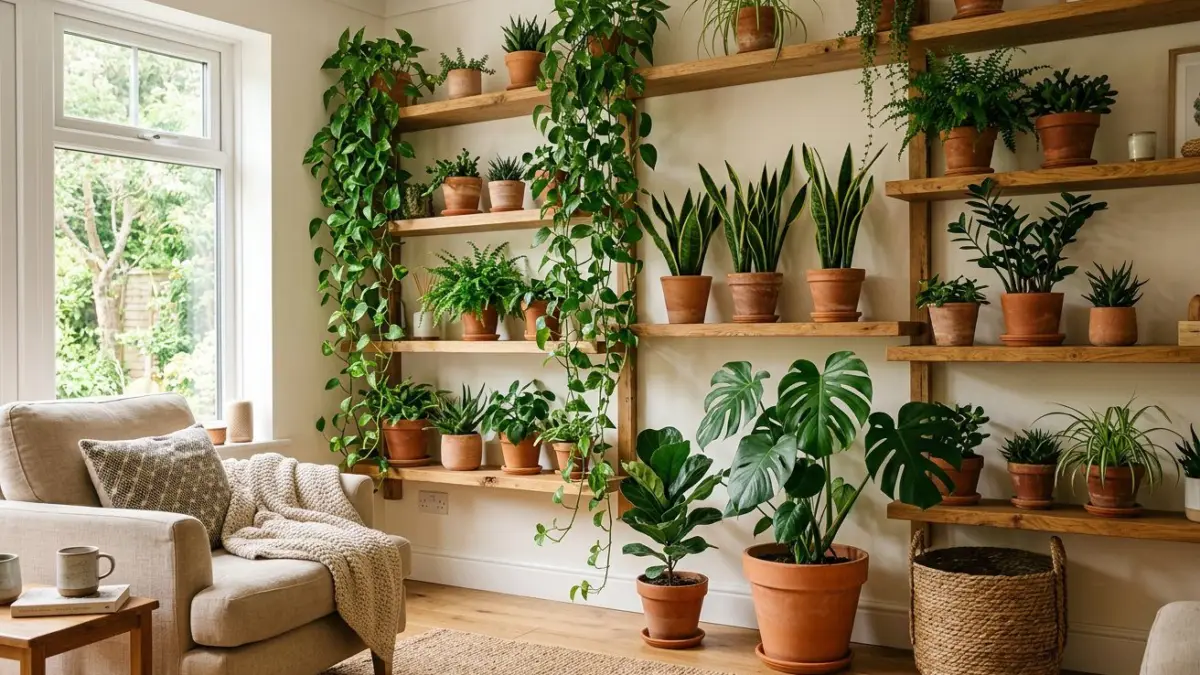
“Low light” is the most misused phrase in houseplant care. It does not mean no light — it means the light where you can read a book comfortably at midday without switching lamps on. With that honest definition, a whole cast of gorgeous plants will genuinely thrive in your dim corners.
The Reliable Fifteen (Top Picks)
- Snake plant — tolerates neglect better than any houseplant alive
- Pothos & heartleaf philodendron — fast, trailing, endlessly forgiving
- ZZ plant — glossy, architectural, near-indestructible
- Peace lily — blooms even in modest light
- Cast iron plant, parlor palm, aglaonema — the quiet workhorses
Match the Plant to the Window
North windows suit snake plants, ZZ and cast iron plants. East windows (gentle morning sun) suit pothos, philodendron and peace lily. Dim interiors with only ambient light are ZZ and snake plant territory — rotate plants through brighter spots every few weeks, the “light rotation” habit from our styling guide. No window at all? Even these need a grow light eventually — plants are solar-powered, whatever the label promises.
The Low-Light Danger: Overwatering
Plants in dim light drink slowly. The same watering can that keeps a sunny-window monstera happy drowns a corner ZZ plant. Follow the dry-out rule from our houseplant watering guide and use the drainage setup from our pot guide — in low light, these two habits matter double.
Care Differences You’ll Notice
Low-light plants grow slowly — that is health, not failure. Feed at half strength and half frequency versus sunny-window plants (the logic is in our feeding guide), wipe dust off leaves monthly so every photon counts, and resist repotting into bigger pots “for growth” — root-bound snake plants are content snake plants, as our repotting guide explains.
Common Mistakes to Avoid
- Believing “low light” means a windowless bathroom — no plant photosynthesizes in the dark.
- Buying a fiddle-leaf fig for a dark corner because a picture looked nice; fiddle-leaf figs are high-light divas.
- Saucers that never empty — low light plus standing water equals root rot.
Frequently Asked Questions
Which low-light plant is safest for pets?
Parlor palm and cast iron plant are non-toxic. Pothos, ZZ, peace lily and snake plant are mildly toxic if chewed — placement matters in pet homes.
Why is my pothos losing its variegation?
The plant is reverting to all-green to harvest more light — a survival move. Move it a bit brighter and new leaves regain the marbling.
Next in this hub: master moisture with houseplant watering, or explore the full indoor plants hub.
The Window Map for low-light houseplants
Every collection is organized by its windows, so map them once, honestly: south (bright most of the day) — succulents, cacti, ficus, and the sun-hungry herbs; east (gentle morning) — the broad middle of houseplants: pothos, philodendron, peperomia; west (hot afternoon) — sun-tough foliage with a step back from the glass; north (soft steady) — ZZ, snake plant, cast iron, parlor palm. Then the honest category: rooms lit by lamps alone, which even survivors eventually refuse.
The map decides purchases before beauty does. A plant that thrives is beautiful; a plant that survives badly is furniture on its way to the bin.
The Salt-Flush Ritual for low-light houseplants
Months of fertilizing and tap water leave dissolved salts that concentrate at the root zone — the hidden author of crispy tips that humidity cures never touch. The quarterly ritual: carry the plant to the sink or shower, water slowly and thoroughly until several pots’ worth drains through, let it drip-dry, and return it. Mark the calendar quarter-by-quarter; big floor plants get the same treatment with a hose outdoors when weather allows.
The ritual costs ten minutes per season per plant and quietly prevents the most common slow decline in houseplant keeping.
Deep Dive: What Experienced Growers Know About low-light houseplants
The two-meter rule reshapes how you place ‘low-light’ plants: light intensity falls off with the square of distance from a window, so a plant two meters inside a bright room may receive a tenth of the sill’s light. Low-light survivors earn that title across a range, not a point — snake plants tolerate dim corners for years but grow slowly there, and grow twice as fast moved three meters closer. Rotate survivors through brighter positions seasonally; even shade plants bank light.
Key Takeaways
- Leggy: Stretched, sparse growth from insufficient light.
- Cachepot: The decorative outer pot; the inner grow pot lifts out for watering.
- Root-Bound: Roots circling the pot, displacing soil; time to repot or root-prune.
- Drainage Layer Myth: Gravel at pot bottoms raises, not lowers, the water table.
More Questions About Low-Light Houseplants
Which low-light plant flowers?
Peace lily blooms reliably in modest light; clivia does in bright shade. Most low-light plants trade bloom for foliage architecture.
Are ZZ plants really unkillable?
Nearly — they survive dim, dry neglect. What kills them is kindness: overwatering in low light is the one crime they cannot absorb.
Do low-light plants need fertilizer?
At half strength and half frequency — slow growth consumes slowly. Feeding a dim-room plant at full rate salts the soil faster than roots drink.
Field Questions Answered
How many plants is too many for one room?
When care quality drops below what each already owns — the collection grows faster than the minutes that tend it. Count your weekly minutes honestly.
Can I use garden soil for houseplants in a pinch?
No — it compacts, drains wrong, and imports fungus gnats and fungi to a pot with no ecosystem to resist them. Coir and perlite travel well instead.
Why is my plant's new growth smaller than the old?
Light drop (seasonal or moved), root congestion, or hunger. Check all three in order; new growth is the plant's honest report card.
Do plants need to be near other plants?
They benefit — shared humidity microclimates are real — but spacing for airflow prevents the gnat and mildew trade. Group loosely, not shoulder to shoulder.
Common Mistakes to Avoid with Low-Light Houseplants
- Watering on a schedule instead of by need — the Sunday massacre.
- Choosing plants for looks while ignoring the window they must live in.
- Potting small plants in giant containers 'so they can grow into them'.
- Leaving pots standing in full saucers overnight.
- Believing 'low light' means no light — nothing photosynthesizes in the dark.
Further Field Questions
How many plants is too many for one room?
When care quality drops below what each already owns — the collection grows faster than the minutes that tend it. Count your weekly minutes honestly.
Can I use garden soil for houseplants in a pinch?
No — it compacts, drains wrong, and imports fungus gnats and fungi to a pot with no ecosystem to resist them. Coir and perlite travel well instead.
Why is my plant's new growth smaller than the old?
Light drop (seasonal or moved), root congestion, or hunger. Check all three in order; new growth is the plant's honest report card.
Do plants need to be near other plants?
They benefit — shared humidity microclimates are real — but spacing for airflow prevents the gnat and mildew trade. Group loosely, not shoulder to shoulder.
What's the best first plant for a total beginner?
Pothos: it communicates clearly (droops thirsty, yellows soggy), roots from cuttings in weeks, and forgives nearly every beginner crime.
How do I clean very large leaves?
Shower the whole plant in lukewarm water, or wipe with a damp cloth monthly. Leaf shine products clog stomata — plain water does the work.
Further Field Questions
How many plants is too many for one room?
When care quality drops below what each already owns — the collection grows faster than the minutes that tend it. Count your weekly minutes honestly.
Can I use garden soil for houseplants in a pinch?
No — it compacts, drains wrong, and imports fungus gnats and fungi to a pot with no ecosystem to resist them. Coir and perlite travel well instead.
Why is my plant's new growth smaller than the old?
Light drop (seasonal or moved), root congestion, or hunger. Check all three in order; new growth is the plant's honest report card.
Do plants need to be near other plants?
They benefit — shared humidity microclimates are real — but spacing for airflow prevents the gnat and mildew trade. Group loosely, not shoulder to shoulder.
What's the best first plant for a total beginner?
Pothos: it communicates clearly (droops thirsty, yellows soggy), roots from cuttings in weeks, and forgives nearly every beginner crime.
How do I clean very large leaves?
Shower the whole plant in lukewarm water, or wipe with a damp cloth monthly. Leaf shine products clog stomata — plain water does the work.
Further Field Questions
How many plants is too many for one room?
When care quality drops below what each already owns — the collection grows faster than the minutes that tend it. Count your weekly minutes honestly.
Can I use garden soil for houseplants in a pinch?
No — it compacts, drains wrong, and imports fungus gnats and fungi to a pot with no ecosystem to resist them. Coir and perlite travel well instead.
Why is my plant's new growth smaller than the old?
Light drop (seasonal or moved), root congestion, or hunger. Check all three in order; new growth is the plant's honest report card.
Do plants need to be near other plants?
They benefit — shared humidity microclimates are real — but spacing for airflow prevents the gnat and mildew trade. Group loosely, not shoulder to shoulder.
What's the best first plant for a total beginner?
Pothos: it communicates clearly (droops thirsty, yellows soggy), roots from cuttings in weeks, and forgives nearly every beginner crime.
How do I clean very large leaves?
Shower the whole plant in lukewarm water, or wipe with a damp cloth monthly. Leaf shine products clog stomata — plain water does the work.
Further Field Questions
How many plants is too many for one room?
When care quality drops below what each already owns — the collection grows faster than the minutes that tend it. Count your weekly minutes honestly.
Can I use garden soil for houseplants in a pinch?
No — it compacts, drains wrong, and imports fungus gnats and fungi to a pot with no ecosystem to resist them. Coir and perlite travel well instead.
Why is my plant's new growth smaller than the old?
Light drop (seasonal or moved), root congestion, or hunger. Check all three in order; new growth is the plant's honest report card.
Do plants need to be near other plants?
They benefit — shared humidity microclimates are real — but spacing for airflow prevents the gnat and mildew trade. Group loosely, not shoulder to shoulder.
What's the best first plant for a total beginner?
Pothos: it communicates clearly (droops thirsty, yellows soggy), roots from cuttings in weeks, and forgives nearly every beginner crime.
How do I clean very large leaves?
Shower the whole plant in lukewarm water, or wipe with a damp cloth monthly. Leaf shine products clog stomata — plain water does the work.
Further Field Questions
How many plants is too many for one room?
When care quality drops below what each already owns — the collection grows faster than the minutes that tend it. Count your weekly minutes honestly.
Can I use garden soil for houseplants in a pinch?
No — it compacts, drains wrong, and imports fungus gnats and fungi to a pot with no ecosystem to resist them. Coir and perlite travel well instead.
Why is my plant's new growth smaller than the old?
Light drop (seasonal or moved), root congestion, or hunger. Check all three in order; new growth is the plant's honest report card.
Do plants need to be near other plants?
They benefit — shared humidity microclimates are real — but spacing for airflow prevents the gnat and mildew trade. Group loosely, not shoulder to shoulder.
What's the best first plant for a total beginner?
Pothos: it communicates clearly (droops thirsty, yellows soggy), roots from cuttings in weeks, and forgives nearly every beginner crime.
How do I clean very large leaves?
Shower the whole plant in lukewarm water, or wipe with a damp cloth monthly. Leaf shine products clog stomata — plain water does the work.