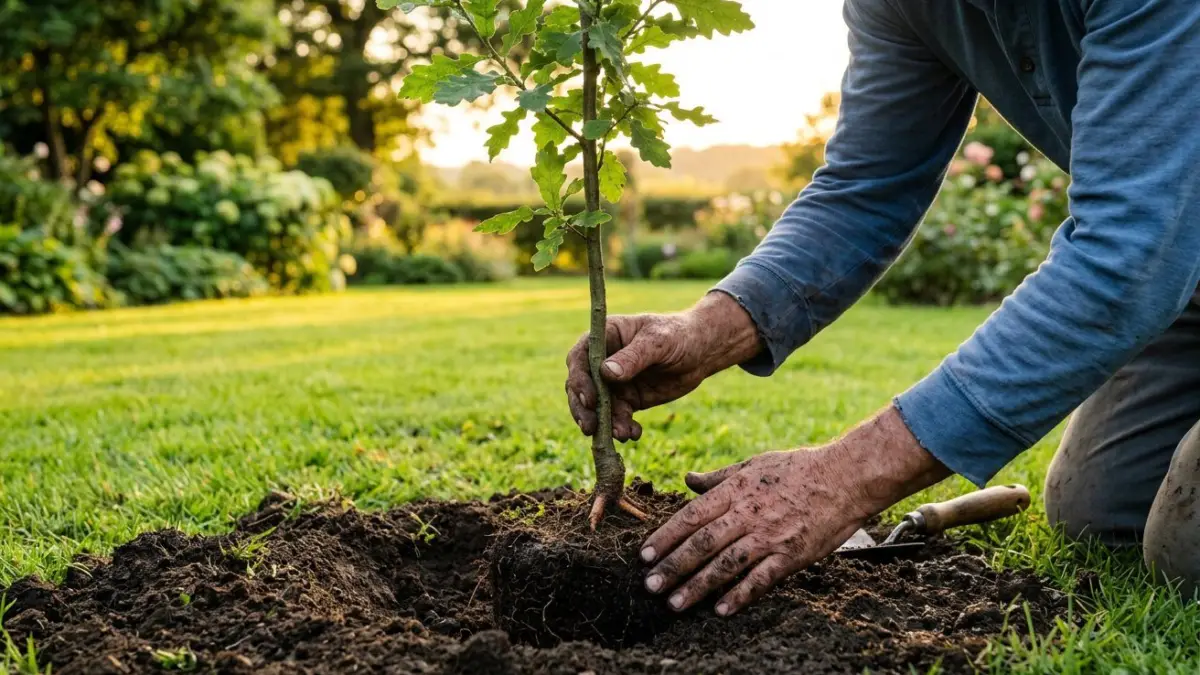
Pruning intimidates gardeners more than any other task — yet trees in nature are pruned constantly by wind and ice, and survive. Your goal is not sculpture; it is removing what is dead, damaged, diseased or badly placed so the tree’s own structure shines.
Pruning Essentials
- Best time: dormant season for structure; anytime for the 3 D’s
- Never remove more than 25% of the canopy in one year
- Cut outside the branch collar — never flush
- Branches over 5 cm: use the three-cut method
The Only Cuts You Need
Thinning cut
Remove a whole branch back to its origin. This opens the canopy to light and air — the single best fungal-disease prevention, as our disease guide explains.
Heading cut
Shorten a branch to a bud or side branch. It thickens growth below — use it to shape young hedges and fruit trees, sparingly on big trees.
The Three-Cut Method (For Anything Thick)
Undercut 30 cm out, a third through the branch. Move 10 cm further out and cut through from the top — the branch falls without tearing bark down the trunk. Finally remove the stub just outside the branch collar, the swollen collar where the trunk’s own healing chemicals live. Flush cuts and paint-sealed stubs both slow healing.
Timing Rules
Structure-prune deciduous trees in dormancy so you can see the bones. Prune spring-flowering trees right after they bloom, or you cut off the year’s flowers. Remove dead, damaged or diseased wood the day you see it, whatever the season — and dispose of diseased material, never compost it, per our prevention guide.
Safety First, Always
- Never prune near power lines — that is utility-crew work, full stop.
- Never use a chainsaw on a ladder. Loppers and pole saws cover most home needs.
- Wear glasses; branches are spring-loaded and eyes are not.
- Wipe blades with alcohol between diseased cuts — a few seconds prevents epidemics.
Frequently Asked Questions
Will pruning paint or seal help?
Research says no on ordinary cuts — trees heal by compartmentalizing from the collar. The exception is oak-family pruning in disease season in some regions; local guidance wins.
My tree is huge and badly overgrown — where do I start?
Spread heavy renovation over three years: dead wood first, then crossing branches, then shaping. Combine with the deep-root care in our watering and mulching guide and the tree recovers strength each season.
Next in this hub: palm and tropical tree care, or the full trees hub.
Reading Tree Stress Before It Shows for pruning
Trees telegraph trouble a season early to anyone reading: smaller-than-normal leaves mean roots struggling; early autumn color in late summer means stress banking; sparse bud set in spring announces last summer’s drought; epicormic shoots (sprouts along the trunk) mean the canopy is failing to feed itself. Walk each tree monthly with those four signals in mind — ten seconds per tree — and problems arrive as adjustments rather than emergencies.
The one signal that overrides everything: the flare. Soil or mulch creeping over it undoes years of health silently, so the monthly walk ends where the tree begins.
The First-Year Calendar for pruning
New trees run on a twelve-month contract. Months 1–3: root ball moisture checks twice weekly; berm basin watering deep; zero fertilizer; mulch ring maintained. Months 4–6: weekly checks; first flush of growth inspected for pests; stakes inspected and loosened if tight. Months 7–9: heat is the exam — deep soaks at the first morning wilt, never daily sprinkles; no pruning beyond broken wood. Months 10–12: taper watering to train roots outward; remove stakes; first formative corrections only if a leader or crossing branch demands it.
The calendar’s quiet genius is subtraction: every month you successfully do less, the tree does more.
Deep Dive: What Experienced Growers Know About pruning
The branch collar is not cosmetic anatomy — it is chemistry. Collar tissue produces the barrier zones that seal decay out of the trunk; cut flush with the trunk and you amputate the tree’s immune response, inviting rot down the middle. The correct cut follows a three-step mental map: find the collar’s swell, find the branch bark ridge at the top, and cut just outside both — never leaving a stub, never entering the collar. Once internalized, every pruning decision becomes geometry plus restraint.
Key Takeaways
- Branch Collar: The swollen junction tissue holding the tree's sealing chemistry; cuts go outside it.
- Compartmentalization: The process by which trees wall off decay behind chemical barriers.
- Chill Hours: Winter hours below ~7°C that stone fruits count before spring bloom.
- Water Sprout: Vigorous vertical regrowth after heavy topping cuts; weakly attached.
More Questions About Pruning
When must I not prune?
Spring-flowering trees right after bloom only — pruning earlier removes the year's flowers. And never in freezing weather for stone fruits (cankers) or peak heat (sunscald).
How much can I prune at once?
A quarter of the live canopy per year, maximum — renovation jobs are three-year projects, not weekend amputations.
Is pruning seal ever right?
Research says almost never; oaks and elms in disease-season regions are the debated exception. Clean cuts at the collar seal themselves.
Field Questions Answered
How much does a tree actually drink?
A mature shade tree can transpire 200–400 liters on a hot day — the case for deep, infrequent watering that reaches, not sprinkles that tease.
When is a tree officially 'established'?
When it survives a normal dry spell without supplemental water — usually two to three seasons after planting.
Should I prune a newly planted tree to 'balance' it?
No — leaves feed the roots that establish it. Remove only broken or crossing wood; shaping waits for year two or three.
How close can I plant a tree to a wall?
Half the mature canopy width, minimum — closer only with proven deep-rooted, well-mannered species like olive or crape myrtle.
Common Mistakes to Avoid with Pruning
- Planting with the root flare buried under backfill or mulch.
- Dug a deep narrow hole instead of a wide shallow one.
- Staking tight and forgetting it — sway builds trunk taper; rigid stakes build dependency.
- Amending only the planting hole, creating a pot in the ground roots refuse to leave.
- Pruning more than a quarter of the canopy in one year, forcing weak regrowth.
Further Field Questions
How close can I plant a tree to a wall?
Half the mature canopy width, minimum — closer only with proven deep-rooted, well-mannered species like olive or crape myrtle.
Do trees need fertilizer every year?
Healthy trees in mulched soil usually feed themselves; feed only on a diagnosed deficiency. Fertilizer on stressed trees delays the real fix.
Can I plant under an established tree?
Only tough dry-shade plants, in raised pockets of compost — never dig into the root zone or the canopy's feeder roots pay for it.
How much does a tree actually drink?
A mature shade tree can transpire 200–400 liters on a hot day — the case for deep, infrequent watering that reaches, not sprinkles that tease.
When is a tree officially 'established'?
When it survives a normal dry spell without supplemental water — usually two to three seasons after planting.
Should I prune a newly planted tree to 'balance' it?
No — leaves feed the roots that establish it. Remove only broken or crossing wood; shaping waits for year two or three.
Further Field Questions
How close can I plant a tree to a wall?
Half the mature canopy width, minimum — closer only with proven deep-rooted, well-mannered species like olive or crape myrtle.
Do trees need fertilizer every year?
Healthy trees in mulched soil usually feed themselves; feed only on a diagnosed deficiency. Fertilizer on stressed trees delays the real fix.
Can I plant under an established tree?
Only tough dry-shade plants, in raised pockets of compost — never dig into the root zone or the canopy's feeder roots pay for it.
How much does a tree actually drink?
A mature shade tree can transpire 200–400 liters on a hot day — the case for deep, infrequent watering that reaches, not sprinkles that tease.
When is a tree officially 'established'?
When it survives a normal dry spell without supplemental water — usually two to three seasons after planting.
Should I prune a newly planted tree to 'balance' it?
No — leaves feed the roots that establish it. Remove only broken or crossing wood; shaping waits for year two or three.
Further Field Questions
How close can I plant a tree to a wall?
Half the mature canopy width, minimum — closer only with proven deep-rooted, well-mannered species like olive or crape myrtle.
Do trees need fertilizer every year?
Healthy trees in mulched soil usually feed themselves; feed only on a diagnosed deficiency. Fertilizer on stressed trees delays the real fix.
Can I plant under an established tree?
Only tough dry-shade plants, in raised pockets of compost — never dig into the root zone or the canopy's feeder roots pay for it.
How much does a tree actually drink?
A mature shade tree can transpire 200–400 liters on a hot day — the case for deep, infrequent watering that reaches, not sprinkles that tease.
When is a tree officially 'established'?
When it survives a normal dry spell without supplemental water — usually two to three seasons after planting.
Should I prune a newly planted tree to 'balance' it?
No — leaves feed the roots that establish it. Remove only broken or crossing wood; shaping waits for year two or three.
Further Field Questions
How close can I plant a tree to a wall?
Half the mature canopy width, minimum — closer only with proven deep-rooted, well-mannered species like olive or crape myrtle.
Do trees need fertilizer every year?
Healthy trees in mulched soil usually feed themselves; feed only on a diagnosed deficiency. Fertilizer on stressed trees delays the real fix.
Can I plant under an established tree?
Only tough dry-shade plants, in raised pockets of compost — never dig into the root zone or the canopy's feeder roots pay for it.
How much does a tree actually drink?
A mature shade tree can transpire 200–400 liters on a hot day — the case for deep, infrequent watering that reaches, not sprinkles that tease.
When is a tree officially 'established'?
When it survives a normal dry spell without supplemental water — usually two to three seasons after planting.
Should I prune a newly planted tree to 'balance' it?
No — leaves feed the roots that establish it. Remove only broken or crossing wood; shaping waits for year two or three.
Further Field Questions
How close can I plant a tree to a wall?
Half the mature canopy width, minimum — closer only with proven deep-rooted, well-mannered species like olive or crape myrtle.
Do trees need fertilizer every year?
Healthy trees in mulched soil usually feed themselves; feed only on a diagnosed deficiency. Fertilizer on stressed trees delays the real fix.
Can I plant under an established tree?
Only tough dry-shade plants, in raised pockets of compost — never dig into the root zone or the canopy's feeder roots pay for it.
How much does a tree actually drink?
A mature shade tree can transpire 200–400 liters on a hot day — the case for deep, infrequent watering that reaches, not sprinkles that tease.
When is a tree officially 'established'?
When it survives a normal dry spell without supplemental water — usually two to three seasons after planting.
Should I prune a newly planted tree to 'balance' it?
No — leaves feed the roots that establish it. Remove only broken or crossing wood; shaping waits for year two or three.
Further Field Questions
How close can I plant a tree to a wall?
Half the mature canopy width, minimum — closer only with proven deep-rooted, well-mannered species like olive or crape myrtle.
Do trees need fertilizer every year?
Healthy trees in mulched soil usually feed themselves; feed only on a diagnosed deficiency. Fertilizer on stressed trees delays the real fix.
Can I plant under an established tree?
Only tough dry-shade plants, in raised pockets of compost — never dig into the root zone or the canopy's feeder roots pay for it.
How much does a tree actually drink?
A mature shade tree can transpire 200–400 liters on a hot day — the case for deep, infrequent watering that reaches, not sprinkles that tease.
When is a tree officially 'established'?
When it survives a normal dry spell without supplemental water — usually two to three seasons after planting.
Should I prune a newly planted tree to 'balance' it?
No — leaves feed the roots that establish it. Remove only broken or crossing wood; shaping waits for year two or three.