Gardening rewards the calendar-minded. The same tomato seed produces harvest or heartbreak depending on the month it meets the soil. This planner gives you the framework professionals use — the two great gardening seasons, and what belongs to each.
The Two Gardening Seasons
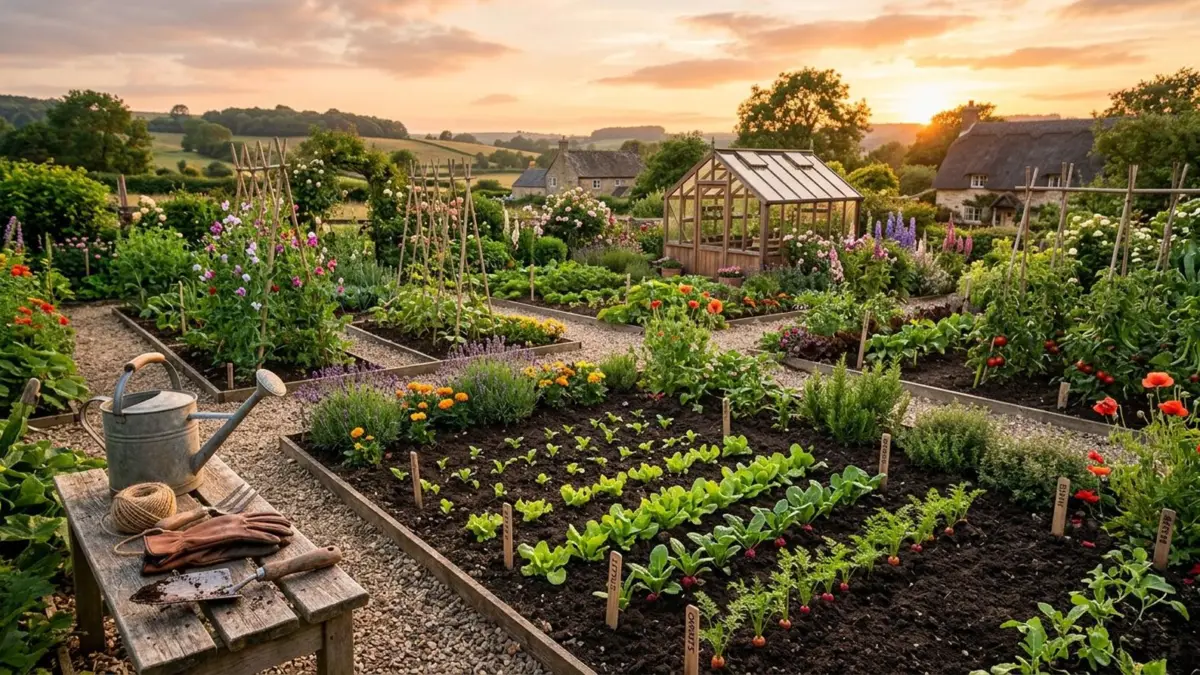
- Cool season: leafy roots and greens — peas, spinach, carrots, pansies
- Warm season: fruiting heat-lovers — tomato, pepper, okra, zinnia
- Rule: cool crops go in 4–6 weeks before the last frost
- Rule: warm crops wait until nights stay above 12°C
Cool Season — The Quiet Overachiever
Spinach, lettuce, radish, carrot, beet, onion, cabbage and peas all thrive while nights are still chilly, and many taste sweeter after light frost. Sow them as soon as soil can be worked; stagger sowings every two weeks for continuous harvest. Chilled summers or winter gardens in mild climates can keep these going most of the year.
Warm Season — The Sun Worshipers
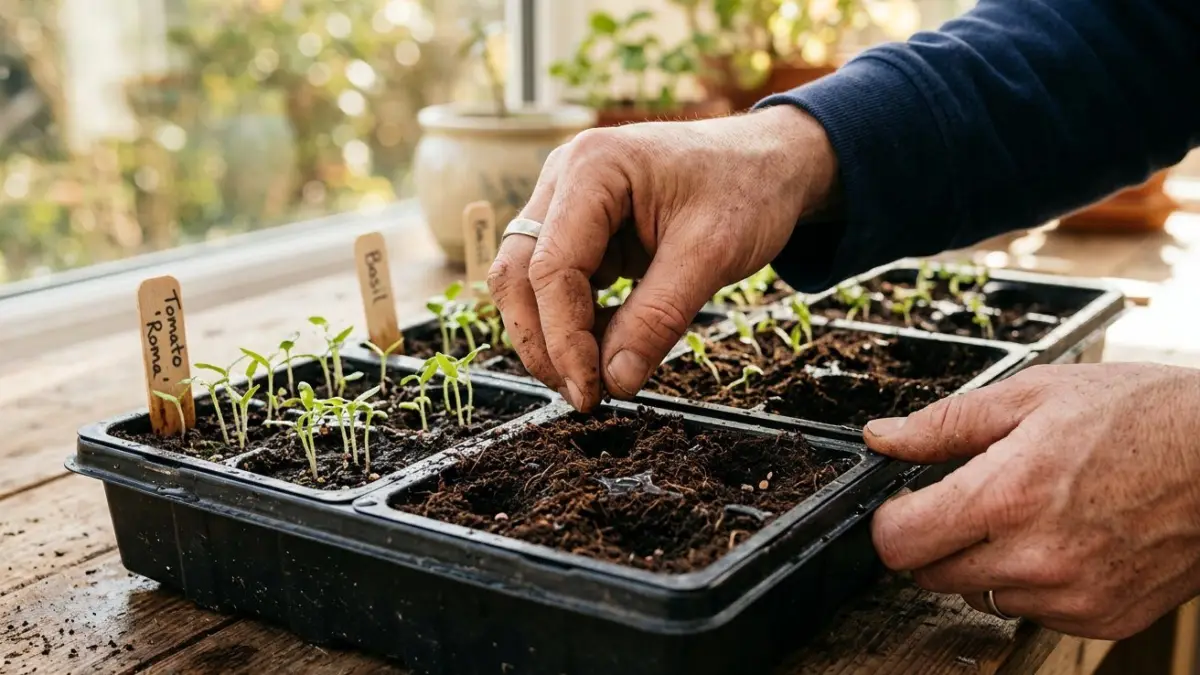
Tomato, pepper, eggplant, cucumber, bean, okra, melon, basil, sunflower and zinnia need warm soil — sow after all frost danger, or start indoors 6–8 weeks early using our step-by-step sowing guide. Push them in too early and they sit purple and sulking until heat arrives.
Between Seasons — The Transition Weeks
Use the lull to feed the soil that fed you: top up compost, mulch beds, and start transplants for the coming season — the move goes smoothly with our transplanting method. Bulbs for next spring go in as autumn cools.
Read Your Own Climate, Not Just the Calendar
Calendars are regional; climates are personal. Track two dates every year — your last and first frost — and watch for local signals: neem leaf-out, mesquite budding, or simply the neighbor’s tomatoes appearing at the nursery. Ten minutes of observation beats any generic chart, and pairing timing with the right soil preparation doubles the payoff.
Common Mistakes to Avoid
- Sowing everything the first warm weekend in spring.
- Forgetting that seed dates and transplant dates differ by about eight weeks.
- Ignoring microclimates — a south wall is a month ahead of an open lawn.
Frequently Asked Questions
What can I plant in the hottest month?
Sow heat-lovers like okra, amaranth, snake gourd and sunflower directly; start your cool-season crops in seed trays in shade for an autumn head start. Keep everything mulched — see our mulching guide to protect roots from peak heat.
When do I plant flowering bulbs?
Spring-flowering bulbs (tulip, daffodil, freesia) go in when nights turn cool in autumn. Summer bloomers like gladiolus wait for warm spring soil — both feature in our bulbs guide.
You have completed this learning path! Revisit the plant growing guides hub anytime, then branch out to vegetables and herbs or tree planting and care.
The Observation Habit That Grows with planting timing
Gardening’s deepest skill is noticing. The trained eye reads a leaf’s angle before its color, soil’s smell before its texture, and a plant’s posture before either. Build the habit with three anchors: same walking route, same time of day, one written line per walk. Within a month the route becomes a baseline — you will spot the droop, the yellow freckle, the chewed edge, days before a casual glance would.
Photography sharpens it further: one photo per plant per week, same angle. The camera holds weeks still for comparison in a way memory will not, and the archive becomes your personal field guide — every past mistake annotated, every recovery documented, every variety’s habits recorded for next season’s smarter choices.
Water Logic for planting timing
| Plant stage | Soil check | Water move |
|---|---|---|
| Seed sown, not sprouted | Surface never dry | Mist twice daily or bottom-soak trays |
| Seedling, true leaves showing | Top 1 cm dry | Gentle can, daily-ish in heat |
| Established in bed | Top 4 cm dry | Deep soak, then wait |
| Flowering/fruiting | Never swings | Steady rhythm — swings cost the crop |
| Dormant/cool season | Barely moist | Long gaps; check before pouring |
Print this table, tape it inside the shed door, and override it only with your own finger’s verdict. Water is the variable gardeners control most often and understand least; the table turns it into a lookup instead of a guess.
Deep Dive: What Experienced Growers Know About planting timing
Phenology — reading plants as calendars — beats any printed chart because it measures your actual microclimate. Traditional pairs work remarkably well: sow peas when forsythia blooms, potatoes when dandelions flower, transplant tender crops when irises bloom and nights hold warm. Local observation integrates frost dates, altitude, aspect and the year’s particular weather in a way no zone map can. Keep the printed calendar as scaffolding, then annotate it annually with what your own garden actually did — within three years the annotations are worth more than the calendar.
Key Takeaways
- Perched Water: The saturated layer at a container bottom, defined by pore size rather than pot height.
- Adventitious Root: A root arising from non-root tissue, like a buried tomato stem.
- Seed Viability: The share of seed still alive and able to germinate; decays with age and storage heat.
- Bottom Heat: Gentle warmth under trays that accelerates germination of warm-season species.
More Questions About Planting Timing
How do I find my frost dates?
National weather services publish 30-year averages by location; local nurseries and neighbors know the real-world exceptions. Write both down and plan from them.
What can I sow in the hottest month?
Direct-sow okra, amaranth and snake gourd — heat is their element — and start cool-season seedlings in shade for autumn transplant.
Is there one date for everything?
No — two anchor dates (last and first frost) plus soil temperature readings cover everything. The thermometer is the calendar that never lies.
Field Questions Answered
Is bottom heat worth it for every seed?
Only warm-season crops — peppers and tomatoes halve germination time; lettuce and peas prefer cool and sprout anyway.
How long should a seedling stay in its tray?
Until its second set of true leaves — roots filling the cell but not circling. Holding longer stunts; moving earlier wastes the tray's protection.
What time of day is best for sowing?
Evening for outdoor beds — seeds settle overnight in cool moisture. Indoor trays don't care; consistency beats timing.
Can I reuse seed trays every year?
Yes after scrubbing and a 10% bleach or hydrogen-peroxide soak — damping-off pathogens persist in last year's grime.
Common Mistakes to Avoid with Planting Timing
- Sowing the entire packet at once and thinning never — crowded seedlings share one small shadow.
- Using garden soil in trays: compaction plus damping-off organisms in one move.
- Skipping hardening off because the seedlings look strong — leaves lie until the first full-sun afternoon.
- Watering on autopilot instead of by finger test; calendars have never met your soil.
- Burying the root flare of transplants and trees — suffocation on a years-long fuse.
Further Field Questions
How long should a seedling stay in its tray?
Until its second set of true leaves — roots filling the cell but not circling. Holding longer stunts; moving earlier wastes the tray's protection.
What time of day is best for sowing?
Evening for outdoor beds — seeds settle overnight in cool moisture. Indoor trays don't care; consistency beats timing.
Can I reuse seed trays every year?
Yes after scrubbing and a 10% bleach or hydrogen-peroxide soak — damping-off pathogens persist in last year's grime.
Why do seedlings need a fan?
Gentle air movement stiffens stems, dries foliage, and prevents fungal pockets — the cheapest 'hardening' that works indoors from day one.
How do I water seedlings on vacation?
Bottom-water trays in a shallow bath, or capillary mats. A week is survivable; ten days needs a plant-sitter or self-watering setup.
Is bottom heat worth it for every seed?
Only warm-season crops — peppers and tomatoes halve germination time; lettuce and peas prefer cool and sprout anyway.
Further Field Questions
How long should a seedling stay in its tray?
Until its second set of true leaves — roots filling the cell but not circling. Holding longer stunts; moving earlier wastes the tray's protection.
What time of day is best for sowing?
Evening for outdoor beds — seeds settle overnight in cool moisture. Indoor trays don't care; consistency beats timing.
Can I reuse seed trays every year?
Yes after scrubbing and a 10% bleach or hydrogen-peroxide soak — damping-off pathogens persist in last year's grime.
Why do seedlings need a fan?
Gentle air movement stiffens stems, dries foliage, and prevents fungal pockets — the cheapest 'hardening' that works indoors from day one.
How do I water seedlings on vacation?
Bottom-water trays in a shallow bath, or capillary mats. A week is survivable; ten days needs a plant-sitter or self-watering setup.
Is bottom heat worth it for every seed?
Only warm-season crops — peppers and tomatoes halve germination time; lettuce and peas prefer cool and sprout anyway.
Further Field Questions
How long should a seedling stay in its tray?
Until its second set of true leaves — roots filling the cell but not circling. Holding longer stunts; moving earlier wastes the tray's protection.
What time of day is best for sowing?
Evening for outdoor beds — seeds settle overnight in cool moisture. Indoor trays don't care; consistency beats timing.
Can I reuse seed trays every year?
Yes after scrubbing and a 10% bleach or hydrogen-peroxide soak — damping-off pathogens persist in last year's grime.
Why do seedlings need a fan?
Gentle air movement stiffens stems, dries foliage, and prevents fungal pockets — the cheapest 'hardening' that works indoors from day one.
How do I water seedlings on vacation?
Bottom-water trays in a shallow bath, or capillary mats. A week is survivable; ten days needs a plant-sitter or self-watering setup.
Is bottom heat worth it for every seed?
Only warm-season crops — peppers and tomatoes halve germination time; lettuce and peas prefer cool and sprout anyway.
Further Field Questions
How long should a seedling stay in its tray?
Until its second set of true leaves — roots filling the cell but not circling. Holding longer stunts; moving earlier wastes the tray's protection.
What time of day is best for sowing?
Evening for outdoor beds — seeds settle overnight in cool moisture. Indoor trays don't care; consistency beats timing.
Can I reuse seed trays every year?
Yes after scrubbing and a 10% bleach or hydrogen-peroxide soak — damping-off pathogens persist in last year's grime.
Why do seedlings need a fan?
Gentle air movement stiffens stems, dries foliage, and prevents fungal pockets — the cheapest 'hardening' that works indoors from day one.
How do I water seedlings on vacation?
Bottom-water trays in a shallow bath, or capillary mats. A week is survivable; ten days needs a plant-sitter or self-watering setup.
Is bottom heat worth it for every seed?
Only warm-season crops — peppers and tomatoes halve germination time; lettuce and peas prefer cool and sprout anyway.
Further Field Questions
How long should a seedling stay in its tray?
Until its second set of true leaves — roots filling the cell but not circling. Holding longer stunts; moving earlier wastes the tray's protection.
What time of day is best for sowing?
Evening for outdoor beds — seeds settle overnight in cool moisture. Indoor trays don't care; consistency beats timing.
Can I reuse seed trays every year?
Yes after scrubbing and a 10% bleach or hydrogen-peroxide soak — damping-off pathogens persist in last year's grime.
Why do seedlings need a fan?
Gentle air movement stiffens stems, dries foliage, and prevents fungal pockets — the cheapest 'hardening' that works indoors from day one.
How do I water seedlings on vacation?
Bottom-water trays in a shallow bath, or capillary mats. A week is survivable; ten days needs a plant-sitter or self-watering setup.
Is bottom heat worth it for every seed?
Only warm-season crops — peppers and tomatoes halve germination time; lettuce and peas prefer cool and sprout anyway.
Further Field Questions
How long should a seedling stay in its tray?
Until its second set of true leaves — roots filling the cell but not circling. Holding longer stunts; moving earlier wastes the tray's protection.
What time of day is best for sowing?
Evening for outdoor beds — seeds settle overnight in cool moisture. Indoor trays don't care; consistency beats timing.
Can I reuse seed trays every year?
Yes after scrubbing and a 10% bleach or hydrogen-peroxide soak — damping-off pathogens persist in last year's grime.
Why do seedlings need a fan?
Gentle air movement stiffens stems, dries foliage, and prevents fungal pockets — the cheapest 'hardening' that works indoors from day one.
How do I water seedlings on vacation?
Bottom-water trays in a shallow bath, or capillary mats. A week is survivable; ten days needs a plant-sitter or self-watering setup.
Is bottom heat worth it for every seed?
Only warm-season crops — peppers and tomatoes halve germination time; lettuce and peas prefer cool and sprout anyway.