Fruit Trees for Beginners: 7 That Almost Grow Themselves

Nothing in gardening pays like a fruit tree: plant once, harvest for decades. But beginners often buy the wrong tree for their climate and wait five years for disappointment. Start with proven forgivers and you will pick fruit by year two or three.

Beginner-Friendly Champions

  • Banana & papaya — fastest “trees”, fruit in 12–18 months
  • Guava & lemon/lime — tough, forgiving, heavy-bearing
  • Figs — nearly unkillable, love pots
  • Mulberry & pomegranate — thrive on neglect
  • Citrus on dwarf rootstock — balcony heroes

Three Questions Before You Buy

1. Does my climate fit?

Stone fruits (peach, plum, cherry) count chill hours — winter cold below 7°C — and fail in warm winters. Mango and banana sulk in frost. Match the tree to your winters first; the seasonal logic comes from our planting calendar.

2. Is it self-pollinating?

Many citrus, figs, guavas and peaches set fruit alone. Apples, plums and some grapes need a compatible partner nearby. One question at the nursery — “self-fertile?” — saves years.

3. Grafted or seedling?

Buy grafted for predictable, early fruit; seedlings take 5–8 years and may never match the parent. Growing from seed is a delightful experiment though — the method is identical to our seed guide.

Planting and First-Year Care

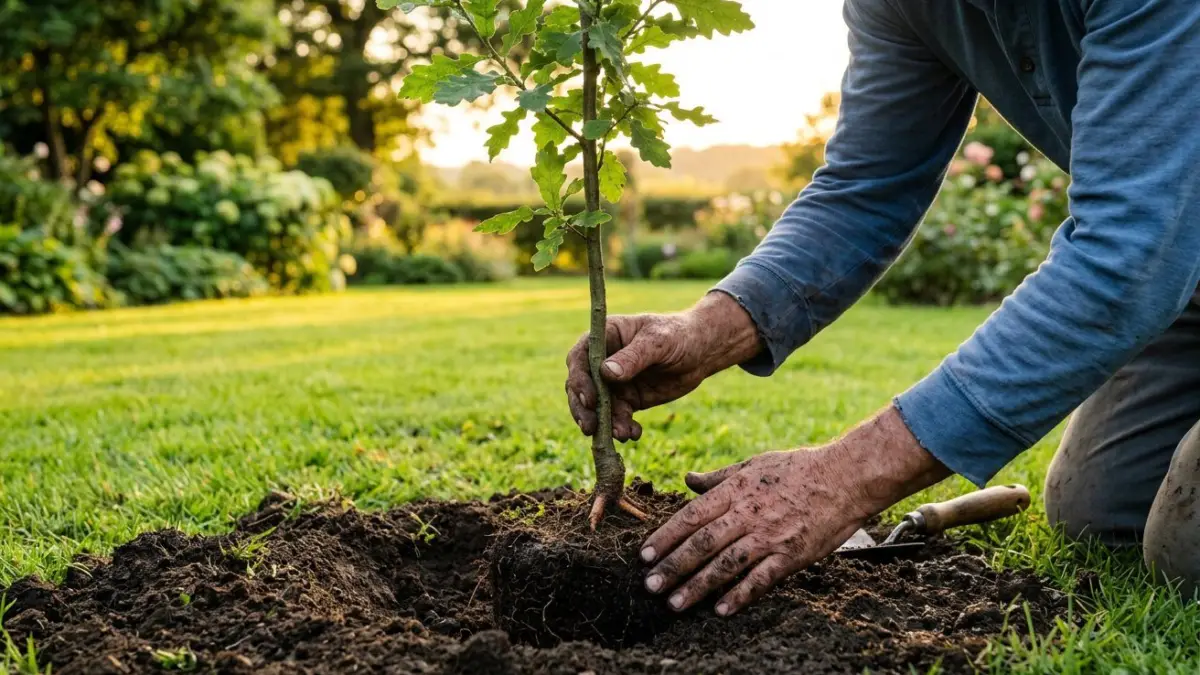
Plant exactly as described in our professional planting guide, with the flare visible. Water deeply weekly for the first year — fruit trees bolt upright growth or fruit only when water is steady. Hold fertilizer until the tree has visibly taken, then feed lightly per our feeding guide.

Common Mistakes to Avoid

  • Letting a young tree fruit in year one — strip those fruits; the tree should build roots first.
  • Skipping thinning on peaches and plums — overloaded branches snap.
  • Ignoring birds; netting at color-change saves crops (more in our wildlife protection guide).

Frequently Asked Questions

Can fruit trees grow in pots?

Yes — dwarf citrus, figs and pomegranates fruit happily in 60–75 cm pots. Use the container setup from our pots and potting mix guide and never let them fully dry in summer.

How do I prune a young fruit tree?

Open the center to a goblet shape so sun reaches every branch — the cuts are simple, and shown step by step in our safe pruning guide.

Continue the orchard path: master pruning next, or return to the trees hub for the complete tree-care library.

The First-Year Calendar for fruit trees

New trees run on a twelve-month contract. Months 1–3: root ball moisture checks twice weekly; berm basin watering deep; zero fertilizer; mulch ring maintained. Months 4–6: weekly checks; first flush of growth inspected for pests; stakes inspected and loosened if tight. Months 7–9: heat is the exam — deep soaks at the first morning wilt, never daily sprinkles; no pruning beyond broken wood. Months 10–12: taper watering to train roots outward; remove stakes; first formative corrections only if a leader or crossing branch demands it.

The calendar’s quiet genius is subtraction: every month you successfully do less, the tree does more.

Reading Tree Stress Before It Shows for fruit trees

Trees telegraph trouble a season early to anyone reading: smaller-than-normal leaves mean roots struggling; early autumn color in late summer means stress banking; sparse bud set in spring announces last summer’s drought; epicormic shoots (sprouts along the trunk) mean the canopy is failing to feed itself. Walk each tree monthly with those four signals in mind — ten seconds per tree — and problems arrive as adjustments rather than emergencies.

The one signal that overrides everything: the flare. Soil or mulch creeping over it undoes years of health silently, so the monthly walk ends where the tree begins.

Deep Dive: What Experienced Growers Know About fruit trees

Year-one fruit is a trap: letting a young tree crop steals the growth that makes every future year productive. Strip the tiny fruit without sentiment — the tree converts that energy into roots and branches, and repays with interest. The exception proves the rule: a single fruit left to ripen on a three-year-old tree as a ‘test’ teaches ripeness timing without stressing the plant. Thinning in year two or three is the same principle — five fruit the size of a fist beat fifty the size of marbles on a broken branch.

Key Takeaways

  • Dripline: The ground circle under the outermost foliage where feeder roots concentrate.
  • Branch Collar: The swollen junction tissue holding the tree's sealing chemistry; cuts go outside it.
  • Compartmentalization: The process by which trees wall off decay behind chemical barriers.
  • Chill Hours: Winter hours below ~7°C that stone fruits count before spring bloom.

More Questions About Fruit Trees

Which fruit tree fruits fastest from planting?

Dwarf citrus and figs — often year two. Banana and papaya are faster 'trees' entirely, fruiting in 12–18 months where frost allows.

Do I really need two trees?

Only for cross-pollinizers — most apples, plums and some cherries. Citrus, figs, guavas and most peaches are self-fertile; one suffices.

What's the most common beginner orchard mistake?

Watering like a lawn — daily sprinkles. Fruit trees want deep weekly soaks and then slightly stressed, flavorful ripening.

Field Questions Answered

Can I plant under an established tree?

Only tough dry-shade plants, in raised pockets of compost — never dig into the root zone or the canopy's feeder roots pay for it.

How much does a tree actually drink?

A mature shade tree can transpire 200–400 liters on a hot day — the case for deep, infrequent watering that reaches, not sprinkles that tease.

When is a tree officially 'established'?

When it survives a normal dry spell without supplemental water — usually two to three seasons after planting.

Should I prune a newly planted tree to 'balance' it?

No — leaves feed the roots that establish it. Remove only broken or crossing wood; shaping waits for year two or three.

Common Mistakes to Avoid with Fruit Trees

  • Planting with the root flare buried under backfill or mulch.
  • Dug a deep narrow hole instead of a wide shallow one.
  • Staking tight and forgetting it — sway builds trunk taper; rigid stakes build dependency.
  • Amending only the planting hole, creating a pot in the ground roots refuse to leave.
  • Pruning more than a quarter of the canopy in one year, forcing weak regrowth.

Further Field Questions

How close can I plant a tree to a wall?

Half the mature canopy width, minimum — closer only with proven deep-rooted, well-mannered species like olive or crape myrtle.

Do trees need fertilizer every year?

Healthy trees in mulched soil usually feed themselves; feed only on a diagnosed deficiency. Fertilizer on stressed trees delays the real fix.

Can I plant under an established tree?

Only tough dry-shade plants, in raised pockets of compost — never dig into the root zone or the canopy's feeder roots pay for it.

How much does a tree actually drink?

A mature shade tree can transpire 200–400 liters on a hot day — the case for deep, infrequent watering that reaches, not sprinkles that tease.

When is a tree officially 'established'?

When it survives a normal dry spell without supplemental water — usually two to three seasons after planting.

Should I prune a newly planted tree to 'balance' it?

No — leaves feed the roots that establish it. Remove only broken or crossing wood; shaping waits for year two or three.

Further Field Questions

How close can I plant a tree to a wall?

Half the mature canopy width, minimum — closer only with proven deep-rooted, well-mannered species like olive or crape myrtle.

Do trees need fertilizer every year?

Healthy trees in mulched soil usually feed themselves; feed only on a diagnosed deficiency. Fertilizer on stressed trees delays the real fix.

Can I plant under an established tree?

Only tough dry-shade plants, in raised pockets of compost — never dig into the root zone or the canopy's feeder roots pay for it.

How much does a tree actually drink?

A mature shade tree can transpire 200–400 liters on a hot day — the case for deep, infrequent watering that reaches, not sprinkles that tease.

When is a tree officially 'established'?

When it survives a normal dry spell without supplemental water — usually two to three seasons after planting.

Should I prune a newly planted tree to 'balance' it?

No — leaves feed the roots that establish it. Remove only broken or crossing wood; shaping waits for year two or three.

Further Field Questions

How close can I plant a tree to a wall?

Half the mature canopy width, minimum — closer only with proven deep-rooted, well-mannered species like olive or crape myrtle.

Do trees need fertilizer every year?

Healthy trees in mulched soil usually feed themselves; feed only on a diagnosed deficiency. Fertilizer on stressed trees delays the real fix.

Can I plant under an established tree?

Only tough dry-shade plants, in raised pockets of compost — never dig into the root zone or the canopy's feeder roots pay for it.

How much does a tree actually drink?

A mature shade tree can transpire 200–400 liters on a hot day — the case for deep, infrequent watering that reaches, not sprinkles that tease.

When is a tree officially 'established'?

When it survives a normal dry spell without supplemental water — usually two to three seasons after planting.

Should I prune a newly planted tree to 'balance' it?

No — leaves feed the roots that establish it. Remove only broken or crossing wood; shaping waits for year two or three.

Further Field Questions

How close can I plant a tree to a wall?

Half the mature canopy width, minimum — closer only with proven deep-rooted, well-mannered species like olive or crape myrtle.

Do trees need fertilizer every year?

Healthy trees in mulched soil usually feed themselves; feed only on a diagnosed deficiency. Fertilizer on stressed trees delays the real fix.

Can I plant under an established tree?

Only tough dry-shade plants, in raised pockets of compost — never dig into the root zone or the canopy's feeder roots pay for it.

How much does a tree actually drink?

A mature shade tree can transpire 200–400 liters on a hot day — the case for deep, infrequent watering that reaches, not sprinkles that tease.

When is a tree officially 'established'?

When it survives a normal dry spell without supplemental water — usually two to three seasons after planting.

Should I prune a newly planted tree to 'balance' it?

No — leaves feed the roots that establish it. Remove only broken or crossing wood; shaping waits for year two or three.

Further Field Questions

How close can I plant a tree to a wall?

Half the mature canopy width, minimum — closer only with proven deep-rooted, well-mannered species like olive or crape myrtle.

Do trees need fertilizer every year?

Healthy trees in mulched soil usually feed themselves; feed only on a diagnosed deficiency. Fertilizer on stressed trees delays the real fix.

Can I plant under an established tree?

Only tough dry-shade plants, in raised pockets of compost — never dig into the root zone or the canopy's feeder roots pay for it.

How much does a tree actually drink?

A mature shade tree can transpire 200–400 liters on a hot day — the case for deep, infrequent watering that reaches, not sprinkles that tease.

When is a tree officially 'established'?

When it survives a normal dry spell without supplemental water — usually two to three seasons after planting.

Should I prune a newly planted tree to 'balance' it?

No — leaves feed the roots that establish it. Remove only broken or crossing wood; shaping waits for year two or three.

Further Field Questions

How close can I plant a tree to a wall?

Half the mature canopy width, minimum — closer only with proven deep-rooted, well-mannered species like olive or crape myrtle.

Do trees need fertilizer every year?

Healthy trees in mulched soil usually feed themselves; feed only on a diagnosed deficiency. Fertilizer on stressed trees delays the real fix.

Can I plant under an established tree?

Only tough dry-shade plants, in raised pockets of compost — never dig into the root zone or the canopy's feeder roots pay for it.

How much does a tree actually drink?

A mature shade tree can transpire 200–400 liters on a hot day — the case for deep, infrequent watering that reaches, not sprinkles that tease.

When is a tree officially 'established'?

When it survives a normal dry spell without supplemental water — usually two to three seasons after planting.

Should I prune a newly planted tree to 'balance' it?

No — leaves feed the roots that establish it. Remove only broken or crossing wood; shaping waits for year two or three.