Quick answers
- Why are my plant's lower leaves turning yellow?
- Most often overwatering or a nitrogen shortage. Check soil moisture first; if it is soggy, reduce watering. If soil is fine, feed lightly.
- What causes brown, crispy leaf tips?
- Dry air, inconsistent watering, salt build-up from fertiliser or tap water, or root damage. Flush the pot with clean water and keep moisture steady.
- Why is my plant tall, pale and leggy?
- Not enough light. The plant is stretching toward a light source. Move it to a brighter spot or add a grow light.
- Are curled leaves always a bad sign?
- Not always. Curling can protect from heat and wind, but persistent curling usually points to underwatering, pests such as aphids or herbicide drift.
Key takeaways
- Look at the whole plant, not one leaf. Pattern and position tell you the cause.
- Old leaves show mobile nutrient problems; new leaves show immobile ones.
- Check the basics first: light, water, drainage and temperature.
- Inspect under leaves and along stems for pests before you reach for sprays.
- Change one thing at a time so you know what worked.
- Keep a log with photos. Slow changes are easier to see side by side.
Table of contents10 sections
Plants cannot call for help, but they are far from silent. Leaf colour, shape, posture and growth rate form a continuous report on light, water, roots, nutrients and pests. The skill is learning to read it early. A yellow leaf is information, not a verdict, and by the time a plant collapses, the real problem has been visible for weeks.
This guide gives you a systematic way to diagnose problems, a table of common symptoms and the likely causes. It belongs to the Plant Growing Fundamentals pillar. For pest and disease identification in more depth, see Pests & Diseases; for houseplants specifically, see Indoor Plants.
A four-step diagnostic routine
- Look at the pattern. Is it old leaves or new? One side of the plant or all over? Between veins or along edges? Uniform patterns suggest environmental causes; patchy ones suggest pests or disease.
- Check the soil. Push a finger in. Is it soggy, bone dry or evenly moist? Lift the pot. Smell the soil; sour or swampy means rot.
- Check the roots if in doubt. Slide the plant from its pot. Healthy roots are pale and firm. Brown, mushy or smelly roots confirm overwatering or poor drainage.
- Inspect leaves closely. Look at the undersides, new growth and stem joints with a hand lens or phone camera for aphids, mites, scale and fungal spots.
Rule of thumb: when a plant looks unwell, suspect water, then light, then pests, then nutrition, in that order. Many gardeners start at the end of the list and waste time and money on fertiliser.
Quick symptom guide
| Symptom | Common causes | First action |
|---|---|---|
| Lower leaves yellow, soft | Overwatering; nitrogen deficiency; natural ageing | Check soil moisture and drainage; feed if soil is fine |
| Leaves pale overall, slow growth | Low light; low nitrogen | Move to brighter spot; apply balanced feed |
| Yellow between green veins on new leaves | Iron deficiency, often high-pH soil or waterlogging | Fix drainage; use chelated iron or acidifying feed |
| Yellow between veins on old leaves | Magnesium deficiency | Apply Epsom salt solution (1 tbsp per litre) |
| Brown, crispy tips and edges | Dry air; inconsistent watering; fertiliser or salt build-up | Flush with water; water consistently; raise humidity |
| Brown spots with yellow halo | Fungal or bacterial leaf spot | Remove affected leaves; keep foliage dry; improve airflow |
| Purple or reddish leaves | Phosphorus shortage in cold soil; cold nights; some varieties are naturally purple | Wait for warmth; check soil temperature |
| Leaves curl or cup | Heat, wind, underwatering, aphids, herbicide drift | Check moisture and the undersides of leaves |
| Wilting with wet soil | Root rot; overwatering | Check roots; repot into fresh, drier mix |
| Wilting with dry soil | Underwatering | Soak thoroughly, then monitor |
| Tall, pale, floppy growth | Insufficient light | Increase light; rotate pot weekly |
| White powdery coating | Powdery mildew | Improve airflow; remove badly affected leaves; spray with diluted milk or potassium bicarbonate |
| Sticky leaves, black soot | Aphids, scale or whitefly (honeydew) | Wipe or spray with soapy water; check undersides |
| Flowers drop or no fruit | Temperature extremes; irregular watering; lack of pollination | Stabilise water; attract pollinators; shade in extreme heat |
Mobile versus immobile nutrients
One of the most useful ideas in diagnosis is that plants move some nutrients around and not others. Nitrogen, phosphorus, potassium and magnesium are mobile: when supplies are short, the plant pulls them out of old leaves to feed new growth, so symptoms show on older, lower leaves first. Calcium, iron, sulphur and boron are immobile: once placed in a leaf they stay, so shortages appear on new growth. This simple rule narrows the possibilities quickly.
However, nutrient problems are less common than watering or pH problems in practice. Waterlogged or cold roots cannot absorb nutrients even when soil is rich, which is why fixing water and drainage often cures “deficiencies” without fertiliser. Learn more about feeding in Soil, Water & Fertilizer.
Reading light
- Too little: long gaps between leaves, small pale leaves, leaning towards the window, no flowers.
- Too much: bleached, scorched or papery patches facing the sun; leaves rolling; soil drying very fast.
- Just right: compact growth, rich leaf colour, steady new leaves.
Reading water
Overwatering and underwatering can look alike: both cause wilting and yellowing. Soil tells them apart. See Watering Plants the Right Way for the full comparison. Whenever you suspect root problems, check the roots instead of guessing.
Reading temperature and environment
- Cold: purple tints, slow growth, leaf drop in tender plants.
- Heat: wilting at midday, flowers dropping, leaf edge scorch.
- Draughts and sudden changes: leaf drop in houseplants such as ficus and gardenia.
- Low humidity: brown tips, especially on tropical foliage plants.
When it is a pest or disease
Look for clues: tiny insects, webbing, sticky residue, holes, trails, spots with concentric rings, or fuzzy coating. Isolate the plant, wipe or rinse leaves, and start with the least toxic option, such as a spray of mild soap and water. Our Pests & Diseases pillar explains organic treatments and prevention.
Mistakes to head off early
- Fertilising a sick plant, which can burn already stressed roots
- Changing several things at once so you cannot tell what worked
- Removing too many leaves at once
- Misreading natural leaf drop (older leaves) as a problem
- Giving up too early; recovery takes weeks, not days
Small habits that pay off
- Take a photo of every plant each month. Slow decline becomes obvious.
- Keep a magnifying glass or phone macro lens near the plants.
- Remove dead leaves to reduce disease and see new growth clearly.
- Give a plant at least two weeks after a change before you judge the result.
Related guides worth your time
Most problems trace back to watering, potting mix or early care. Plan healthier beds with the first garden plan. Back to Plant Growing Fundamentals.
More in Plant Growing Guides

The First Garden Plan: What to Plant Where, for Beginners
A realistic, beginner-proof plan for your first garden: choosing a site, sizing a bed, picking easy crops and flowers, and a simple layout and schedule you…
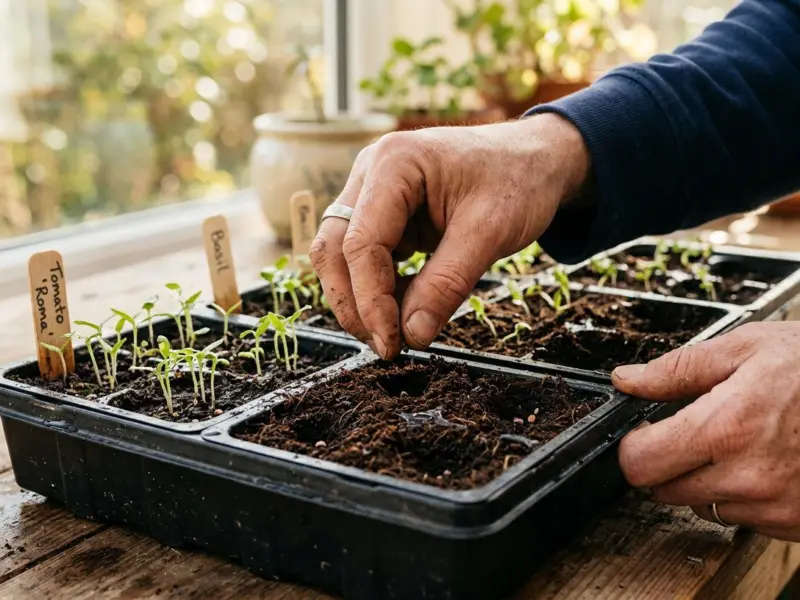
How to Plant Seeds Step by Step (Complete Beginner Guide)
Learn exact seed-sowing depth, spacing, timing and aftercare so more of your seeds actually grow, a foolproof step-by-step method for beginners.
How to Transplant Seedlings Without Killing Them
Harden off, timing, root handling and aftercare, everything you need to move seedlings from tray to garden with zero transplant shock.