Quick answers
- How can I tell if my tree is diseased or just stressed?
- Stress (drought, waterlogging, planting too deep) tends to affect the whole tree evenly. Disease often shows as patches: spots, cankers, one dying branch, oozing, or fuzzy growth. Check watering and planting depth first.
- Do I need to spray every tree disease?
- No. Most leaf diseases (leaf spot, powdery mildew, apple scab) rarely kill a mature tree. Raking up fallen leaves and pruning for air flow solves most cases without sprays.
- When should I call a professional arborist?
- When a large tree has a dying limb over a house or path, fungal brackets growing on the trunk, deep cankers, a leaning trunk, or any disease listed as notifiable in your area (such as fire blight in some regions).
- Should I paint pruning wounds with sealant?
- No. Research shows wound dressings do not prevent disease and can trap moisture. Make clean cuts at the branch collar and let the tree seal itself.
Key takeaways
- Diagnose before you treat. Many "diseases" are watering or planting-depth problems.
- Sanitation beats sprays. Rake leaves, remove cankered wood and disinfect tools.
- Air flow is prevention. Thin crowded canopies so leaves dry quickly after rain.
- Healthy trees resist disease. Mulch, water deeply and never pile soil on the trunk.
- Know the serious ones. Fire blight, honey fungus and Phytophthora root rot need fast, firm action.
- Copper and sulphur sprays are organic but not harmless. Use them sparingly and read the label.
Table of contents9 sections
Trees are tougher than most people fear. A healthy tree carries a number of fungi and bacteria all its life without harm, and many leaf spots that look alarming in late summer vanish after leaf fall. The real skill is separating the cosmetic from the serious, and then using the simplest effective treatment.
This guide shows how to identify the common tree diseases and treat them organically. It is part of the Trees pillar, builds on Plant Diseases: Identify and Treat the Big Five and works with the planting advice in How to Plant a Tree Properly.
Step one: rule out stress
Before you blame a pathogen, look at conditions. Most tree decline starts with a stressor that weakens defences and lets disease in.
- Planted too deep: the root flare (where the trunk widens) should be visible above soil.
- Waterlogging or drought: yellow leaves and early leaf drop point to roots, not leaves.
- Mulch against the trunk: volcano mulching keeps bark wet and invites rot.
- Mechanical damage: strimmer and mower wounds at the base are the commonest trunk injuries.
- Soil compaction and construction: roots suffocate under compacted or paved areas.
Common tree diseases at a glance
| Disease | What you see | Trees affected | Seriousness |
|---|---|---|---|
| Leaf spot / anthracnose | Brown or black spots, sometimes yellow rims; early leaf drop | Maples, oaks, sycamore, dogwood, many others | Cosmetic in most years |
| Powdery mildew | White powdery coating on leaves | Apple, crabapple, lilac, oak, maple | Cosmetic to moderate |
| Apple scab | Olive-brown scabs on leaves and fruit | Apple, crabapple, pear | Moderate; spoils fruit |
| Rust | Orange pustules on leaf undersides | Pear, hawthorn, juniper, poplar | Cosmetic to moderate |
| Canker | Sunken, cracked or oozing patches on bark; dieback beyond | Plum, cherry, poplar, many ornamentals | Serious on stressed trees |
| Fire blight | Shoot tips wilt into a “shepherd’s crook”, leaves turn black as if scorched | Pear, apple, hawthorn, cotoneaster | Very serious |
| Honey fungus | White fungal sheets under bark, black bootlace strands, honey-coloured mushrooms | Almost any tree or shrub | Very serious; kills roots |
| Phytophthora root rot | Thin canopy, wilting, dark oozing at the base | Many; common on wet soils | Serious |
| Bracket fungi | Shelf-like growths on trunk or roots | Mature trees | Indicates internal decay; call an arborist |
Organic treatment, step by step
- Remove the source. Rake and dispose of fallen infected leaves each autumn. Do not compost badly infected material unless your pile reaches 55°C or more.
- Prune out infection. Cut out diseased wood back to healthy tissue. Disinfect secateurs with 70% alcohol between cuts, and cut in dry weather.
- Improve air flow. Thin crossing branches so the crown dries quickly after rain; most fungal diseases need leaf wetness to spread.
- Fix the roots. Correct drainage, remove soil from the trunk base, replace compacted soil with mulch and water deeply in drought (see Tree Watering & Mulching).
- Spray only if needed. For serious repeated problems on small trees, use organic-approved products such as sulphur for scab and mildew, or copper in dormancy for canker and leaf curl. Follow the label exactly and spray in cool, still weather.
- Choose resistant varieties when you replant. Disease-resistant apples, pears and cherries exist and save years of trouble.
Fire blight: cut fast, cut clean
Fire blight is a bacterial disease that moves rapidly through blossoms into branches. At first sight of blackened, crooked shoots, cut at least 30 cm (12 in) below the visible damage into healthy wood, in dry weather. Disinfect tools after every cut and burn or bag the clippings. Do not wait: delay lets the disease reach the trunk. In some regions it must be reported to the plant health authority.
Honey fungus and root rot
These attack the roots, which is why the canopy thins long before anything looks wrong. There is no organic cure. The aim is to slow spread and protect nearby plants.
- Remove infected stumps and as many roots as you can.
- Install a vertical barrier of heavy plastic 45 cm deep around valuable plants to block rhizomorphs.
- Replant with resistant species such as hornbeam, yew, box and ginkgo.
- Improve drainage and avoid planting susceptible trees where water pools.
When the tree is a safety risk
A tree with fungal brackets on the trunk, deep splits, a lean that has changed, or dead limbs over a roof or path should be checked by a qualified arborist before the next storm. Decay inside a trunk can be invisible from the ground.
What usually goes wrong
- Painting wounds with sealants, which trap moisture
- Spraying fungicide on a stressed tree without fixing the root cause
- Pruning in wet weather, which spreads spores and bacteria
- Leaving diseased prunings or fallen leaves under the tree
- Mulching against the trunk
Practical tips from experience
- Photograph symptoms and the date. Disease timing helps with diagnosis.
- Take a sealed bag of fresh leaves or bark to a local plant clinic when unsure.
- Dormant-season cleanup (leaves, mummified fruit, cankered twigs) halves problems the following year.
Related guides worth your time
Build tree health from the ground up with Soil, Water & Fertilizer, learn the cutting skill in How to Prune Trees Safely and prevent problems early with the Master Guide to Preventing Garden Problems. Return to Trees: Planting & Care.
More in Trees
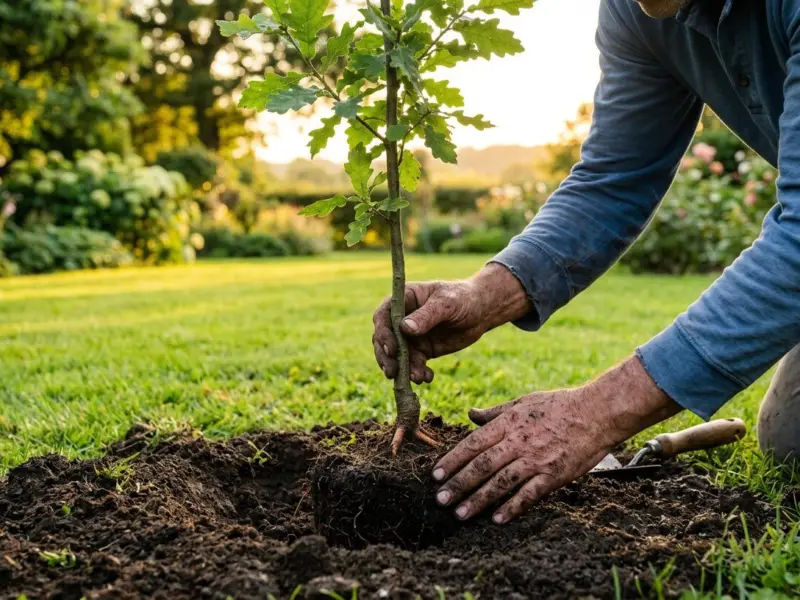
How to Plant a Tree Properly (The 10-Minute Professional Method)
Most trees die from being planted too deep. Learn the exact hole size, root-flare rule, staking and aftercare that nursery professionals actually use.
Best Shade Trees for Home Gardens (Fast, Clean, Beautiful)
The smartest shade trees for yards: fast growers that don't crack pipes, drop sticky fruit on cars, or eat your water bill, plus how to match…
Fruit Trees for Beginners: 7 That Almost Grow Themselves
Which fruit trees forgive beginner mistakes, how many years to first harvest, chill hours and pollination decoded: start your orchard the smart way.