How to Transplant Seedlings Without Killing Them

Transplant shock turns promising seedlings into sulking, purple-stunted plants — but it is almost entirely preventable. The secret is to treat the move as a gradual holiday, not a sudden house shift.

The Golden Rules of Transplanting

  • Harden off for 7–10 days before the move
  • Transplant in the evening or on a cloudy day
  • Handle by leaves, never by the fragile stem
  • Water before and after — never move a dry seedling

Step 1 — Harden Off (The Step Everyone Skips)

Indoor-grown seedlings have soft leaves that sun and wind scorch easily. For a week, put them outside for 2–3 hours in dappled shade, adding an hour of direct exposure each day. By day seven they should tolerate a full afternoon outdoors. This one week of patience prevents weeks of stunted regrowth.

Step 2 — Prepare the Hole Before You Lift

Dig holes first, water them, and mix a handful of compost into each. Pre-warmed, moist soil eases roots in. If you are planting into beds, review our soil type guide to match amendments to your ground.

Step 3 — Lift and Plant at the Same Depth

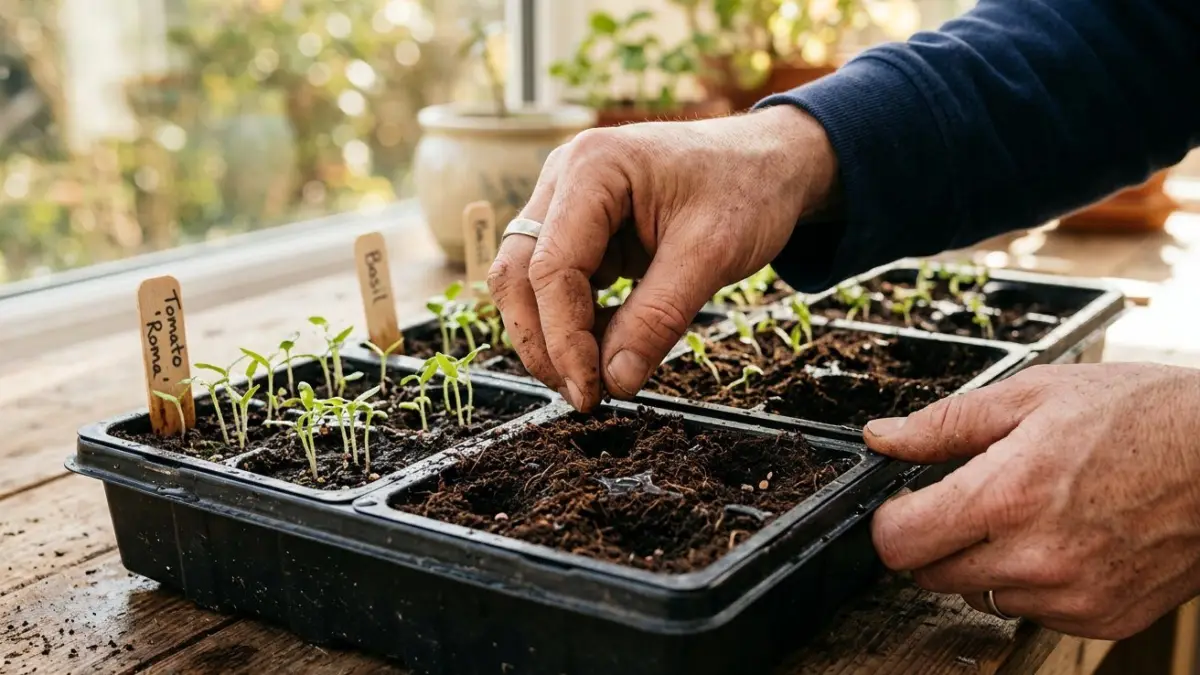
Squeeze the tray, tip the seedling into your palm, and let it release naturally. Tomatoes are the famous exception — bury them up to their top leaves, because they grow roots along any buried stem. Firm soil around the root ball gently and water in with a diluted seaweed or transplant solution to speed root recovery.

Step 4 — Shade and Steady Moisture for 3 Days

Give transplants a cloth shade or upturned pot for two or three mid-days. Keep the soil consistently moist — one wilting event now costs a week of growth. This is exactly where our correct watering method pays off.

Common Mistakes to Avoid

  • Moving leggy, overcrowded seedlings — thin them first with help from our seed sowing guide.
  • Transplanting at noon in full sun — always choose evening.
  • Forgetting root disturbance differs by crop: beans, zinnias and squash hate it; use peat or coco pots for them.

Frequently Asked Questions

My transplanted seedlings are wilting — did I kill them?

Probably not. Mild evening wilt is normal for 24–48 hours. If they perk up at night, they are recovering. Persistent morning wilt means the roots dried out; shade them and water steadily.

When exactly should I transplant vegetables?

After the last frost for warm-season crops (tomato, pepper, basil) and while weather is still cool for peas, spinach and pansies. The safest schedule lives in our seasonal planting calendar.

Continue the path: see the full plant growing guides hub, then learn propagation by cuttings to multiply your plants for free.

The Observation Habit That Grows with transplanting

Gardening’s deepest skill is noticing. The trained eye reads a leaf’s angle before its color, soil’s smell before its texture, and a plant’s posture before either. Build the habit with three anchors: same walking route, same time of day, one written line per walk. Within a month the route becomes a baseline — you will spot the droop, the yellow freckle, the chewed edge, days before a casual glance would.

Photography sharpens it further: one photo per plant per week, same angle. The camera holds weeks still for comparison in a way memory will not, and the archive becomes your personal field guide — every past mistake annotated, every recovery documented, every variety’s habits recorded for next season’s smarter choices.

Water Logic for transplanting

Plant stage Soil check Water move
Seed sown, not sprouted Surface never dry Mist twice daily or bottom-soak trays
Seedling, true leaves showing Top 1 cm dry Gentle can, daily-ish in heat
Established in bed Top 4 cm dry Deep soak, then wait
Flowering/fruiting Never swings Steady rhythm — swings cost the crop
Dormant/cool season Barely moist Long gaps; check before pouring

Print this table, tape it inside the shed door, and override it only with your own finger’s verdict. Water is the variable gardeners control most often and understand least; the table turns it into a lookup instead of a guess.

Deep Dive: What Experienced Growers Know About transplanting

Root:shoot ratio explains every transplant rule at once. A seedling’s leaves demand water its small root system can barely supply; hardening off slows leaf demand (tougher cuticle, smaller cells) while root pruning-by-wind thickens the supply side. Evening transplanting then extends the recovery window by twelve root-working hours. The plants that sulk despite this are usually root-bound in cells — roots circling so tightly they cannot pick up water even in moist soil. Tease or slice the ball before planting; the one-minute intervention rescues weeks.

Key Takeaways

  • True Leaves: The second-generation leaves that look like the adult plant; a transplant-readiness signal.
  • Damping Off: Fungal collapse of seedlings at the soil line; prevented by airflow, clean media and careful water.
  • Hardening Off: Gradual outdoor acclimation that thickens cuticles and conditions roots before transplanting.
  • Node: The stem junction where leaves, buds and roots originate — the only place a cutting roots.

More Questions About Transplanting

Can I transplant in full sun if I shade them?

Yes with a cloth shade for three days and steady moisture — but evening is still easier on both of you.

Which crops truly hate transplanting?

Root crops (carrot, beet) and beans, squash, zinnias — direct-sow them or use biodegradable pots that plant whole.

How long does transplant shock last?

Mild sulk: two to three days. A week of persistent morning wilt means roots dried or were damaged — shade, steady water, wait.

Field Questions Answered

What time of day is best for sowing?

Evening for outdoor beds — seeds settle overnight in cool moisture. Indoor trays don't care; consistency beats timing.

Can I reuse seed trays every year?

Yes after scrubbing and a 10% bleach or hydrogen-peroxide soak — damping-off pathogens persist in last year's grime.

Why do seedlings need a fan?

Gentle air movement stiffens stems, dries foliage, and prevents fungal pockets — the cheapest 'hardening' that works indoors from day one.

How do I water seedlings on vacation?

Bottom-water trays in a shallow bath, or capillary mats. A week is survivable; ten days needs a plant-sitter or self-watering setup.

Common Mistakes to Avoid with Transplanting

  • Sowing the entire packet at once and thinning never — crowded seedlings share one small shadow.
  • Using garden soil in trays: compaction plus damping-off organisms in one move.
  • Skipping hardening off because the seedlings look strong — leaves lie until the first full-sun afternoon.
  • Watering on autopilot instead of by finger test; calendars have never met your soil.
  • Burying the root flare of transplants and trees — suffocation on a years-long fuse.

Further Field Questions

How long should a seedling stay in its tray?

Until its second set of true leaves — roots filling the cell but not circling. Holding longer stunts; moving earlier wastes the tray's protection.

What time of day is best for sowing?

Evening for outdoor beds — seeds settle overnight in cool moisture. Indoor trays don't care; consistency beats timing.

Can I reuse seed trays every year?

Yes after scrubbing and a 10% bleach or hydrogen-peroxide soak — damping-off pathogens persist in last year's grime.

Why do seedlings need a fan?

Gentle air movement stiffens stems, dries foliage, and prevents fungal pockets — the cheapest 'hardening' that works indoors from day one.

How do I water seedlings on vacation?

Bottom-water trays in a shallow bath, or capillary mats. A week is survivable; ten days needs a plant-sitter or self-watering setup.

Is bottom heat worth it for every seed?

Only warm-season crops — peppers and tomatoes halve germination time; lettuce and peas prefer cool and sprout anyway.

Further Field Questions

How long should a seedling stay in its tray?

Until its second set of true leaves — roots filling the cell but not circling. Holding longer stunts; moving earlier wastes the tray's protection.

What time of day is best for sowing?

Evening for outdoor beds — seeds settle overnight in cool moisture. Indoor trays don't care; consistency beats timing.

Can I reuse seed trays every year?

Yes after scrubbing and a 10% bleach or hydrogen-peroxide soak — damping-off pathogens persist in last year's grime.

Why do seedlings need a fan?

Gentle air movement stiffens stems, dries foliage, and prevents fungal pockets — the cheapest 'hardening' that works indoors from day one.

How do I water seedlings on vacation?

Bottom-water trays in a shallow bath, or capillary mats. A week is survivable; ten days needs a plant-sitter or self-watering setup.

Is bottom heat worth it for every seed?

Only warm-season crops — peppers and tomatoes halve germination time; lettuce and peas prefer cool and sprout anyway.

Further Field Questions

How long should a seedling stay in its tray?

Until its second set of true leaves — roots filling the cell but not circling. Holding longer stunts; moving earlier wastes the tray's protection.

What time of day is best for sowing?

Evening for outdoor beds — seeds settle overnight in cool moisture. Indoor trays don't care; consistency beats timing.

Can I reuse seed trays every year?

Yes after scrubbing and a 10% bleach or hydrogen-peroxide soak — damping-off pathogens persist in last year's grime.

Why do seedlings need a fan?

Gentle air movement stiffens stems, dries foliage, and prevents fungal pockets — the cheapest 'hardening' that works indoors from day one.

How do I water seedlings on vacation?

Bottom-water trays in a shallow bath, or capillary mats. A week is survivable; ten days needs a plant-sitter or self-watering setup.

Is bottom heat worth it for every seed?

Only warm-season crops — peppers and tomatoes halve germination time; lettuce and peas prefer cool and sprout anyway.

Further Field Questions

How long should a seedling stay in its tray?

Until its second set of true leaves — roots filling the cell but not circling. Holding longer stunts; moving earlier wastes the tray's protection.

What time of day is best for sowing?

Evening for outdoor beds — seeds settle overnight in cool moisture. Indoor trays don't care; consistency beats timing.

Can I reuse seed trays every year?

Yes after scrubbing and a 10% bleach or hydrogen-peroxide soak — damping-off pathogens persist in last year's grime.

Why do seedlings need a fan?

Gentle air movement stiffens stems, dries foliage, and prevents fungal pockets — the cheapest 'hardening' that works indoors from day one.

How do I water seedlings on vacation?

Bottom-water trays in a shallow bath, or capillary mats. A week is survivable; ten days needs a plant-sitter or self-watering setup.

Is bottom heat worth it for every seed?

Only warm-season crops — peppers and tomatoes halve germination time; lettuce and peas prefer cool and sprout anyway.

Further Field Questions

How long should a seedling stay in its tray?

Until its second set of true leaves — roots filling the cell but not circling. Holding longer stunts; moving earlier wastes the tray's protection.

What time of day is best for sowing?

Evening for outdoor beds — seeds settle overnight in cool moisture. Indoor trays don't care; consistency beats timing.

Can I reuse seed trays every year?

Yes after scrubbing and a 10% bleach or hydrogen-peroxide soak — damping-off pathogens persist in last year's grime.

Why do seedlings need a fan?

Gentle air movement stiffens stems, dries foliage, and prevents fungal pockets — the cheapest 'hardening' that works indoors from day one.

How do I water seedlings on vacation?

Bottom-water trays in a shallow bath, or capillary mats. A week is survivable; ten days needs a plant-sitter or self-watering setup.

Is bottom heat worth it for every seed?

Only warm-season crops — peppers and tomatoes halve germination time; lettuce and peas prefer cool and sprout anyway.

Further Field Questions

How long should a seedling stay in its tray?

Until its second set of true leaves — roots filling the cell but not circling. Holding longer stunts; moving earlier wastes the tray's protection.

What time of day is best for sowing?

Evening for outdoor beds — seeds settle overnight in cool moisture. Indoor trays don't care; consistency beats timing.

Can I reuse seed trays every year?

Yes after scrubbing and a 10% bleach or hydrogen-peroxide soak — damping-off pathogens persist in last year's grime.

Why do seedlings need a fan?

Gentle air movement stiffens stems, dries foliage, and prevents fungal pockets — the cheapest 'hardening' that works indoors from day one.

How do I water seedlings on vacation?

Bottom-water trays in a shallow bath, or capillary mats. A week is survivable; ten days needs a plant-sitter or self-watering setup.

Is bottom heat worth it for every seed?

Only warm-season crops — peppers and tomatoes halve germination time; lettuce and peas prefer cool and sprout anyway.