Soil pH Explained: Why It Unlocks (or Locks) Your Garden

Soil pH is the least glamorous number in gardening and the one that decides most others. At the wrong pH, fertilizers sit locked in the soil like money in a vault with no key. At the right pH, even modest feeding performs. Here is the whole story in plain language.

The pH Map

  • 6.0–7.0: the sweet spot where nearly all nutrients unlock
  • Below 6.0 (acidic): calcium, magnesium lock out
  • Above 7.5 (alkaline): iron, manganese, phosphorus lock out
  • Acid-lovers: azalea, gardenia, blueberry, camellia (4.5–5.5)

Test Before You Treat

A cheap liquid test kit or digital meter from any garden store reads pH in minutes; lab tests add precision and nutrient profiles. Sample from several spots at root depth (10–15 cm), mix, and test the blend — single-spot tests mislead. Note that soil near concrete walls often reads alkaline from lime leaching, and that new-build soils are routinely disturbed and misnumbered.

Reading the Symptoms

Classic pH trouble has a signature: young leaves yellow with green veins in alkaline soil is iron lockout — hydrangeas and gardenias announce it first. Overall pale, stunted growth in acidic soil suggests locked calcium and magnesium. Before buying more fertilizer, cross-check the pattern with the diagnosis method in our problem guide — the leaves testify the same way indoors and out.

Moving pH — Gently

To raise pH (make alkaline)

Garden lime, worked in and retested after a season. Fine lime acts faster; pellets last longer.

To lower pH (make acid)

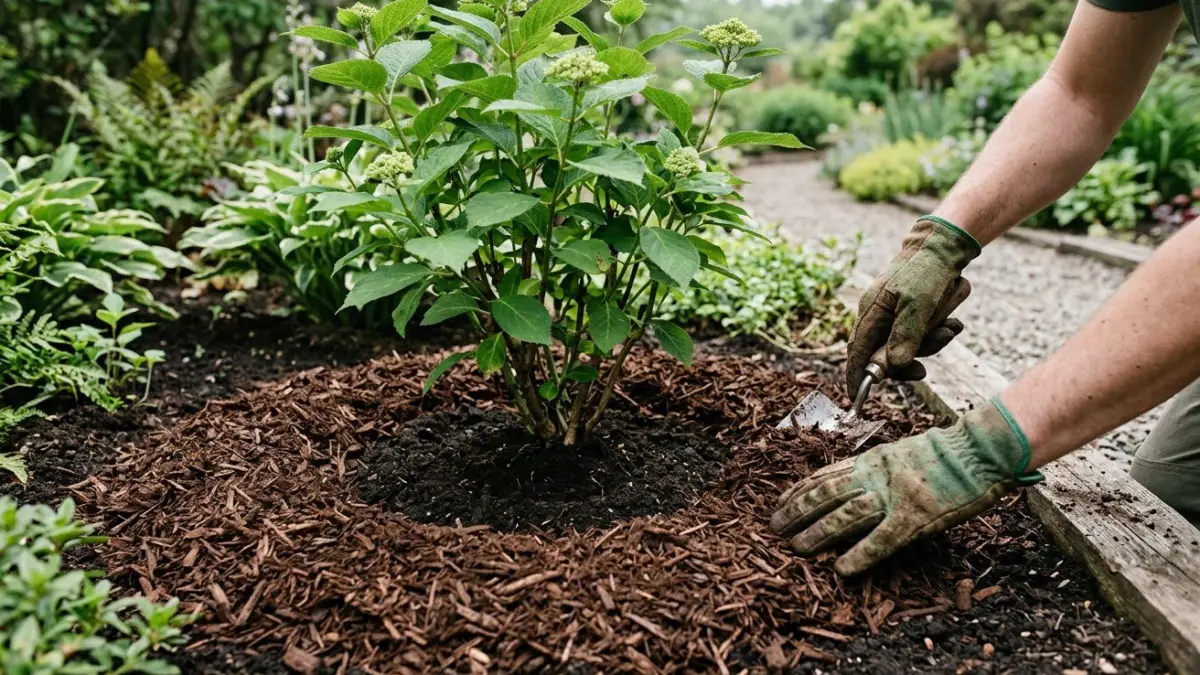
Elemental sulfur (slow, lasting) or acidifying mulches — pine needles, oak leaf mold, peat alternatives. Acid-lovers prefer steady acidic feeding per our fertilizer guide over one dramatic correction.

Shifts take months; retest seasonally and expect drift — irrigation water in dry climates pushes soil alkaline over the years, one reason the irrigation guide discusses water quality.

Common Mistakes to Avoid

  • Adding lime “just because” — overshooting locks a new set of nutrients.
  • Chasing pH for acid-lovers planted in chalky soil — grow them in pots with the mix strategy from our container guide instead.
  • Testing right after fertilizer or lime application — wait weeks for a true reading.

Frequently Asked Questions

Do pH meters from the drugstore work?

The cheap probe meters are unreliable; liquid kits and lab tests are honest. Calibrate any digital meter with buffer solutions and keep probes moist.

Why won’t my blueberries survive no matter what?

Almost certainly alkaline soil or water. Blueberries need 4.5–5.5 — in most warm climates they thrive only in large pots of ericaceous mix, per our container methods.

Next in the hub: feed with understanding via organic vs synthetic fertilizers, or see the whole soil, water and fertilizer hub.

The Irrigation Walk-Through for soil pH

Monthly, walk the system end to end in fifteen minutes: filter opened and rinsed, first and last emitter compared (rate mismatch = pressure or clog), line ends flushed until clear, timer battery and program checked against the season, and one probe-test at the far bed to confirm depth wetted. Log runtimes and rainfall beside the timer.

The walk’s payoff is invisible until the heatwave, when the system that was verified keeps watering while the system that was assumed quietly strangles its far end.

The Amendment Safety Rules for soil pH

Soil amendments are medicine — dosing matters. Compost: 2–3 cm top-dressing, up to 30% of a bed’s volume when digging new; more ties up nitrogen and loads phosphorus. Lime and sulfur: only after a test, only in the dose the test names, only retested after a season. Manure: composted or aged, never fresh on food beds. Wood ash: a liming agent, not a generic fertilizer — alkaline soils get worse, not better.

The meta-rule: change one variable, measure one season. Soil rewards patience with compounding and punishes enthusiasm with lockout.

Deep Dive: What Experienced Growers Know About soil pH

Local water writes your soil’s pH story over years: hard, alkaline tap water pushes soils upward season by season, which is why beds that tested fine three years ago now lock out iron. Test every two to three years, and collect rainwater for the acid-loving plants where water is hard. The chlorosis pattern — young leaves yellow, veins green — is the tell that pH drifted, not that fertilizer ran out.

Key Takeaways

  • Perched Water: Saturated layer above a texture change; why pots and layered soils drain oddly.
  • Lockout: Nutrients present but chemically unavailable due to wrong pH.
  • Npk: Nitrogen (leaves), phosphorus (roots/bloom), potassium (vigor) — the label's job codes.
  • Aerated Tea: Compost brew oxygenated 24–36 hours to multiply aerobic microbes.

More Questions About Soil Ph

How fast can I lower pH?

Elemental sulfur works over months; sulfate-based feeds nudge faster. Retest after a season — overshooting creates the opposite lockout.

Do coffee grounds acidify soil?

Modestly and temporarily — used grounds are near-neutral; their value is organic matter. For real acidification: sulfur, pine mulch, ericaceous feed.

Can I ignore pH with enough fertilizer?

No — the vault stays locked regardless of deposits. pH decides availability; fertilizer only adds to what the soil can release.

Field Questions Answered

Is rainwater really better for plants?

Yes — soft, slightly acidic, unchlorinated, and at ambient temperature. Every collector pays for itself in seedling health and acid-loving plants.

What's the fastest legal way to compost?

Hot composting: one cubic meter minimum, finely chopped materials, balanced greens-browns, turned weekly — finished in 6–10 weeks.

Can I fertilize and water at once?

Yes — fertigation through dilute feed in the watering can suits containers especially. Half-strength, weekly, after a plain-water flush monthly.

How deep should mulch be on clay vs sand?

Clay: 5 cm — thicker stays wet too long. Sand: up to 8 cm — every millimeter of protection counts against the strainer effect.

Common Mistakes to Avoid with Soil Ph

  • Working clay soil wet — one spadeful bakes into pottery for the season.
  • Sand plus clay 'to fix' clay: the recipe is brick. Compost is the fix.
  • Liming 'just in case', locking out a new set of nutrients.
  • Fertilizing a mystery problem instead of diagnosing it first.
  • Bloom-booster phosphorus everywhere; most soils already hold decades' worth.

Further Field Questions

How do I improve soil without digging?

Top-dress compost twice yearly, mulch 5–8 cm deep, and let worms do the incorporation — no-dig beds build structure faster than forked ones.

Is rainwater really better for plants?

Yes — soft, slightly acidic, unchlorinated, and at ambient temperature. Every collector pays for itself in seedling health and acid-loving plants.

What's the fastest legal way to compost?

Hot composting: one cubic meter minimum, finely chopped materials, balanced greens-browns, turned weekly — finished in 6–10 weeks.

Can I fertilize and water at once?

Yes — fertigation through dilute feed in the watering can suits containers especially. Half-strength, weekly, after a plain-water flush monthly.

How deep should mulch be on clay vs sand?

Clay: 5 cm — thicker stays wet too long. Sand: up to 8 cm — every millimeter of protection counts against the strainer effect.

Do I need to test before every fertilizer purchase?

Plants are the test: read symptoms first, buy second. The soil lab test every 2–3 years keeps the purchases honest.

Further Field Questions

How do I improve soil without digging?

Top-dress compost twice yearly, mulch 5–8 cm deep, and let worms do the incorporation — no-dig beds build structure faster than forked ones.

Is rainwater really better for plants?

Yes — soft, slightly acidic, unchlorinated, and at ambient temperature. Every collector pays for itself in seedling health and acid-loving plants.

What's the fastest legal way to compost?

Hot composting: one cubic meter minimum, finely chopped materials, balanced greens-browns, turned weekly — finished in 6–10 weeks.

Can I fertilize and water at once?

Yes — fertigation through dilute feed in the watering can suits containers especially. Half-strength, weekly, after a plain-water flush monthly.

How deep should mulch be on clay vs sand?

Clay: 5 cm — thicker stays wet too long. Sand: up to 8 cm — every millimeter of protection counts against the strainer effect.

Do I need to test before every fertilizer purchase?

Plants are the test: read symptoms first, buy second. The soil lab test every 2–3 years keeps the purchases honest.

Further Field Questions

How do I improve soil without digging?

Top-dress compost twice yearly, mulch 5–8 cm deep, and let worms do the incorporation — no-dig beds build structure faster than forked ones.

Is rainwater really better for plants?

Yes — soft, slightly acidic, unchlorinated, and at ambient temperature. Every collector pays for itself in seedling health and acid-loving plants.

What's the fastest legal way to compost?

Hot composting: one cubic meter minimum, finely chopped materials, balanced greens-browns, turned weekly — finished in 6–10 weeks.

Can I fertilize and water at once?

Yes — fertigation through dilute feed in the watering can suits containers especially. Half-strength, weekly, after a plain-water flush monthly.

How deep should mulch be on clay vs sand?

Clay: 5 cm — thicker stays wet too long. Sand: up to 8 cm — every millimeter of protection counts against the strainer effect.

Do I need to test before every fertilizer purchase?

Plants are the test: read symptoms first, buy second. The soil lab test every 2–3 years keeps the purchases honest.

Further Field Questions

How do I improve soil without digging?

Top-dress compost twice yearly, mulch 5–8 cm deep, and let worms do the incorporation — no-dig beds build structure faster than forked ones.

Is rainwater really better for plants?

Yes — soft, slightly acidic, unchlorinated, and at ambient temperature. Every collector pays for itself in seedling health and acid-loving plants.

What's the fastest legal way to compost?

Hot composting: one cubic meter minimum, finely chopped materials, balanced greens-browns, turned weekly — finished in 6–10 weeks.

Can I fertilize and water at once?

Yes — fertigation through dilute feed in the watering can suits containers especially. Half-strength, weekly, after a plain-water flush monthly.

How deep should mulch be on clay vs sand?

Clay: 5 cm — thicker stays wet too long. Sand: up to 8 cm — every millimeter of protection counts against the strainer effect.

Do I need to test before every fertilizer purchase?

Plants are the test: read symptoms first, buy second. The soil lab test every 2–3 years keeps the purchases honest.

Further Field Questions

How do I improve soil without digging?

Top-dress compost twice yearly, mulch 5–8 cm deep, and let worms do the incorporation — no-dig beds build structure faster than forked ones.

Is rainwater really better for plants?

Yes — soft, slightly acidic, unchlorinated, and at ambient temperature. Every collector pays for itself in seedling health and acid-loving plants.

What's the fastest legal way to compost?

Hot composting: one cubic meter minimum, finely chopped materials, balanced greens-browns, turned weekly — finished in 6–10 weeks.

Can I fertilize and water at once?

Yes — fertigation through dilute feed in the watering can suits containers especially. Half-strength, weekly, after a plain-water flush monthly.

How deep should mulch be on clay vs sand?

Clay: 5 cm — thicker stays wet too long. Sand: up to 8 cm — every millimeter of protection counts against the strainer effect.

Do I need to test before every fertilizer purchase?

Plants are the test: read symptoms first, buy second. The soil lab test every 2–3 years keeps the purchases honest.

Further Field Questions

How do I improve soil without digging?

Top-dress compost twice yearly, mulch 5–8 cm deep, and let worms do the incorporation — no-dig beds build structure faster than forked ones.

Is rainwater really better for plants?

Yes — soft, slightly acidic, unchlorinated, and at ambient temperature. Every collector pays for itself in seedling health and acid-loving plants.

What's the fastest legal way to compost?

Hot composting: one cubic meter minimum, finely chopped materials, balanced greens-browns, turned weekly — finished in 6–10 weeks.

Can I fertilize and water at once?

Yes — fertigation through dilute feed in the watering can suits containers especially. Half-strength, weekly, after a plain-water flush monthly.

How deep should mulch be on clay vs sand?

Clay: 5 cm — thicker stays wet too long. Sand: up to 8 cm — every millimeter of protection counts against the strainer effect.

Do I need to test before every fertilizer purchase?

Plants are the test: read symptoms first, buy second. The soil lab test every 2–3 years keeps the purchases honest.

Part of the Soil, Water & Fertilizer hub

Follow the full learning path — every guide in this topic, in order.

Open the hub