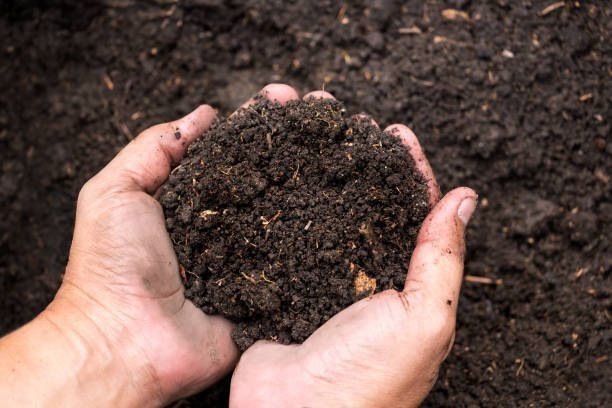
Quick answers
- What is soil compaction?
- Pressure squeezes soil particles together and removes the air pockets between them. Water cannot drain, roots cannot penetrate, and beneficial soil life declines.
- How do I test for compaction?
- Push a screwdriver or metal rod into the soil. If it takes hard effort below 10 cm, or water pools after rain, your soil is likely compacted. Healthy soil lets a rod slide in easily.
- What is the best way to fix compacted soil?
- Stop walking on it, add compost and mulch, loosen deeply with a garden fork without turning the soil, and grow deep-rooted cover crops such as daikon radish or rye. Repeat over several seasons.
- Should I rotavate to loosen compacted soil?
- No. Rotavating breaks soil structure further and creates a hard pan beneath the tilled layer. Use a fork or broadfork and organic matter instead.
Key takeaways
- Prevention beats repair. Stay off wet soil and keep permanent paths.
- Organic matter builds structure. Compost and mulch feed the life that holds soil open.
- Never dig or walk on wet soil. It compacts in minutes and takes years to recover.
- Use deep roots as free tillage. Cover crops like daikon radish and rye loosen subsoil.
- Beds no wider than 1.2 m mean you never need to step on them.
- Avoid rotavators; they create a hard pan below the tilled layer.
Table of contents13 sections
Healthy soil is roughly half solid particles and half pore space, and the pores are as important as the particles. They carry air to the roots, hold water for plants and let earthworms and microbes move. Compaction closes those pores. A footprint on wet soil, a heavy wheelbarrow, years of rotavating or construction work leave a dense, airless layer that roots struggle to enter.
This guide shows you how to spot compaction, prevent it and repair it. It belongs to the Soil, Water & Fertilizer pillar and relates to Understanding Your Soil Type, Mulching Mastery and Reading Your Soil.
Signs your soil is compacted
- Water pools on the surface after rain or runs off instead of soaking in.
- Surface crust forms and cracks when dry.
- Roots grow sideways or are stunted; carrots fork and are short.
- Plants yellow and struggle despite regular watering and feeding.
- Few earthworms in a spadeful of soil.
- Hard to dig, especially below the top 10 cm.
Quick tests
- The screwdriver test. Push a long screwdriver into moist soil. It should slide in easily to 20 cm; if it stops at 8–10 cm, compaction is present.
- The infiltration test. Dig a 30 cm hole and fill it with water; fill it again and time how long it takes to drain. Ideal drainage is about 2.5–5 cm per hour. Much slower means compaction or heavy clay.
- The spade test. Dig out a spade-sized block. Healthy soil crumbles into small aggregates with visible roots; compacted soil comes in a dense lump with horizontal layers.
What causes compaction
| Cause | Why it matters | Prevention |
|---|---|---|
| Walking or working on wet soil | Wet particles slide together, squeezing out air | Wait until a handful crumbles rather than smears |
| Heavy machinery and wheelbarrows | Concentrated pressure compacts deep layers | Use fixed paths and boards to spread weight |
| Rotavating repeatedly | Destroys structure and creates a hard pan | Switch to no-dig or fork loosening |
| Low organic matter | Nothing holds particles apart | Add compost and mulch yearly |
| Bare soil in rain | Raindrops seal the surface into a crust | Keep soil covered with mulch or plants |
| Construction and building fill | Subsoil is crushed and mixed with rubble | Decompact deeply and import good topsoil if needed |
1. Create permanent paths and narrow beds
Make beds no wider than 1.2 m (4 ft) so you can reach the centre from the path. Mulch the paths with wood chips or lay stepping stones so all foot traffic stays on them. This single habit prevents most compaction in vegetable gardens (see How to Start a Vegetable Garden).
2. Stay off wet soil
Squeeze a handful of soil. If it forms a sticky ball that smears, it is too wet to work. Wait until it crumbles when poked. If you must walk on wet soil, lay a plank to spread your weight.
3. Feed the soil with organic matter
Spread 3–5 cm of compost on beds each year and cover it with mulch. Earthworms pull it down and their burrows keep the soil open. Learn how to make your own in Composting at Home.
4. Keep soil covered
Mulch or plants (living or cover crops) protect the surface from raindrop impact and temperature swings, and feed soil life.
5. Go no-dig
Instead of digging each year, add compost on top and let worms do the work. Over time, soil structure improves and weeds decline.
How to repair compacted soil
- Stop the cause. Mark out paths and keep off the beds; fix drainage problems if water is pooling.
- Loosen with a fork. Push a garden fork or broadfork in at 20–30 cm intervals and rock it back and forth to crack the soil without inverting it. Do not turn the soil over.
- Add organic matter. Spread 5 cm of compost, well-rotted manure or leaf mould over the surface and leave it for worms to blend in.
- Plant deep-rooted cover crops. Daikon (tillage) radish, rye, clover and mustard punch through compacted layers, and their roots decay to leave channels.
- Mulch thickly. Cover with 5–8 cm of wood chips, straw or leaves.
- Repeat for several seasons. Severe compaction takes two to three years to heal fully.
Gypsum is often recommended for compaction, but it only helps sodic (salty) clay soils. On ordinary soils it makes little difference. Organic matter is a far more reliable fix.
Lawns and trees
- Lawns: core-aerate in autumn or spring, then top-dress with sand and compost. Avoid mowing when the grass is wet. See Lawn Care Basics.
- Trees: do not park or pile material over roots. Mulch the root zone and aerate gently with an air spade if needed (see Tree Watering & Mulching).
Habits that undermine results
- Rotavating every year
- Walking on beds, especially when wet
- Adding sand to clay (it makes concrete) instead of compost
- Leaving soil bare through winter
- Expecting one forking to fix years of compaction
Quick wins to try first
- Keep a pair of boards by the vegetable patch to kneel and stand on.
- A dense planting of cover crops over winter prepares beds for spring without any digging.
- Check compaction yearly with the screwdriver test and track the improvement.
What to read next
Learn to interpret your soil with Reading Your Soil, test pH with Soil pH Explained, and feed it with Organic vs Synthetic Fertilizers. Back to Soil, Water & Fertilizer.
More in Soil, Water & Fertilizer
Reading Your Soil: Simple Tests Anyone Can Do
You do not need a lab to understand your soil. Use the squeeze test, drainage test, worm count, smell and a pH check to learn what…
Understanding Your Soil Type: The Jar Test and Beyond
Sand, silt, clay or loam? Identify your soil in 10 minutes with a jar and water, then apply the exact watering, planting and amendment strategy for…
Soil pH Explained: Why It Unlocks (or Locks) Your Garden
The 6.0-7.0 sweet spot, why yellow leaves can mean locked iron, testing methods and safe ways to raise or lower pH, the master switch of plant…