Styling with Indoor Plants: The Designer’s Playbook

Two homes can own the same plants and look utterly different — the difference is arrangement. Plant styling is interior design with living sculpture, and it runs on a handful of professional principles anyone can copy in an afternoon.

The Designer’s Rules

  • Group in odd numbers — 3s and 5s, never matched pairs
  • Work in height triangles: tall → medium → trailing
  • One statement plant per room — let it own the space
  • Vary the containers, not just the plants

Rule One — The Height Triangle

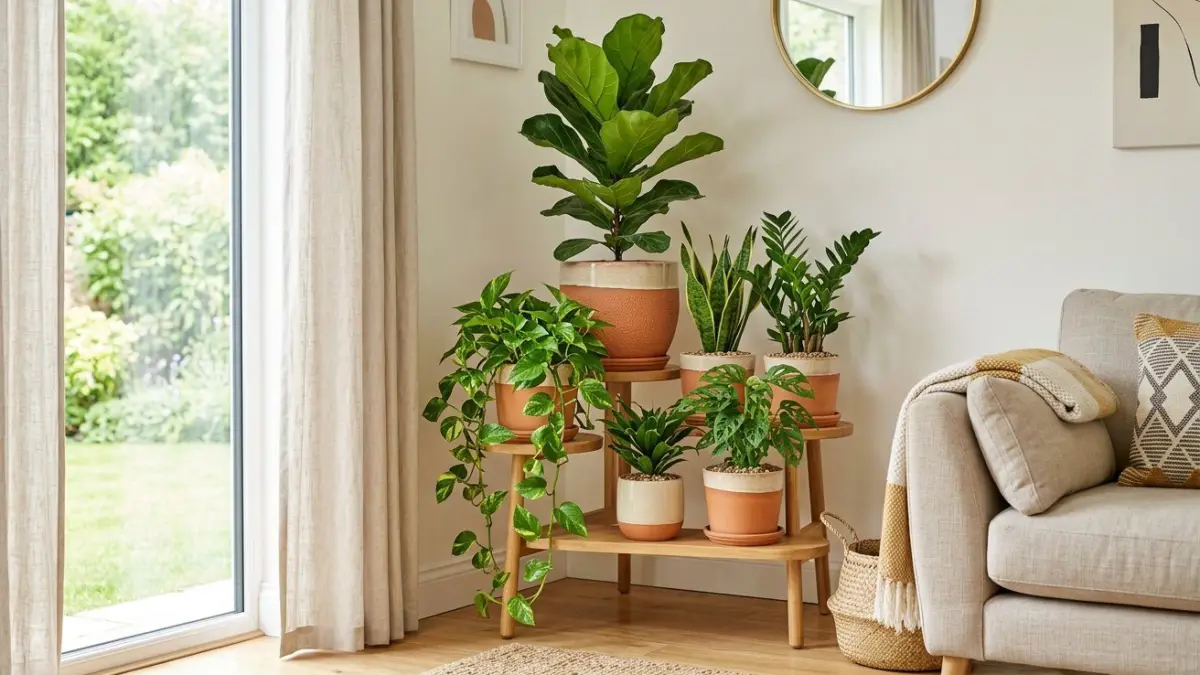
Every vignette needs a vertical, a mid and a horizontal element: a fiddle-leaf or parlor palm reaching up, a monstera or calathea at mid height, a pothos cascading low. Arrange the three as a triangle and your eye completes the composition. Scale it up across the room with multiple triangles rather than one lonely cluster — layering logic borrowed straight from our border design guide.

Rule Two — Statement Plants Need Stage

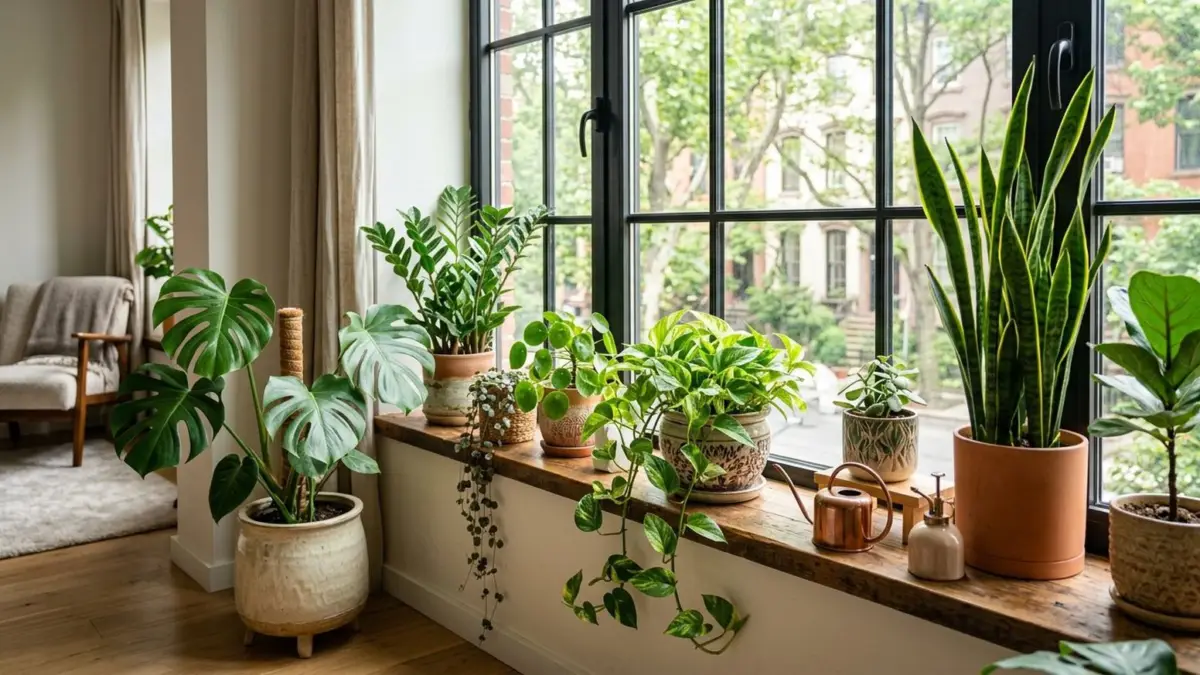
A mature monstera, bird-of-paradise or rubber plant earns a Solo spot: bare floor, mid-room or by the window, nothing crowding it. Give statement plants the light they demand first — placement follows photosynthesis, per the window-mapping in our light guide — then let them perform.

Rule Three — Shelves Are for Cascades

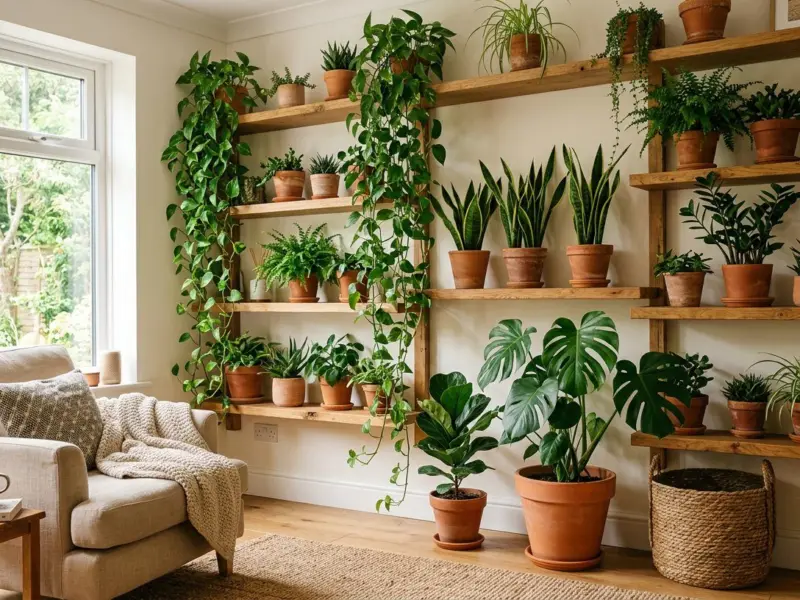
Trailing pothos, string-of-pearls and ivy transform shelving; upright plants just block the books. Let trailers spill at varied lengths, and place one trailing plant per three shelf items for rhythm. Rotate shelf plants to the window monthly — shelf light is dim, and rotation is survival per our low-light care rules.

Rule Four — Pots Are Part of the Picture

Curb the nursery-pot rainbow: unify containers in two or three tones (terracotta, cream, black), vary heights with plant stands and stacked books, and always use a cachepot over the drainage pot so watering stays clean — the two-pot system from our pot guide.

Common Mistakes to Avoid

  • Plant-shop clutter — twelve small pots on one sill reads messy; three grouped read styled.
  • Choosing plants for looks before light — beautiful and dead is not a style.
  • Never rotating — one-sided plants betray their window; a quarter-turn weekly keeps them even.

Frequently Asked Questions

How many plants does a room need?

As few as three well-arranged, or a full collection if light allows — composition beats quantity. For air-quality ambitions, see the numbers in our air-purifying guide.

What’s the best first statement plant?

A monstera deliciosa — architectural, fast, communicative about its needs, and forgiving of the mistakes catalogued in our problem guide.

You have completed the indoor path! Return to the indoor plants hub anytime, or take your skills outside to the garden design hub.

The Salt-Flush Ritual for plant styling

Months of fertilizing and tap water leave dissolved salts that concentrate at the root zone — the hidden author of crispy tips that humidity cures never touch. The quarterly ritual: carry the plant to the sink or shower, water slowly and thoroughly until several pots’ worth drains through, let it drip-dry, and return it. Mark the calendar quarter-by-quarter; big floor plants get the same treatment with a hose outdoors when weather allows.

The ritual costs ten minutes per season per plant and quietly prevents the most common slow decline in houseplant keeping.

The Window Map for plant styling

Every collection is organized by its windows, so map them once, honestly: south (bright most of the day) — succulents, cacti, ficus, and the sun-hungry herbs; east (gentle morning) — the broad middle of houseplants: pothos, philodendron, peperomia; west (hot afternoon) — sun-tough foliage with a step back from the glass; north (soft steady) — ZZ, snake plant, cast iron, parlor palm. Then the honest category: rooms lit by lamps alone, which even survivors eventually refuse.

The map decides purchases before beauty does. A plant that thrives is beautiful; a plant that survives badly is furniture on its way to the bin.

Deep Dive: What Experienced Growers Know About plant styling

Light-first styling is the difference between arrangements that last and arrangements that photograph: style each zone with the plants that survive its actual light, then choose pots to unify. The professional trick is negative space — one clear shelf, one bare floor stretch — which lets three grouped plants read as a deliberate composition instead of accumulation. Every additional plant must earn its place by adding either a height level or a trailing line the zone lacks.

Key Takeaways

  • Transpiration: Water vapor leaving leaves; the plant's cooling and transport engine.
  • Photoperiod: Day length; some plants bloom or sleep by it.
  • Etiolation: Extreme stretching in darkness — pale, weak, space-seeking growth.
  • Top-Dressing: Replacing the top layer of mix to refresh nutrition without repotting.

More Questions About Plant Styling

How do I style a dim hallway?

Choose honestly from the survivor list — ZZ, snake plant — and rotate pairs monthly from brighter rooms. Styled and rotating beats lush and dying.

What's the rule for pot colors?

Two or three tones across the whole home — terracotta, cream, charcoal — varied by height, not hue. Variety belongs to plants.

Can one plant style a whole room?

Yes — the statement plant: a monstera or bird of paradise mid-room near light, nothing crowding it. One confident specimen outsells ten scattered pots.

Field Questions Answered

How do I clean very large leaves?

Shower the whole plant in lukewarm water, or wipe with a damp cloth monthly. Leaf shine products clog stomata — plain water does the work.

How many plants is too many for one room?

When care quality drops below what each already owns — the collection grows faster than the minutes that tend it. Count your weekly minutes honestly.

Can I use garden soil for houseplants in a pinch?

No — it compacts, drains wrong, and imports fungus gnats and fungi to a pot with no ecosystem to resist them. Coir and perlite travel well instead.

Why is my plant's new growth smaller than the old?

Light drop (seasonal or moved), root congestion, or hunger. Check all three in order; new growth is the plant's honest report card.

Common Mistakes to Avoid with Plant Styling

  • Watering on a schedule instead of by need — the Sunday massacre.
  • Choosing plants for looks while ignoring the window they must live in.
  • Potting small plants in giant containers 'so they can grow into them'.
  • Leaving pots standing in full saucers overnight.
  • Believing 'low light' means no light — nothing photosynthesizes in the dark.

Further Field Questions

How many plants is too many for one room?

When care quality drops below what each already owns — the collection grows faster than the minutes that tend it. Count your weekly minutes honestly.

Can I use garden soil for houseplants in a pinch?

No — it compacts, drains wrong, and imports fungus gnats and fungi to a pot with no ecosystem to resist them. Coir and perlite travel well instead.

Why is my plant's new growth smaller than the old?

Light drop (seasonal or moved), root congestion, or hunger. Check all three in order; new growth is the plant's honest report card.

Do plants need to be near other plants?

They benefit — shared humidity microclimates are real — but spacing for airflow prevents the gnat and mildew trade. Group loosely, not shoulder to shoulder.

What's the best first plant for a total beginner?

Pothos: it communicates clearly (droops thirsty, yellows soggy), roots from cuttings in weeks, and forgives nearly every beginner crime.

How do I clean very large leaves?

Shower the whole plant in lukewarm water, or wipe with a damp cloth monthly. Leaf shine products clog stomata — plain water does the work.

Further Field Questions

How many plants is too many for one room?

When care quality drops below what each already owns — the collection grows faster than the minutes that tend it. Count your weekly minutes honestly.

Can I use garden soil for houseplants in a pinch?

No — it compacts, drains wrong, and imports fungus gnats and fungi to a pot with no ecosystem to resist them. Coir and perlite travel well instead.

Why is my plant's new growth smaller than the old?

Light drop (seasonal or moved), root congestion, or hunger. Check all three in order; new growth is the plant's honest report card.

Do plants need to be near other plants?

They benefit — shared humidity microclimates are real — but spacing for airflow prevents the gnat and mildew trade. Group loosely, not shoulder to shoulder.

What's the best first plant for a total beginner?

Pothos: it communicates clearly (droops thirsty, yellows soggy), roots from cuttings in weeks, and forgives nearly every beginner crime.

How do I clean very large leaves?

Shower the whole plant in lukewarm water, or wipe with a damp cloth monthly. Leaf shine products clog stomata — plain water does the work.

Further Field Questions

How many plants is too many for one room?

When care quality drops below what each already owns — the collection grows faster than the minutes that tend it. Count your weekly minutes honestly.

Can I use garden soil for houseplants in a pinch?

No — it compacts, drains wrong, and imports fungus gnats and fungi to a pot with no ecosystem to resist them. Coir and perlite travel well instead.

Why is my plant's new growth smaller than the old?

Light drop (seasonal or moved), root congestion, or hunger. Check all three in order; new growth is the plant's honest report card.

Do plants need to be near other plants?

They benefit — shared humidity microclimates are real — but spacing for airflow prevents the gnat and mildew trade. Group loosely, not shoulder to shoulder.

What's the best first plant for a total beginner?

Pothos: it communicates clearly (droops thirsty, yellows soggy), roots from cuttings in weeks, and forgives nearly every beginner crime.

How do I clean very large leaves?

Shower the whole plant in lukewarm water, or wipe with a damp cloth monthly. Leaf shine products clog stomata — plain water does the work.

Further Field Questions

How many plants is too many for one room?

When care quality drops below what each already owns — the collection grows faster than the minutes that tend it. Count your weekly minutes honestly.

Can I use garden soil for houseplants in a pinch?

No — it compacts, drains wrong, and imports fungus gnats and fungi to a pot with no ecosystem to resist them. Coir and perlite travel well instead.

Why is my plant's new growth smaller than the old?

Light drop (seasonal or moved), root congestion, or hunger. Check all three in order; new growth is the plant's honest report card.

Do plants need to be near other plants?

They benefit — shared humidity microclimates are real — but spacing for airflow prevents the gnat and mildew trade. Group loosely, not shoulder to shoulder.

What's the best first plant for a total beginner?

Pothos: it communicates clearly (droops thirsty, yellows soggy), roots from cuttings in weeks, and forgives nearly every beginner crime.

How do I clean very large leaves?

Shower the whole plant in lukewarm water, or wipe with a damp cloth monthly. Leaf shine products clog stomata — plain water does the work.

Further Field Questions

How many plants is too many for one room?

When care quality drops below what each already owns — the collection grows faster than the minutes that tend it. Count your weekly minutes honestly.

Can I use garden soil for houseplants in a pinch?

No — it compacts, drains wrong, and imports fungus gnats and fungi to a pot with no ecosystem to resist them. Coir and perlite travel well instead.

Why is my plant's new growth smaller than the old?

Light drop (seasonal or moved), root congestion, or hunger. Check all three in order; new growth is the plant's honest report card.

Do plants need to be near other plants?

They benefit — shared humidity microclimates are real — but spacing for airflow prevents the gnat and mildew trade. Group loosely, not shoulder to shoulder.

What's the best first plant for a total beginner?

Pothos: it communicates clearly (droops thirsty, yellows soggy), roots from cuttings in weeks, and forgives nearly every beginner crime.

How do I clean very large leaves?

Shower the whole plant in lukewarm water, or wipe with a damp cloth monthly. Leaf shine products clog stomata — plain water does the work.

Part of the Indoor Plants hub

Follow the full learning path — every guide in this topic, in order.

Open the hub