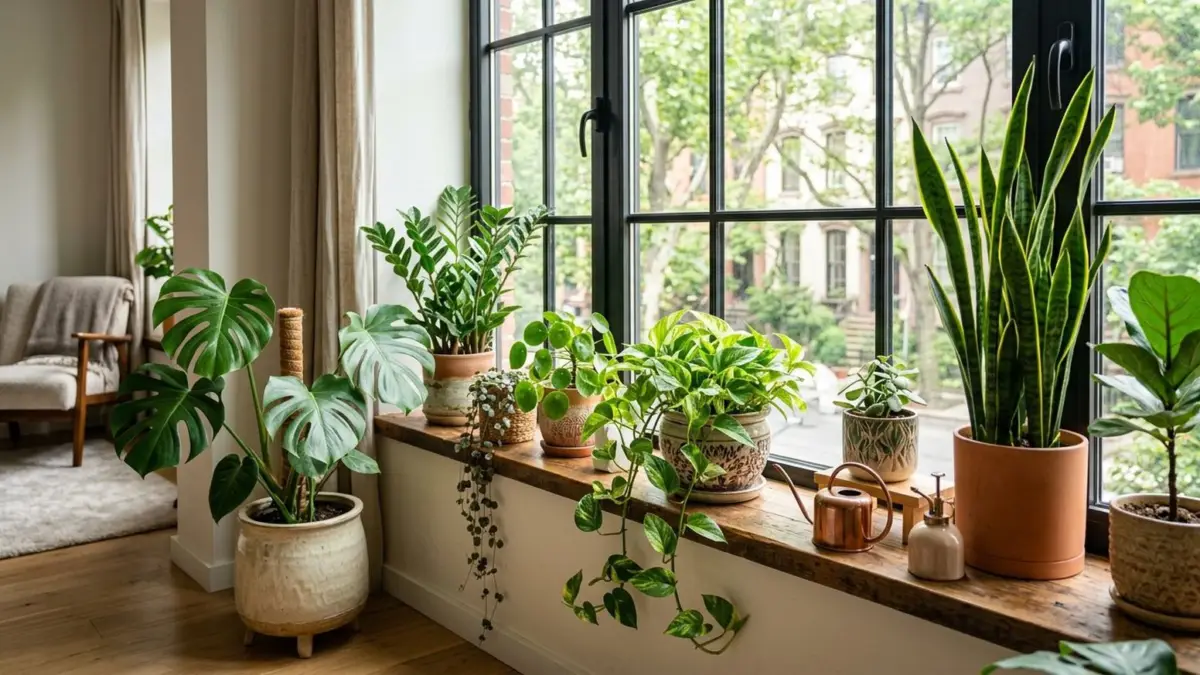
Quick answers
- Which houseplants are safe for cats and dogs?
- Spider plant, Boston fern, areca and parlor palms, calathea, prayer plant, peperomia, African violet, haworthia, money tree and Phalaenopsis orchids are all listed as non-toxic.
- Which common houseplants are toxic to pets?
- Pothos, philodendron, monstera, peace lily, snake plant, ZZ plant, aloe vera, jade plant and dieffenbachia can cause drooling, vomiting or mouth irritation. Lilies and sago palm are especially dangerous.
- Does non-toxic mean my pet can eat it?
- No. Non-toxic means it should not poison your pet, but eating a lot of any plant can still upset the stomach. Discourage chewing and offer cat grass instead.
- What should I do if my pet eats a toxic plant?
- Remove any plant from the mouth, rinse with water, and contact your vet or an animal poison helpline straight away. Take a photo or a piece of the plant with you.
Key takeaways
- Check every plant by its botanical name. Common names overlap and cause mistakes.
- Lilies are deadly to cats. Keep them out of homes with cats, even the pollen and vase water.
- Non-toxic is not the same as edible. Even safe plants can cause mild stomach upset.
- Place risky plants out of reach or in rooms pets cannot enter.
- Offer alternatives such as cat grass to stop pets chewing your plants.
- Keep your vet's and a poison helpline number handy. Fast action matters.
Table of contents7 sections
For many people, a home without plants feels empty, but so does a home without a dog or cat. Fortunately you do not need to choose. Many beautiful houseplants are considered non-toxic to pets, and with a little planning you can enjoy a lush indoor garden without constant worry.
This guide lists pet-friendly plants, the common ones to avoid and practical ways to keep curious animals and foliage apart. It belongs to the Indoor Plants pillar and complements 15 Best Low-Light Houseplants and Styling with Indoor Plants.
This guide is general information, not veterinary advice. Toxicity depends on the species, the amount eaten and the size of the pet. If you suspect poisoning, contact your vet or a local animal poison helpline immediately.
Pet-safe houseplants
These plants are listed as non-toxic to cats and dogs by recognised poison databases such as the ASPCA. Always confirm the exact species before buying, because lookalikes can be toxic.
| Plant | Light | Care level | Notes |
|---|---|---|---|
| Spider plant (Chlorophytum comosum) | Bright, indirect to medium | Easy | Cats love the leaves; hang it out of reach |
| Boston fern (Nephrolepis exaltata) | Medium, indirect | Medium | Needs humidity (see Humidity for Houseplants) |
| Areca palm and parlor palm | Bright, indirect | Easy | Great floor plants; avoid sago palm, which is toxic |
| Calathea and prayer plant (Maranta) | Medium to low | Medium | Humidity lovers with beautiful patterned leaves |
| Peperomia (many species) | Medium to bright | Easy | Compact, many leaf shapes; do not overwater |
| African violet (Saintpaulia) | Bright, indirect | Medium | Flowers all year; keep leaves dry |
| Haworthia and Echeveria | Bright | Easy | Safe succulents; avoid aloe, jade and kalanchoe |
| Money tree (Pachira aquatica) | Bright, indirect | Easy | Braided trunk; check the species, not “lucky bamboo” |
| Cast iron plant (Aspidistra) | Low to medium | Very easy | Near-indestructible in shade |
| Phalaenopsis orchid | Bright, indirect | Medium | Long-lasting blooms, non-toxic |
| Christmas cactus (Schlumbergera) | Bright, indirect | Easy | Winter flowers, generally safe |
| Bromeliads (many) | Bright, indirect | Easy | Colourful rosettes |
Common houseplants to avoid with pets
| Plant | Risk |
|---|---|
| All true lilies (Lilium) and daylilies (Hemerocallis) | Extremely dangerous to cats, even small amounts of pollen or vase water can cause kidney failure |
| Sago palm (Cycas revoluta) | Highly toxic to dogs and cats; can be fatal |
| Pothos, philodendron, monstera, dieffenbachia | Calcium oxalate crystals cause mouth pain, drooling and vomiting |
| Peace lily (Spathiphyllum) | Same irritant effect as above; not a true lily but still risky |
| Snake plant, ZZ plant | Mild to moderate stomach upset if chewed |
| Aloe vera, jade plant, kalanchoe | Vomiting, lethargy; sometimes more serious |
| Oleander, azalea, rhododendron | Heart and nervous system effects; highly toxic |
How to keep plants and pets safely together
- Identify every plant. Write down the botanical name of each plant in your home, then check it against a trusted pet-toxicity database.
- Remove the dangerous ones or give them away. For lilies and sago palm there is no safe way to keep them in a home with cats or dogs.
- Move risky plants that are only mildly irritating to hanging baskets, high shelves or rooms your pet cannot access.
- Offer an alternative. Grow a pot of cat grass or wheatgrass; many pets chew plants simply because they enjoy greens.
- Stop digging and chewing. Cover soil with pebbles or a layer of decorative bark, and use a pot cover or plant stand.
- Keep products safe. Store fertiliser, slug pellets and pesticides where pets cannot reach; some are poisonous even in small amounts.
What to do if your pet eats a plant
- Remove any plant material from the mouth and offer water.
- Keep a piece of the plant or a clear photo, including the label, to show your vet.
- Call your vet or a poison helpline promptly. Do not induce vomiting unless a professional tells you to.
- Watch for drooling, vomiting, diarrhoea, lethargy, tremors or breathing changes, and seek urgent help if you notice them.
Where most people go wrong
- Trusting common names like “lily” or “palm”, which cover safe and toxic species
- Assuming a plant is safe because the pet has ignored it so far
- Leaving cut flower bouquets with lilies on a table
- Using unlabelled garden products around pets
Practical tips from experience
- Grow safe, attractive hanging plants such as spider plants and Boston ferns above pet reach.
- Use plant labels with the botanical name when you buy and propagate.
- Give kittens and puppies extra supervision around any plant until they stop exploring with their mouths.
Keep going from here
Find easy-care species in 15 Best Low-Light Houseplants, learn watering in How to Water Houseplants Correctly, and stay on top of problems with Houseplant Problems & Fixes. Back to Indoor Plants.
More in Indoor Plants
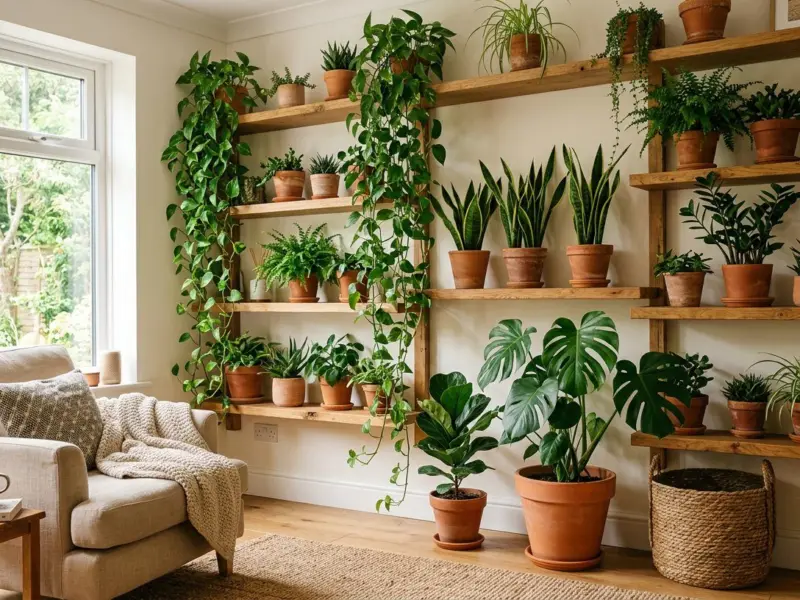
15 Best Low-Light Houseplants (That Actually Thrive)
Snake plants to pothos: the genuinely shade-tolerant houseplants for north windows and dim corners, plus what "low light" really means, honestly.
How to Water Houseplants Correctly (The Complete Guide)
The finger test, bottom watering, drain-through technique and why schedules kill houseplants: water by the plant's rules, not the calendar's.
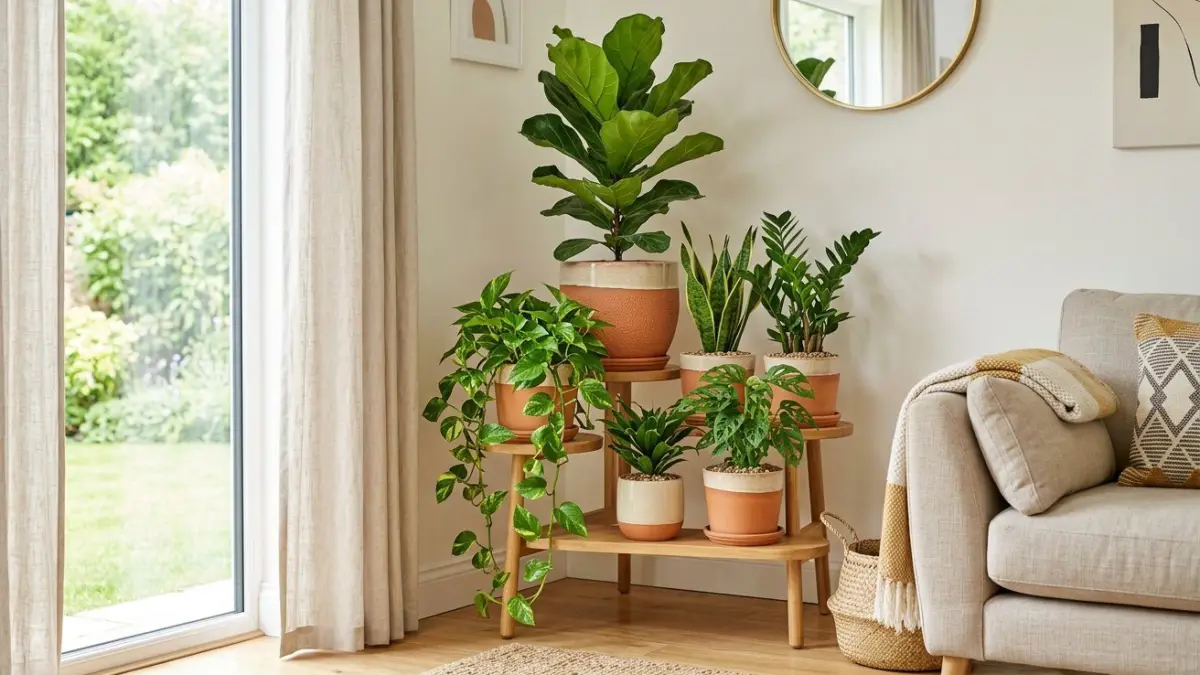
Repotting Houseplants Without Stress (Yours or Theirs)
When to repot, choosing the right pot size, root-pruning fearlessly, and the aftercare week, repot once and right, and your plant doubles its growth.