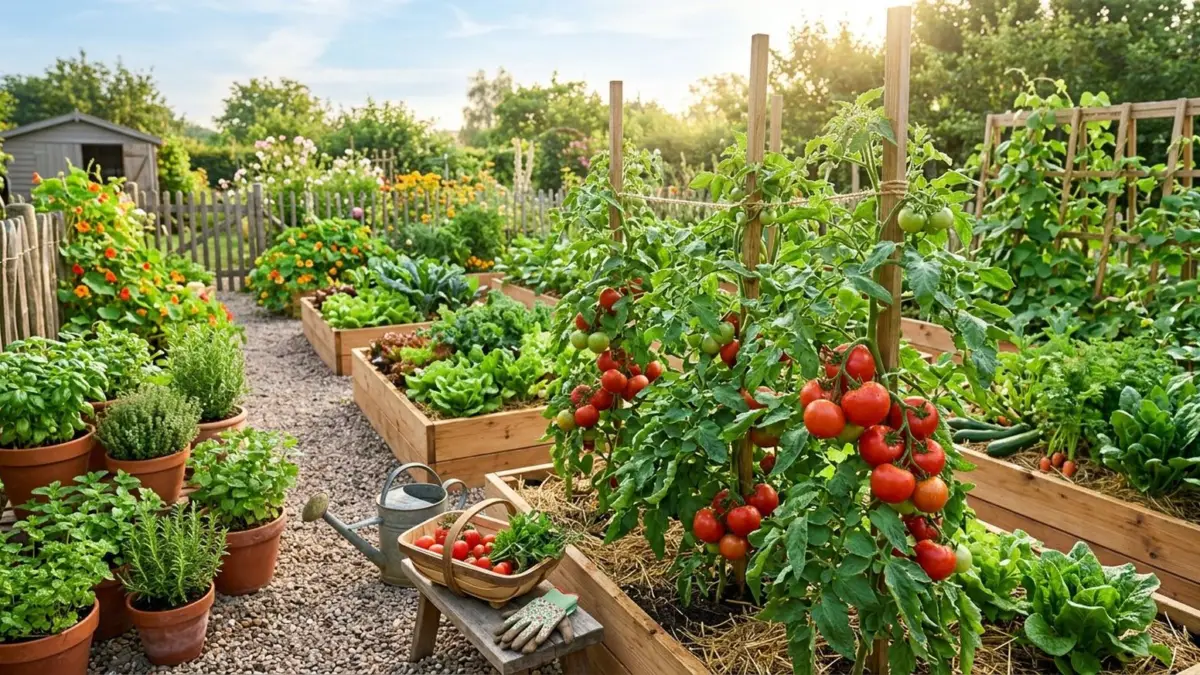
Quick answers
- Open pile or bin (best for yards)
- A simple 1-cubic-meter bin in dappled shade processes a family's scraps indefinitely. Bigger piles hold heat; heat means speed.
- Tumbler (best for tidy spaces)
- Fast and rodent-proof, just keep it evenly moist, tumblers dry out faster than piles.
- Bokashi or worm bin (best for apartments)
- Bokashi ferments scraps (including citrus and dairy) in a sealed bucket; worm bins turn scraps quietly on a balcony. Pair either with the container habits in our container guide and even a flat can run a closed loop.
- Does compost attract rats?
- Open piles with meat and bread do. A bin with a lid, a hard base, and fruit-and-veg-only inputs is uninteresting to rodents.
Key takeaways
- Greens (nitrogen): veggie scraps, coffee grounds, fresh clippings
- Browns (carbon): dry leaves, cardboard, straw, twigs
- Target ratio: roughly 2 parts browns to 1 part greens
- Needs: moisture like a wrung sponge + air + a little patience
Table of contents17 sections
- The Method (It’s Layering + Waiting)
- What Stays Out
- Troubleshooting in One Breath
- The Harvest-Extension Toolkit for composting
- The Bed-Rotation Planner for composting
- Deep Dive: What Experienced Growers Know About composting
- Words worth knowing
- How do I know compost is finished?
- Can I compost in winter?
- Is moldy bread and cooked rice allowed?
- What earns the most per square meter?
- How many hours of sun is the honest minimum?
- What's the best first-year fertilizer plan?
- How do I keep salad through summer heat?
- Can I plant a second crop where the first finished?
- Why are my herbs weak and leggy?
Composting is the closest gardening gets to alchemy: kitchen scraps and autumn leaves become the black, sweet-smelling matter that powers every other guide on this site. It asks fifteen minutes a week and forgives almost every beginner error.
The Method (It’s Layering + Waiting)
Alternate browns and greens as material arrives, every scraps-bucket load gets a matching handful of dry leaves or torn cardboard. This one habit prevents 90% of compost problems before they start. Turn the pile every week or two for the fast 8-12 week batch; ignore it entirely and it still finishes in 4-6 months. Finished compost smells like forest floor and looks like dark crumbly soil, feed it to beds per our soil guide or steep it into the liquid feed in our compost tea guide.
What Stays Out
- Meat, fish, oily food and dairy in open systems, pests and smell.
- Diseased plants: home piles rarely reach sterilizing heat; see disease basics.
- Weeds with seed heads: you’d be planting a weed bed.
Troubleshooting in One Breath
Smelly and slimy? Too wet, too green, add browns and turn. Doing nothing? Too dry, too brown, add greens and water. Attracting flies? Always bury fresh scraps under a browns layer.
Is compost a fertilizer replacement?
It is the soil’s heart but modest in NPK, pair it with the feeding strategy in our organic vs synthetic guide for heavy feeders like tomatoes.
You have completed the kitchen garden path! Revisit the hub anytime, or go deeper into soil science with the soil, water and fertilizer hub.
The Harvest-Extension Toolkit for composting
Every crop’s season has both edges, and both are movable. Earlier: pre-warm soil with black plastic, transplant under cloches, choose fast varieties. Later: succession sow past the usual window, shade cloth through the first heat, and cold frames that add a month at each end of the cool seasons. Longer within the season: cut-and-come-again harvesting, frequent picking, and feeding at fruit set keep plants producing instead of winding down.
The toolkit’s net effect is a garden that feeds you weeks earlier, months longer, and refuses the empty gaps that make grocery stores necessary again.
The Bed-Rotation Planner for composting
Rotation is the cheapest pesticide and fertilizer ever invented: moving plant families breaks the pest and disease cycles that build in familiar soil, and alternates heavy feeders with soil-builders. The working four-block scheme: 1 fruiting crops (tomato, pepper, squash, the hungry ones), 2 roots and bulbs (carrot, onion, light feeders that loosen soil), 3 legumes (beans, peas, nitrogen bankers), 4 leaf crops (salad, brassicas). Each family advances one block yearly.
Even a four-bed balcony rotation works at pot scale. The log makes it function: without last year’s map, rotation is just a nice idea.
Deep Dive: What Experienced Growers Know About composting
The browns-first habit is composting’s entire hygiene system: every kitchen-scrap load gets buried under a handful of dry leaves or torn cardboard before the lid closes. That single motion blocks flies, traps the nitrogen’s ammonia smell, and keeps the carbon-nitrogen ratio drifting toward balance without measuring anything. Compost failures are almost never recipe failures; they are habit failures, and this one habit prevents ninety percent of them.
Words worth knowing
- Succession Sowing: Repeat sowings at intervals for continuous harvest.
- Interplanting: Growing fast crops between slow ones to double bed-time value.
- Side-Dressing: Feeding alongside growing plants mid-season rather than at sowing.
- Topping: Removing a plant's growing point to force branching, basil's best friend.
How do I know compost is finished?
It smells like forest floor, looks like dark crumble, and you cannot recognize a single ingredient. Two to four months hot, six ignored, both are valid compost.
Can I compost in winter?
Yes, slower: keep the pile large for retained heat, stockpile browns beside it, and add winter scraps, freezing pauses, thawing resumes.
Is moldy bread and cooked rice allowed?
In sealed bokashi or hot, well-managed piles, modestly; in casual open piles, no; they draw pests before the pile can outcompete them.
What earns the most per square meter?
Herbs, salad, and vertically grown cherry tomatoes: high grocery price, small footprint, continuous harvest. Zucchini wins volume, not value.
How many hours of sun is the honest minimum?
Fruiting crops: six plus. Leafy crops and herbs: four manages. Below that, grow mushrooms or move the garden.
What's the best first-year fertilizer plan?
Compost in the bed at planting, then nothing until fruit set; then low-N feed every three weeks. Beginners overfeed nitrogen and harvest leaves.
How do I keep salad through summer heat?
Shade cloth at 30-50%, heat-tolerant varieties, and sowing in the shadiest bed. Or treat summer as salad's off-season and preserve the habit for autumn.
Can I plant a second crop where the first finished?
Immediately; that is succession's whole point. Radish after peas, salad after garlic, autumn brassicas after early beans.
Why are my herbs weak and leggy?
Not enough sun or not enough cutting. Herbs want harsh light and harsher harvests; the pampered windowsill basil is a candle burning at both ends.
More in Vegetables & Herbs
Companion Planting: What Grows Well Together (and What the Evidence Says)
Companion planting works best when it uses real mechanisms: trap crops, pollinator magnets, shade, nitrogen fixing and pest confusion. See which classic pairings are proven, which…
Harvesting and Storing Vegetables: When to Pick and How to Keep
Pick vegetables at peak flavour with simple ripeness signals, then cure, chill, freeze or store them correctly so your harvest lasts for weeks or months.
How to Start a Vegetable Garden from Scratch
Site selection, bed building, soil prep and the first season's plan, everything a brand-new food grower needs, in one honest step-by-step guide.