Quick answers
- Is compost tea a fertilizer replacement?
- No, its nutrient load is light. Think probiotic supplement: real benefits, supporting cast to the main meal of compost and balanced feeding.
- Manure tea vs compost tea?
- Compost from plant matter is safer, raw manure teas can carry pathogens onto food crops. If using manure, it should be fully composted first, per our composting rules.
- Can I spray tea on leaves in sun?
- No -UV kills the microbes and wet leaf in sun burns. Apply early morning or dusk; cloudy days are ideal.
- Is manure tea ever safe on vegetables?
- Only fully composted manure, never raw, raw carries pathogens onto food. Plant-matter compost tea is the safe default.
Key takeaways
- Delivers mild nutrients, a gentle, fast liquid feed
- Introduces beneficial microbes that outcompete pathogens
- Best as a supplement to soil compost, never a replacement
- Use it fresh, within 4-6 hours of brewing ends
Table of contents16 sections
- Simple Non-Aerated Tea (Zero Equipment)
- Aerated Compost Tea (The Pro Version)
- Applying It Well
- Where most people go wrong
- Frequently asked questions
- The Irrigation Walk-Through for compost tea
- The Amendment Safety Rules for compost tea
- Deep Dive: What Experienced Growers Know About compost tea
- Terminology made simple
Compost tea is compost steeped like tea, sometimes with air pumped through, producing a liquid that delivers nutrients and, more importantly, living microbes to your soil and leaves. Used honestly, it is a superb tonic. Marketed as magic, it disappoints. Here is the truth and the recipe.
Simple Non-Aerated Tea (Zero Equipment)
Fill a bucket a third with finished compost, top with water (dechlorinated: let tap sit overnight), stir vigorously, and steep 24-48 hours stirring a few times daily. Strain through cloth, dilute until it looks like weak tea (about 1:5), and water the soil. This “extract” is foolproof and fits perfectly into the feeding rhythm of our fertilizer guide.
Aerated Compost Tea (The Pro Version)
An aquarium pump and air stone bubble oxygen through the brew for 24-36 hours, growing aerobic microbe populations far denser than steeping. Add a handful of unsulfured molasses as microbe food; some growers add a pinch of kelp or humic acid. Warmth (20-25°C) speeds growth. The smell test is your quality control: earthy and sweet is right; sour or rotten means the brew went anaerobic, discard and clean everything.
Applying It Well
Water the soil around vegetables, flowers and lawns at dilution; spray leaves in morning for a microbe film that occupies the surfaces disease would claim (the competitive logic behind our prevention guide). Apply every 2-4 weeks in the growing season. Sterilize the brewer between batches, residue turns every future batch sour.
Where most people go wrong
- Brewing longer “for strength”: past 48 hours microbes starve and spoil.
- Using chlorinated water: chlorine is a microbe killer; dechlorinate first.
- Adding fertilizer to the brew, salts and preservatives undo the biology.
Frequently asked questions
Next in the hub: automate water with drip irrigation, or return to the soil, water and fertilizer hub.
The Irrigation Walk-Through for compost tea
Monthly, walk the system end to end in fifteen minutes: filter opened and rinsed, first and last emitter compared (rate mismatch = pressure or clog), line ends flushed until clear, timer battery and program checked against the season, and one probe-test at the far bed to confirm depth wetted. Log runtimes and rainfall beside the timer.
The walk’s payoff is invisible until the heatwave, when the system that was verified keeps watering while the system that was assumed quietly strangles its far end.
The Amendment Safety Rules for compost tea
Soil amendments are medicine: dosing matters. Compost: 2-3 cm top-dressing, up to 30% of a bed’s volume when digging new; more ties up nitrogen and loads phosphorus. Lime and sulfur: only after a test, only in the dose the test names, only retested after a season. Manure: composted or aged, never fresh on food beds. Wood ash: a liming agent, not a generic fertilizer, alkaline soils get worse, not better.
The meta-rule: change one variable, measure one season. Soil rewards patience with compounding and punishes enthusiasm with lockout.
Deep Dive: What Experienced Growers Know About compost tea
The dechlorination step is where most home brews fail quietly: chlorinated tap water sterilizes the very biology the tea exists to deliver. Let water stand 24 hours, or run an aquarium airstone in it for an hour before brewing. The second failure is old equipment, biofilm in pumps and buckets turns every future batch sour; a quick scrub with baking soda between brews keeps the aerated tea sweet-smelling and aerobic.
Terminology made simple
- Npk: Nitrogen (leaves), phosphorus (roots/bloom), potassium (vigor), the label's job codes.
- Aerated Tea: Compost brew oxygenated 24-36 hours to multiply aerobic microbes.
- Matric Potential: The tension with which soil particles hold water; texture decides it.
- Browns/Greens: Carbon materials vs nitrogen materials; the compost ratio's two hands.
How do I know my brew worked?
Sweet, earthy smell and a foamy head by hour 24. Sour or sulfurous means anaerobic spoilage: down the drain, scrub everything.
Can I fertilize and water at once?
Yes: fertigation through dilute feed in the watering can suits containers especially. Half-strength, weekly, after a plain-water flush monthly.
How deep should mulch be on clay vs sand?
Clay: 5 cm, thicker stays wet too long. Sand: up to 8 cm, every millimeter of protection counts against the strainer effect.
Do I need to test before every fertilizer purchase?
Plants are the test: read symptoms first, buy second. The soil lab test every 2-3 years keeps the purchases honest.
How do I improve soil without digging?
Top-dress compost twice yearly, mulch 5-8 cm deep, and let worms do the incorporation, no-dig beds build structure faster than forked ones.
Is rainwater really better for plants?
Yes: soft, slightly acidic, unchlorinated, and at ambient temperature. Every collector pays for itself in seedling health and acid-loving plants.
What's the fastest legal way to compost?
Hot composting: one cubic meter minimum, finely chopped materials, balanced greens-browns, turned weekly, finished in 6-10 weeks.
More in Soil, Water & Fertilizer
Drip Irrigation & Smart Watering: Set It and Trust It
Design a drip system in an afternoon, add a smart controller, cut water use 50%, plus seasonal reprogramming so automation serves the season.
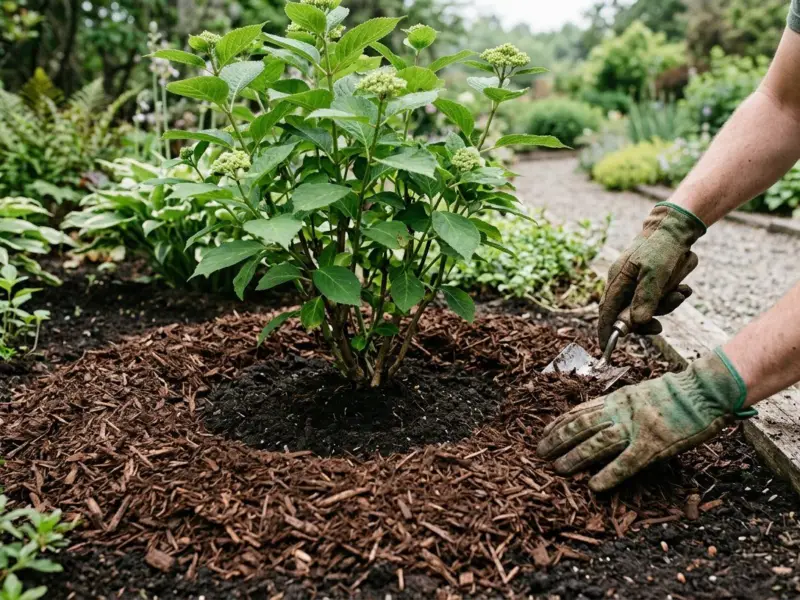
Mulching Mastery: The One Habit That Transforms Gardens
Organic vs stone mulch, correct depth, the donut-not-volcano rule, and how a 5 cm layer slashes watering, weeding and disease all at once.
Preventing Soil Compaction: Air, Water and Roots Need Space
Compacted soil starves roots of air and water. Learn how to recognise compaction, prevent it with paths, mulch and no-dig methods, and repair it with organic…