Quick answers
- How do I tell what type of soil I have?
- The jar test: mix soil and water in a jar, shake, and let settle. Sand settles first, silt next, clay last. A professional test gives more detail.
- What is the best soil for most plants?
- Loam: a balanced mix of sand, silt, and clay with organic matter. Most gardens are not loam, but adding organic matter improves any soil.
- How often should I fertilize my garden?
- It depends on your soil, plants, and goals. Most established perennials need little fertilizer. Vegetables benefit from regular feeding. A soil test tells you what you need.
- What is the difference between organic and synthetic fertilizer?
- Organic fertilizers release nutrients slowly and build soil health. Synthetic fertilizers deliver nutrients immediately. Both have their place.
Key takeaways
- Know your soil before you try to improve it. A simple test tells you what you have. Guessing leads to wrong decisions.
- Organic matter is the universal improver. Compost, leaf mould, manure, whatever you can get. Organic matter improves any soil.
- Feed the soil, not just the plant. Soil is a living ecosystem. Add organic matter, avoid compaction, and the soil food web supports your plants.
- Water deeply and infrequently. Deep watering encourages deep roots that find their own moisture.
- Mulch is not optional; it is essential. Mulch conserves moisture, suppresses weeds, and breaks down to feed the soil.
- Match fertilizer to need, not habit. A soil test tells you what your soil actually needs. Most gardens need less than gardeners apply.
- Drainage problems cause more plant deaths than drought. If water stands for hours after rain, you have a drainage issue.
- pH matters, but not as much as gardeners fear. Most plants tolerate a range. Only a few are pH-specific.
Table of contents47 sections
- The Invisible Garden That Decides Everything
- How to Use This Hub
- The Seasonal Rhythm of Soil, Water & Fertilizer
- Your First 30 Days with Soil, Water & Fertilizer
- The Science, Briefly
- 10 Mistakes That Sink Gardeners in This Topic
- Myths Worth Retiring
- The Toolkit: What You Actually Need
- Plain-Language Glossary
- Regional Notes
- How This Hub Connects to the Rest of the Site
- The Deeper Why: The Ground Remembers
- Advanced Field Notes
- Common Objections, Answered
- Three Field Confessions
- The 7-Day Starter Plan
- How long until my clay soil actually improves?
- Is expensive pH meter worth it?
- Can I water too deeply?
- Do I need both compost and fertilizer?
- How often should mulch be renewed?
- Is expensive organic fertilizer better than cheap synthetic?
- How do I know if my soil drains well?
- Can I water plants with aquarium water?
- What's the ideal compost-to-soil ratio in beds?
- Do moisture meters work?
- Is watering established trees from the trunk outward wrong?
- Guides at a Glance
- Revision Cards: The Guides at a Glance
- Seasonal Checklist, Condensed
- Pace Yourself: The Long View
- Advanced Vocabulary, Applied
- Study Notes: The Guides in Brief
- Frequently Asked: The Index
- Practice Drills for This Week
Ask professional growers where gardening really happens and they point at the ground. Soil chemistry, water physics and plant nutrition decide 80% of garden outcomes before a leaf appears. This hub demystifies all three: reading your soil type, understanding pH, choosing between organic and synthetic feeding, brewing compost tea, installing smart irrigation and mulching like a forester.
These guides multiply the value of everything else on this site, the kitchen garden tastes better, the flowers bloom harder, and the trees establish faster when the ground beneath them is understood. Start with the soil type guide; it is the foundation in the most literal sense.
The Invisible Garden That Decides Everything
Ask professional growers where gardening really happens and they point downward. Soil texture, pH chemistry, water physics and microbe biology decide most garden outcomes before a single leaf appears, invisibly, silently, and mercifully learnable. This hub is the underground curriculum: reading your soil, mastering its chemistry, feeding it properly, brewing its biology, watering its physics and covering it with the mulch that runs the whole machine.
The stakes are lopsided. Everything else on this site, the kitchen garden’s flavor, the flower hub’s bloom count, the trees’ decades, rides on ground conditions. A mediocre gardener with excellent soil outgrows a brilliant one fighting clay with willpower. Better: soil is improvable. Unlike your climate or your plot size, texture, chemistry and biology all move within seasons when you work them correctly.
The six guides build in dependency order. Know your texture first: every watering and amendment decision hangs on it. Understand pH because it is the master switch on nutrition. Learn the honest fertilizer story, brew the biology, automate the water, and lock it all in with mulch. By the hub’s end, the ground stops being dirt and starts being an engine.
Start with the jar test tonight. Ten minutes, one clear jar, and your garden’s most important secret is on the kitchen counter by morning.
How to Use This Hub
| Guide | What you will learn | Time to apply |
|---|---|---|
| Understanding Soil Types | The jar test and texture-specific strategies | One overnight |
| Soil pH Explained | The 6.0-7.0 sweet spot and the lockout map | One test kit |
| Organic vs Synthetic Fertilizers | NPK decoded and the hybrid feeding schedule | One season of practice |
| Compost Tea | Brews, ratios, honest expectations | 24-48 hours per batch |
| Drip Irrigation & Smart Watering | System anatomy and the one-rule run times | One afternoon install |
| Mulching Mastery | Materials, depth, the donut rule | One season to transform |
Texture First
The jar test separates sand (sinks first), silt (next) and clay (the slow cloud) into measurable layers: the identity card every other decision consults. Sand gardens strain: water and nutrients flow through, so the strategy is organic matter plus mulch. Clay gardens vault: nutrients rich, drainage poor, so the strategy is compost plus raised structure and the iron rule of never working it wet. The guide’s deeper lesson is that texture is destiny but structure is choice, crumbly, aggregated soil is built by compost, minimal digging and soil life, not bought by the bag.
The pH Master Switch
At the wrong pH, fertilizer is money in a locked vault: above 7.5, iron and manganese lock out (young leaves yellow with green veins); below 6, calcium and magnesium do. The guide teaches honest testing, the symptom signatures, and the gentle moves, lime to raise, sulfur or acid mulches to lower, with retesting patience because shifts take months. Its wisest counsel: grow acid-lovers in pots of ericaceous mix where your soil is chalky, rather than declaring war on local chemistry.
Feeding Without Dogma
Organic and synthetic fertilizers are different tools, not tribes. Organics feed soil microbes that feed plants, slow, structure-building, forgiving. Synthetics feed plants directly: fast, precise, salt-based, and sterile to the soil web if abused. The guide decodes NPK into job descriptions (N for leaves, P for roots and bloom, K for vigor), then builds the hybrid schedule professionals actually run: compost as foundation, targeted low-N feeds for fruiting crops, half-strength rules, and the diagnosis-first discipline of never fertilizing a mystery problem.
Biology You Can Brew
Compost tea multiplies the microbes finished compost already carries. The non-aerated extract is foolproof bucket steeping; the aerated version pumps oxygen through a molasses-fed brew for denser populations. Both deliver mild nutrition and, more importantly, microbial competition onto leaf and soil surfaces. The guide is honest about limits, a supplement, never a fertilizer replacement, and strict on hygiene: fresh application, sterilized brewers, and the smell test that condemns any sour batch to the drain.
Water, Automated
Drip irrigation is water physics working for you: emitters deliver the root zone directly at rates slower than runoff, cutting use by half while foliage stays dry and disease stays hungry. The anatomy lesson runs from tap to dripper, backflow, filter, regulator, lines, and the one-rule run times mirror the deep-and-rare doctrine: long sessions at intervals, reprogrammed with the seasons. The maintenance confession: filters clog, lines need flushing, and a five-minute monthly walk beats a week of discovered dry zones.
The Mulch Machine
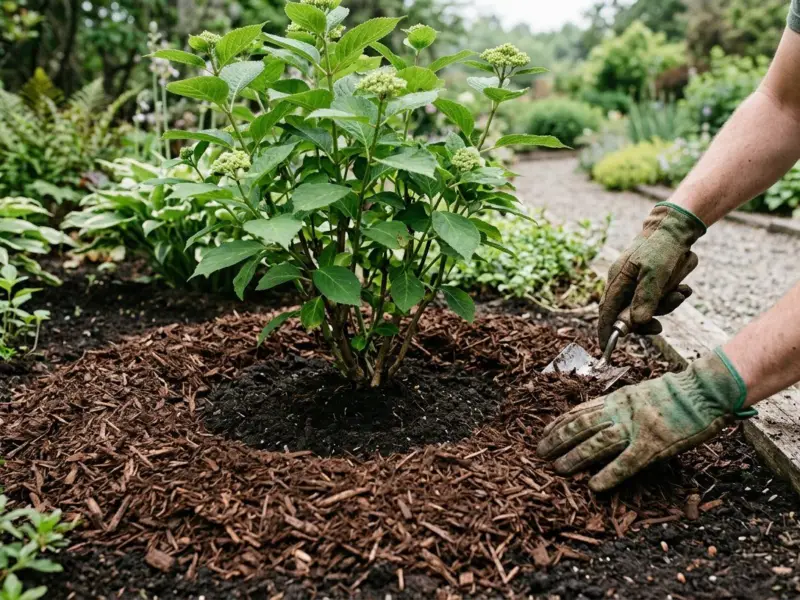
Mulch is the habit that runs every other guide’s results: a 5-8 centimeter organic layer cuts watering, smothers weeds, buffers temperature, blocks disease splash and, decomposing, feeds the soil web that feeds everything. The guide matches material to job (wood chips for beds and trees, straw for vegetables, stone for arid schemes), teaches the donut-not-volcano rule that keeps bark breathing, and names the compound-interest effect: three years of mulching visibly transform either sand or clay.
The Seasonal Rhythm of Soil, Water & Fertilizer
Late winter. Jar-test any new bed, pH-test the usual suspects, and order amendments. Top-dress beds with finished compost as soil becomes workable; service the drip filter.
Spring. Mulch after soil warms, not before. Install or extend irrigation before summer demand. First feeding rounds follow the hybrid schedule, soil-first, targeted synthetics where crops demand speed.
Summer. Walk the drip line monthly; flush, unclog, adjust run times to heat. Brew tea on a 3-week rhythm for tomatoes and roses. Check mulch depth after storms.
Autumn. The compost inheritance season: leaves stockpile into next year’s browns. Re-mulch thin beds, final feeding for perennials done early, irrigation blown out or drained before freeze.
Your First 30 Days with Soil, Water & Fertilizer
Tonight: the jar test, one bed minimum. Tomorrow: read it against the texture strategies and note which watering habits you must unlearn.
First month: pH test, one top-dressing of compost, and the first mulch application done properly: donut, 5-8 centimeters, no trunk contact. Change one watering zone to the deep-and-rare rhythm.
First season: run one aerated tea batch for the tomatoes, automate one bed end-to-end with drip on a timer, and re-test pH at season’s end. Keep a soil log, texture, amendments, results, and within a year your ground stops being a mystery and becomes a system.
The Science, Briefly
Underground gardening runs on three mechanisms. Cation exchange: clay and organic matter hold positively charged nutrients (calcium, magnesium, potassium) on their surfaces, releasing them to roots in trade, the reason both texture and pH decide what plants can actually eat. The soil food web: bacteria and fungi decompose and transport; protozoa and nematodes graze them and release plant-available nitrogen in their waste, compost and mulch are habitat construction, not just fertilizer. Matric potential: water clings to particle surfaces by tension; sand’s big pores release water easily, clay’s microscopic sheets hold it at tensions roots struggle to extract, the physics behind every texture-specific watering strategy here.
10 Mistakes That Sink Gardeners in This Topic
- Working clay soil wet: one spadeful bakes into pottery for the season.
- Sand plus clay 'to fix' clay: the recipe is brick. Compost is the fix.
- Liming 'just in case', locking out a new set of nutrients.
- Fertilizing a mystery problem instead of diagnosing it first.
- Bloom-booster phosphorus everywhere; most soils already hold decades' worth.
- Gravel 'drainage layers' in pots, raising the waterline they meant to lower.
- Mulch volcanoes against trunks and stems.
- Set-and-forget irrigation timers across seasons; plants drift, so must schedules.
- Brewing tea past 48 hours and watering the spoilage onto plants.
- Two centimeters of sprinkle mulch: depth is the mechanism, decoration changes nothing.
Myths Worth Retiring
“Organic fertilizer can burn plants.” Rarely and slowly, but manures and blood meal misapplied absolutely can. The organic label is a process, not a safety net.
“Compost tea replaces fertilizer.” Its nutrient load is a supplement’s; its real gift is biology. Feed the soil first, tea the leaves second.
“Sand improves clay.” In practical ratios you cannot afford, sand plus clay sinter into brick. Organic matter is the lever that actually moves clay.
“Drip wastes money in small gardens.” Small gardens benefit most: pots and narrow beds dry fastest, and a 20-euro kit saves a vacation’s worth of watering anxiety.
The Toolkit: What You Actually Need
- A clear quart jar with a lid, the entire soil laboratory you need to start
- Liquid pH test kit or probe meter, calibrated honestly
- A compost thermometer for the pile and the curious
- Drip kit: regulator, filter, 16 mm line, drippers, sized to one bed, expandable
- A battery tap timer; the 90% automation solution
- Bypass pruners stay home: today it's a long screwdriver for moisture probing
- Wheelbarrow and tarp for mulch days
- A soil notebook: texture, pH, amendments, dates, results
Plain-Language Glossary
- Cation exchange capacity
- The soil's nutrient-holding battery; clay and humus are its plates.
- Perched water
- Saturated layer above a texture change; why pots and layered soils drain oddly.
- Lockout
- Nutrients present but chemically unavailable due to wrong pH.
- NPK
- Nitrogen (leaves), phosphorus (roots/bloom), potassium (vigor), the label's job codes.
- Aerated tea
- Compost brew oxygenated 24-36 hours to multiply aerobic microbes.
- Matric potential
- The tension with which soil particles hold water; texture decides it.
- Browns/greens
- Carbon materials vs nitrogen materials; the compost ratio's two hands.
- Dripline irrigation
- Tubing with built-in emitters at fixed spacing, beds and hedges.
- Top-dressing
- Compost layered on soil surface, worked in by worms, not shovel.
- Soil food web
- The decomposer-grazer loop that converts organic matter into plant food.
- Chelated micronutrient
- A micro-nutrient wrapped for availability at higher pH.
- Donut rule
- Mulch kept clear of trunks and stems; volcano mulch is the crime.
Regional Notes
Hot and dry: mulch is infrastructure; organic matter burns fast and needs constant resupply; irrigation quality (salts) shapes long-term pH. Humid tropics: rainfall leaches nutrients relentlessly: split feeding, generous mulch, and acid-soil management define the program. Cold climates: frozen soil halts biology: autumn compost applications feed spring; snow is mulch. Coastal: sand and salt again: organic matter rates double, and wind-driven evaporation rewrites irrigation math.
How This Hub Connects to the Rest of the Site
This hub is the site’s engine room: the kitchen garden flavors its harvests from this fertility, trees establish on its watering doctrine, and the pest hub’s prevention pyramid stands on soil health. Improve the ground and every other page improves silently.
The Deeper Why: The Ground Remembers
Soil is the garden’s long memory. Every compost top-dressing, every mulch season, every year of no-dig is recorded in its structure, its biology, its water behavior, and the record plays back for years, both ways. This is the only hub where last decade’s habits matter as much as this week’s, and where a mediocre gardener with excellent soil routinely outgrows a brilliant one who skipped the ground.
It is also the hub where small inputs compound most visibly: three years of mulch and top-dressing transform clay or sand into something roots describe as home. No other investment on this site pays at that exchange rate, which is why professionals, asked for one piece of advice, still point at the ground.
Advanced Field Notes
- Run the jar test on your bagged products too: ‘topsoil’ and ‘compost’ vary wildly; one clear jar per purchase saves beds from screened subsoil and bark-dust posing as compost.
- Irrigate by probe, not by timer faith: one screwdriver check at the far emitter, monthly, dry there means the system needs its filter cleaned, not its runtime doubled.
- Fertigate containers, top-dress beds: pots need their weakly-weekly liquid feed (every watering leaches); beds want slow compost, matching the method to the medium ends most feeding confusion.
- Leaf mold is the free soil conditioner: bagged autumn leaves, wet, forgotten for a year, the woodland’s own potting ingredient, superior to most things sold in bags.
- Salvage the salt-burned: white crusts on soil or pot rims flush out with three slow waterings; the plant usually recovers fully once the salt leaves.
Common Objections, Answered
“Soil science is too technical for me.” The jar, the finger, the probe, the smell, every instrument in this hub is human-scale. The technicality is in the explanation, not the practice; you have been doing the practices since day one of gardening.
“My plants grow fine without all this.” They grow fine despite it, and the day the weather stresses them, the soil buffer decides whether stress is an anecdote or a funeral. Insurance reads boring until the fire.
“Testing is overkill for a small garden.” The jar test is free and overnight; the finger is free and instant. The hub’s entire instrument panel costs less than one ornamental shrub.
Three Field Confessions
The clay I fought with sand. Two seasons of bagged sand dug into heavy clay produced pottery with excellent drainage delusions. Compost, unglamorous, twice a year, did in eighteen months what the sand never started. The jar test would have saved both seasons; it runs before every bed now.
The lime I regretted. Spread ‘for the lawn’ on a hunch, it locked out iron across two borders by midsummer, yellow leaves, green veins, and a pH test reading the hunch’s receipt. Corrections cost a year. Nothing soil-touching gets applied on a hunch anymore.
The timer that drowned a hedge. Spring programming left running into autumn’s rains: one drowned rhododendron row as tuition. Timers are servants, not gardeners, the seasonal walk-through reprograms them now, four times a year, on the calendar next to the filter cleaning.
The 7-Day Starter Plan
Day 1: the jar test: tonight, one bed, read it tomorrow morning. Day 2: probe your watering depth with a screwdriver; write the real number down. Day 3: pH test the problem bed; note it beside the jar result. Day 4: apply the year’s compost top-dressing to one bed properly. Day 5: mulch that bed to 5-8 cm, donut rules enforced. Day 6: build or refurbish the compost bin; today’s scraps are batch one. Day 7: install one timer on one hose and program the deep-and-rare schedule.
Seven days moves the garden’s engine room from guesswork to instruments: texture known, pH known, water measured, biology running.
How long until my clay soil actually improves?
Visible change in one season of compost plus mulch; loam-like behavior within two to three years. Texture never changes; behavior does, and behavior is what roots feel.
Is expensive pH meter worth it?
Mid-range digital meters with calibration are good; drugstore probes are roulette. Liquid kits are the honest budget choice; labs are the gold standard.
Can I water too deeply?
Yes: past the root zone is leaching, carrying nutrients below reach. Deep means 20-30 cm wetted, verified by probe, not an hour of flooding.
Do I need both compost and fertilizer?
Usually yes: compost builds the soil, targeted fertilizer fills crop-specific gaps. Heavy feeders like tomatoes will ask for both.
How often should mulch be renewed?
Organic mulch tops up annually as it decomposes; that decomposition is the feature. Stone mulch is permanent but feeds nothing.
Is expensive organic fertilizer better than cheap synthetic?
Neither is 'better'; they are tools. Read the plant, run the hybrid schedule, and spend on soil first: compost and mulch outperform any bottle per rupee.
How do I know if my soil drains well?
Dig a 30 cm hole, fill with water, time the drain: 1-4 hours is good; instant is sand; overnight is clay asking for raised beds.
Can I water plants with aquarium water?
Old, not saltwater; it carries gentle nitrogen and trace nutrients. Orchids and seedlings aside, most plants accept it gladly.
What's the ideal compost-to-soil ratio in beds?
20-30% by volume worked into new beds; established beds take 2-3 cm top-dressing. More is not better: phosphorus accumulates.
Do moisture meters work?
Decent ones help for a calibration month, teaching your finger's accuracy. After that, the finger is faster, free, and never needs batteries.
Is watering established trees from the trunk outward wrong?
Backwards: feeder roots wait at the dripline. Trunk soaking waters bark and invites rot; the ring is where the drink belongs.
Guides at a Glance
- Understanding Soil Types: The jar test and texture-specific strategies
- Soil pH Explained: The 6.0-7.0 sweet spot and the lockout map
- Organic vs Synthetic Fertilizers: NPK decoded and the hybrid feeding schedule
- Compost Tea: Brews, ratios, honest expectations
- Drip Irrigation & Smart Watering: System anatomy and the one-rule run times
- Mulching Mastery: Materials, depth, the donut rule
What does “Cation exchange capacity” mean in practice?
The soil's nutrient-holding battery; clay and humus are its plates.
What does “Perched water” mean in practice?
Saturated layer above a texture change; why pots and layered soils drain oddly.
What does “Lockout” mean in practice?
Nutrients present but chemically unavailable due to wrong pH.
What does “NPK” mean in practice?
Nitrogen (leaves), phosphorus (roots/bloom), potassium (vigor), the label's job codes.
What does “Aerated tea” mean in practice?
Compost brew oxygenated 24-36 hours to multiply aerobic microbes.
What does “Matric potential” mean in practice?
The tension with which soil particles hold water; texture decides it.
Revision Cards: The Guides at a Glance
Understanding Soil Types: The jar test and texture-specific strategies. Budget: One overnight.
Soil pH Explained: The 6.0-7.0 sweet spot and the lockout map. Budget: One test kit.
Organic vs Synthetic Fertilizers: NPK decoded and the hybrid feeding schedule. Budget: One season of practice.
Compost Tea: Brews, ratios, honest expectations. Budget: 24-48 hours per batch.
Drip Irrigation & Smart Watering: System anatomy and the one-rule run times. Budget: One afternoon install.
Mulching Mastery: Materials, depth, the donut rule. Budget: One season to transform.
Seasonal Checklist, Condensed
- Late winter. Jar-test any new bed, pH-test the usual suspects, and order amendments.
- Spring. Mulch after soil warms, not before.
- Summer. Walk the drip line monthly; flush, unclog, adjust run times to heat.
- Autumn. The compost inheritance season: leaves stockpile into next year’s browns.
Pace Yourself: The Long View
- Tonight: the jar test, one bed minimum.
- First month: pH test, one top-dressing of compost, and the first mulch application done properly: donut, 5-8 centimeters, no trunk contact.
- First season: run one aerated tea batch for the tomatoes, automate one bed end-to-end with drip on a timer, and re-test pH at season’s end.
Advanced Vocabulary, Applied
- Browns/Greens: Carbon materials vs nitrogen materials; the compost ratio's two hands.
- Dripline Irrigation, Tubing with built-in emitters at fixed spacing, beds and hedges.
- Top-Dressing: Compost layered on soil surface, worked in by worms, not shovel.
- Soil Food Web: The decomposer-grazer loop that converts organic matter into plant food.
- Chelated Micronutrient: A micro-nutrient wrapped for availability at higher pH.
- Donut Rule: Mulch kept clear of trunks and stems; volcano mulch is the crime.
Study Notes: The Guides in Brief
- Texture First: The jar test separates sand (sinks first), silt (next) and clay (the slow cloud) into measurable layers: the identity card every other decision consults.
- The pH Master Switch: At the wrong pH, fertilizer is money in a locked vault: above 7.5, iron and manganese lock out (young leaves yellow with green veins); below 6, calcium and magnesium do.
- Feeding Without Dogma: Organic and synthetic fertilizers are different tools, not tribes.
- Biology You Can Brew: Compost tea multiplies the microbes finished compost already carries.
- Water, Automated: Drip irrigation is water physics working for you: emitters deliver the root zone directly at rates slower than runoff, cutting use by half while foliage stays dry and disease stays hungry.
- The Mulch Machine: Mulch is the habit that runs every other guide's results: a 5-8 centimeter organic layer cuts watering, smothers weeds, buffers temperature, blocks disease splash and, decomposing, feeds the soil web that feeds everything.
Frequently Asked: The Index
- How long until my clay soil actually improves?
- Is expensive pH meter worth it?
- Can I water too deeply?
- Do I need both compost and fertilizer?
- How often should mulch be renewed?
- Is expensive organic fertilizer better than cheap synthetic?
- How do I know if my soil drains well?
- Can I water plants with aquarium water?
- What's the ideal compost-to-soil ratio in beds?
- Do moisture meters work?
- Is watering established trees from the trunk outward wrong?
Practice Drills for This Week
- Drill 1: Cation Exchange Capacity: find this concept in your own garden this week and write one line about it in the log.
- Drill 2: Perched Water: find this concept in your own garden this week and write one line about it in the log.
- Drill 3: Lockout: find this concept in your own garden this week and write one line about it in the log.
- Drill 4: Npk: find this concept in your own garden this week and write one line about it in the log.
- Drill 5: Aerated Tea: find this concept in your own garden this week and write one line about it in the log.
- Drill 6: Matric Potential: find this concept in your own garden this week and write one line about it in the log.
- Drill 1: Cation Exchange Capacity: find this concept in your own garden this week and write one line about it in the log.
- Drill 2: Perched Water: find this concept in your own garden this week and write one line about it in the log.
- Drill 3: Lockout: find this concept in your own garden this week and write one line about it in the log.
- Drill 4: Npk: find this concept in your own garden this week and write one line about it in the log.
- Drill 5: Aerated Tea: find this concept in your own garden this week and write one line about it in the log.
- Drill 6: Matric Potential: find this concept in your own garden this week and write one line about it in the log.
- Drill 1: Cation Exchange Capacity: find this concept in your own garden this week and write one line about it in the log.
- Drill 2: Perched Water: find this concept in your own garden this week and write one line about it in the log.
- Drill 3: Lockout: find this concept in your own garden this week and write one line about it in the log.
- Drill 4: Npk: find this concept in your own garden this week and write one line about it in the log.
- Drill 5: Aerated Tea: find this concept in your own garden this week and write one line about it in the log.
- Drill 6: Matric Potential: find this concept in your own garden this week and write one line about it in the log.
All Soil, Water & Fertilizer guides
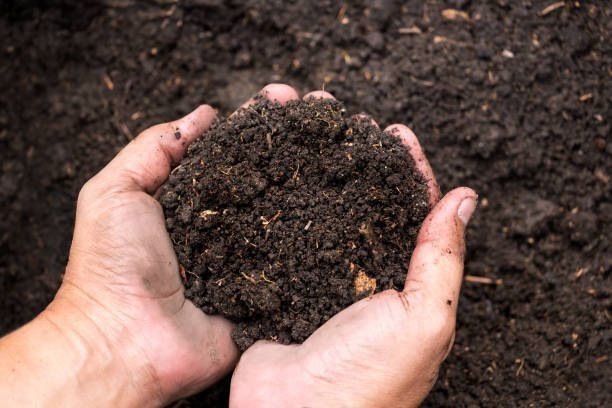
Understanding Your Soil Type: The Jar Test and Beyond
Sand, silt, clay or loam? Identify your soil in 10 minutes with a jar and water, then apply the exact watering, planting and amendment strategy for…
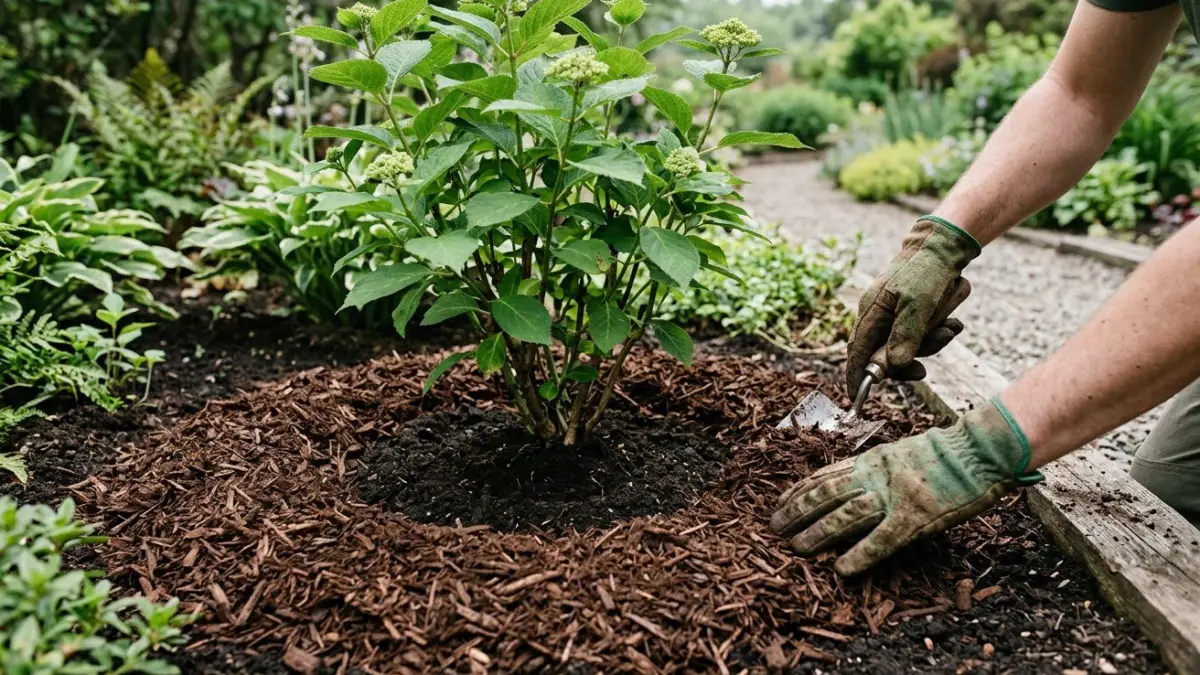
Soil pH Explained: Why It Unlocks (or Locks) Your Garden
The 6.0-7.0 sweet spot, why yellow leaves can mean locked iron, testing methods and safe ways to raise or lower pH, the master switch of plant…
Organic vs Synthetic Fertilizers: The Honest Comparison
NPK decoded, slow vs fast release, what each does to soil life long-term, and the hybrid feeding schedule professionals actually use.
Compost Tea: Brew Liquid Gold for Your Garden
Aerated compost tea step by step, ingredients, brewing times, application rates and honest expectations, a probiotic tonic, not a miracle.
Drip Irrigation & Smart Watering: Set It and Trust It
Design a drip system in an afternoon, add a smart controller, cut water use 50%, plus seasonal reprogramming so automation serves the season.
Mulching Mastery: The One Habit That Transforms Gardens
Organic vs stone mulch, correct depth, the donut-not-volcano rule, and how a 5 cm layer slashes watering, weeding and disease all at once.
Preventing Soil Compaction: Air, Water and Roots Need Space
Compacted soil starves roots of air and water. Learn how to recognise compaction, prevent it with paths, mulch and no-dig methods, and repair it with organic…
Reading Your Soil: Simple Tests Anyone Can Do
You do not need a lab to understand your soil. Use the squeeze test, drainage test, worm count, smell and a pH check to learn what…