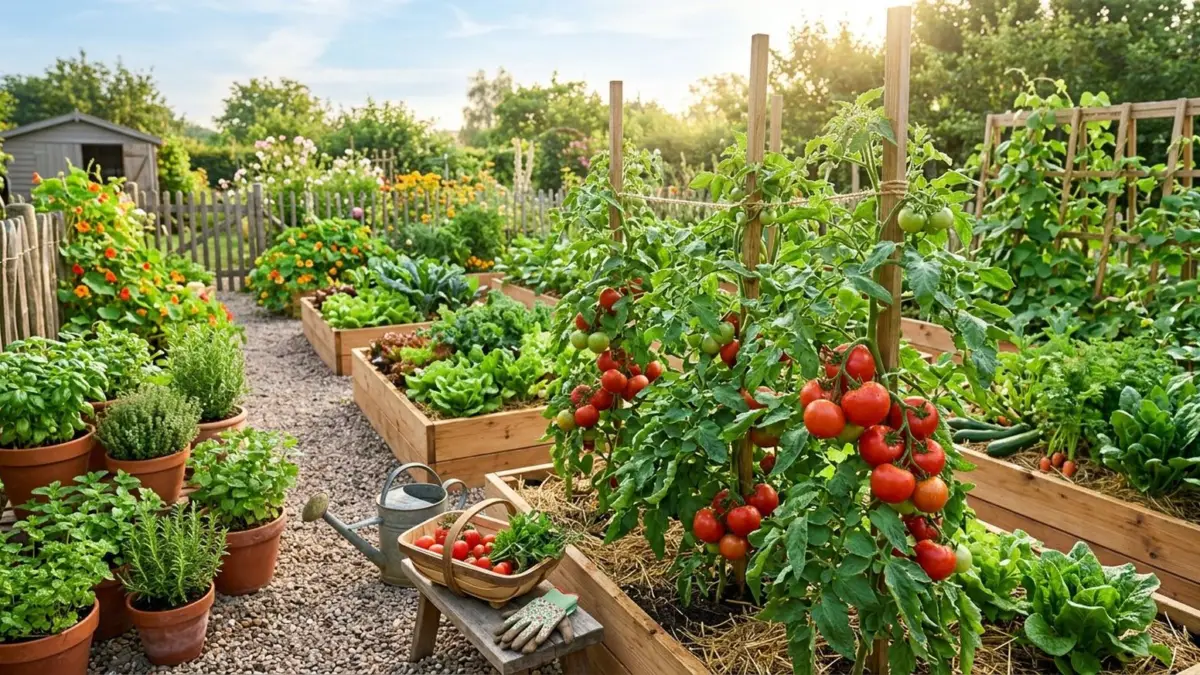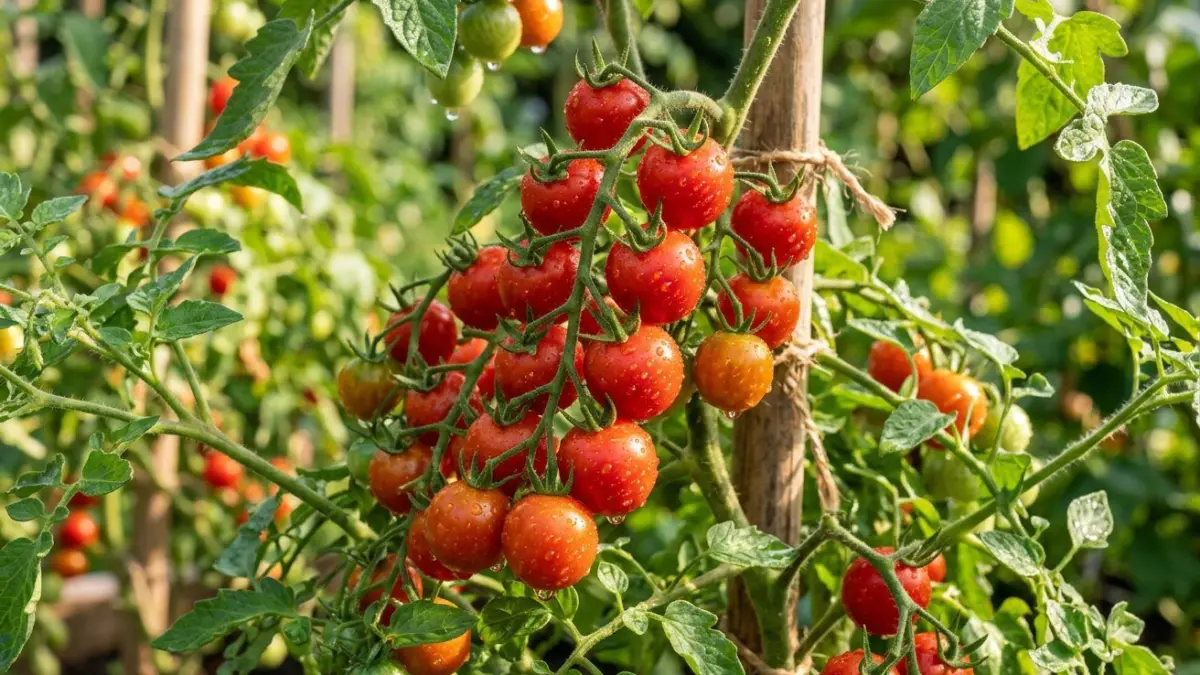
Tomatoes are the gateway drug of vegetable gardening — and the crop where small details swing the harvest wildly. Master five things (variety, depth, support, water, feeding) and you will never buy a flavorless supermarket tomato again.
Tomato Fundamentals
- Full sun, 6–8 hours — flavor is bottled sunshine
- Plant deep: bury two-thirds of the stem; it roots along the stem
- Consistent water — inconsistency causes cracked fruit and rot
- Support early: cages and stakes at planting, never after
Choose Your Type First
Determinate (bush) varieties fruit in one concentrated wave — ideal for sauce-makers and pots. Indeterminate (vining) types fruit all season until frost and want serious staking. Cherry types forgive the most and ripen fastest; big beefsteaks test your patience and your watering discipline. Match variety to season with the planting calendar — tomatoes are warm-season creatures to the bone.
Plant Deep, Stake Early
Strip the lower leaves and bury two-thirds of the stem — the buried stem sprouts roots, building a drought-proof plant. This makes tomatoes unique among transplants. Install the stake or cage at planting time; driving a stake through an established root ball in June is self-sabotage.
The Watering Discipline
Deep and even, always: irregular watering is the root of cracked fruits and blossom-end rot (a calcium-transport problem, not usually a soil-calcium problem). Water at the soil, never the leaves — wet foliage invites the blights profiled in our disease guide. Mulch 5 cm deep to stabilize moisture; the technique is in our mulching guide.
Prune Suckers (Indeterminates Only)
Suckers are the shoots in every leaf-stem junction. Remove those below the first flower cluster by snapping sideways on a dry morning; let the top ones stay. Two or three main stems ripen earlier and breathe better than a jungle of ten — airflow is disease prevention, the theme of our prevention guide.
Feeding Timeline
Compost at planting; hold nitrogen until the first fruits set, then switch to a lower-nitrogen feed every 2–3 weeks. Too-early nitrogen buys you a magnificent leafy bush with no tomatoes — the balance explained in our fertilizer guide.
Common Mistakes to Avoid
- Crowding plants 30 cm apart — 60 cm minimum saves your blight resistance.
- Refrigerating harvest — tomatoes lose flavor below 12°C; keep them on the counter.
- Reusing the same bed for tomatoes year after year — rotate to break disease cycles.
Frequently Asked Questions
Why are my tomato leaves curling?
Heat and wind curl is harmless (leaves stay green and firm); herbicide drift and virus curl are not. Check the pattern against our disease identification guide before acting.
Can I grow tomatoes in containers?
Yes — determinate and cherry types in 40–60 cm pots with the mix from our pot guide. Potted tomatoes need daily summer water and twice-monthly feeding.
Complete the meal: plant herb garden essentials beside your tomatoes, or visit the kitchen garden hub.
The Bed-Rotation Planner for tomatoes
Rotation is the cheapest pesticide and fertilizer ever invented: moving plant families breaks the pest and disease cycles that build in familiar soil, and alternates heavy feeders with soil-builders. The working four-block scheme: 1 fruiting crops (tomato, pepper, squash — the hungry ones), 2 roots and bulbs (carrot, onion — light feeders that loosen soil), 3 legumes (beans, peas — nitrogen bankers), 4 leaf crops (salad, brassicas). Each family advances one block yearly.
Even a four-bed balcony rotation works at pot scale. The log makes it function: without last year’s map, rotation is just a nice idea.
The Harvest-Extension Toolkit for tomatoes
Every crop’s season has both edges, and both are movable. Earlier: pre-warm soil with black plastic, transplant under cloches, choose fast varieties. Later: succession sow past the usual window, shade cloth through the first heat, and cold frames that add a month at each end of the cool seasons. Longer within the season: cut-and-come-again harvesting, frequent picking, and feeding at fruit set keep plants producing instead of winding down.
The toolkit’s net effect is a garden that feeds you weeks earlier, months longer, and refuses the empty gaps that make grocery stores necessary again.
Deep Dive: What Experienced Growers Know About tomatoes
The two-thirds burial rule makes tomatoes drought-proof: buried stem nodes initiate adventitious roots within two weeks, roughly doubling the root system before fruit load arrives. Pair it with the stake-at-planting rule and the deep-water training, and the plant’s architecture is locked in by midseason. The final discipline is nutritional patience — nitrogen withheld until first fruit set — which converts all that root and leaf investment into the only harvest that counts: fruit, not foliage.
Key Takeaways
- Blossom-End Rot: Black sunken fruit base from calcium interrupted by uneven water.
- Chitting: Pre-sprouting seed potatoes in light before planting.
- Hardening Off: Outdoor acclimation week that readies indoor-raised transplants.
- Succession Sowing: Repeat sowings at intervals for continuous harvest.
More Questions About Tomatoes
Should I pinch all suckers?
On indeterminates, remove below the first flower cluster and keep two or three main stems. Determinates fruit on their terms — leave them unpruned.
Why do my tomatoes crack?
Water swings after dry spells fill ripening fruit faster skins can stretch. Even moisture and mulch are the entire cure.
Can I replant tomato suckers?
Yes — a 15 cm sucker rooted in water becomes a clone of the parent in two weeks, a free late-season succession plant.
Field Questions Answered
How do I keep salad through summer heat?
Shade cloth at 30–50%, heat-tolerant varieties, and sowing in the shadiest bed. Or treat summer as salad's off-season and preserve the habit for autumn.
Can I plant a second crop where the first finished?
Immediately — that is succession's whole point. Radish after peas, salad after garlic, autumn brassicas after early beans.
Why are my herbs weak and leggy?
Not enough sun or not enough cutting. Herbs want harsh light and harsher harvests; the pampered windowsill basil is a candle burning at both ends.
What earns the most per square meter?
Herbs, salad, and vertically grown cherry tomatoes — high grocery price, small footprint, continuous harvest. Zucchini wins volume, not value.
Common Mistakes to Avoid with Tomatoes
- Planting more bed than your week can honestly water and weed.
- Beds beyond arm's reach — the middle third never gets tended.
- Full-sun crops in the only convenient spot; shade obedience beats convenience.
- Sowing everything the first warm weekend; soil temperature votes, not sunshine.
- Skipping thinning — crowded carrots and beets never size up.
Further Field Questions
How many hours of sun is the honest minimum?
Fruiting crops: six plus. Leafy crops and herbs: four manages. Below that, grow mushrooms or move the garden.
What's the best first-year fertilizer plan?
Compost in the bed at planting, then nothing until fruit set — then low-N feed every three weeks. Beginners overfeed nitrogen and harvest leaves.
How do I keep salad through summer heat?
Shade cloth at 30–50%, heat-tolerant varieties, and sowing in the shadiest bed. Or treat summer as salad's off-season and preserve the habit for autumn.
Can I plant a second crop where the first finished?
Immediately — that is succession's whole point. Radish after peas, salad after garlic, autumn brassicas after early beans.
Why are my herbs weak and leggy?
Not enough sun or not enough cutting. Herbs want harsh light and harsher harvests; the pampered windowsill basil is a candle burning at both ends.
What earns the most per square meter?
Herbs, salad, and vertically grown cherry tomatoes — high grocery price, small footprint, continuous harvest. Zucchini wins volume, not value.
Further Field Questions
How many hours of sun is the honest minimum?
Fruiting crops: six plus. Leafy crops and herbs: four manages. Below that, grow mushrooms or move the garden.
What's the best first-year fertilizer plan?
Compost in the bed at planting, then nothing until fruit set — then low-N feed every three weeks. Beginners overfeed nitrogen and harvest leaves.
How do I keep salad through summer heat?
Shade cloth at 30–50%, heat-tolerant varieties, and sowing in the shadiest bed. Or treat summer as salad's off-season and preserve the habit for autumn.
Can I plant a second crop where the first finished?
Immediately — that is succession's whole point. Radish after peas, salad after garlic, autumn brassicas after early beans.
Why are my herbs weak and leggy?
Not enough sun or not enough cutting. Herbs want harsh light and harsher harvests; the pampered windowsill basil is a candle burning at both ends.
What earns the most per square meter?
Herbs, salad, and vertically grown cherry tomatoes — high grocery price, small footprint, continuous harvest. Zucchini wins volume, not value.
Further Field Questions
How many hours of sun is the honest minimum?
Fruiting crops: six plus. Leafy crops and herbs: four manages. Below that, grow mushrooms or move the garden.
What's the best first-year fertilizer plan?
Compost in the bed at planting, then nothing until fruit set — then low-N feed every three weeks. Beginners overfeed nitrogen and harvest leaves.
How do I keep salad through summer heat?
Shade cloth at 30–50%, heat-tolerant varieties, and sowing in the shadiest bed. Or treat summer as salad's off-season and preserve the habit for autumn.
Can I plant a second crop where the first finished?
Immediately — that is succession's whole point. Radish after peas, salad after garlic, autumn brassicas after early beans.
Why are my herbs weak and leggy?
Not enough sun or not enough cutting. Herbs want harsh light and harsher harvests; the pampered windowsill basil is a candle burning at both ends.
What earns the most per square meter?
Herbs, salad, and vertically grown cherry tomatoes — high grocery price, small footprint, continuous harvest. Zucchini wins volume, not value.
Further Field Questions
How many hours of sun is the honest minimum?
Fruiting crops: six plus. Leafy crops and herbs: four manages. Below that, grow mushrooms or move the garden.
What's the best first-year fertilizer plan?
Compost in the bed at planting, then nothing until fruit set — then low-N feed every three weeks. Beginners overfeed nitrogen and harvest leaves.
How do I keep salad through summer heat?
Shade cloth at 30–50%, heat-tolerant varieties, and sowing in the shadiest bed. Or treat summer as salad's off-season and preserve the habit for autumn.
Can I plant a second crop where the first finished?
Immediately — that is succession's whole point. Radish after peas, salad after garlic, autumn brassicas after early beans.
Why are my herbs weak and leggy?
Not enough sun or not enough cutting. Herbs want harsh light and harsher harvests; the pampered windowsill basil is a candle burning at both ends.
What earns the most per square meter?
Herbs, salad, and vertically grown cherry tomatoes — high grocery price, small footprint, continuous harvest. Zucchini wins volume, not value.
Further Field Questions
How many hours of sun is the honest minimum?
Fruiting crops: six plus. Leafy crops and herbs: four manages. Below that, grow mushrooms or move the garden.
What's the best first-year fertilizer plan?
Compost in the bed at planting, then nothing until fruit set — then low-N feed every three weeks. Beginners overfeed nitrogen and harvest leaves.
How do I keep salad through summer heat?
Shade cloth at 30–50%, heat-tolerant varieties, and sowing in the shadiest bed. Or treat summer as salad's off-season and preserve the habit for autumn.
Can I plant a second crop where the first finished?
Immediately — that is succession's whole point. Radish after peas, salad after garlic, autumn brassicas after early beans.
Why are my herbs weak and leggy?
Not enough sun or not enough cutting. Herbs want harsh light and harsher harvests; the pampered windowsill basil is a candle burning at both ends.
What earns the most per square meter?
Herbs, salad, and vertically grown cherry tomatoes — high grocery price, small footprint, continuous harvest. Zucchini wins volume, not value.
Further Field Questions
How many hours of sun is the honest minimum?
Fruiting crops: six plus. Leafy crops and herbs: four manages. Below that, grow mushrooms or move the garden.
What's the best first-year fertilizer plan?
Compost in the bed at planting, then nothing until fruit set — then low-N feed every three weeks. Beginners overfeed nitrogen and harvest leaves.
How do I keep salad through summer heat?
Shade cloth at 30–50%, heat-tolerant varieties, and sowing in the shadiest bed. Or treat summer as salad's off-season and preserve the habit for autumn.
Can I plant a second crop where the first finished?
Immediately — that is succession's whole point. Radish after peas, salad after garlic, autumn brassicas after early beans.
Why are my herbs weak and leggy?
Not enough sun or not enough cutting. Herbs want harsh light and harsher harvests; the pampered windowsill basil is a candle burning at both ends.
What earns the most per square meter?
Herbs, salad, and vertically grown cherry tomatoes — high grocery price, small footprint, continuous harvest. Zucchini wins volume, not value.