Quick answers
- Why does timing matter so much in gardening?
- Plants respond to temperature, day length and moisture. The same seed sown three weeks too early or too late can fail or thrive, so doing the right job at the right time beats working harder.
- How do I find the right dates for my garden?
- Look up your average last spring frost and first autumn frost, or in hot climates your cool and hot seasons, then count backwards and forwards from them. Refine with your own notes.
- What are the most important jobs in each season?
- Spring: sow and plant. Summer: water, feed and harvest. Autumn: plant trees, shrubs and bulbs and prepare soil. Winter: protect, prune dormant plants and plan.
- Does this calendar work in hot climates?
- The principles do. Replace the four seasons with a cool growing season, a warm season and a heat or monsoon break, and plan sowing, shading and watering around them.
Key takeaways
- Garden by conditions, not by the calendar. Soil temperature, frost dates and day length decide timing.
- Each season has one main job: sow, tend, plant and protect, and plan.
- Find your frost dates and build your own calendar from them.
- Weekly habits matter: look, water, weed, harvest, and clean tools.
- In hot climates, the cool season is the main growing time and the heat is the pause.
- Keep a journal; it turns experience into a calendar that fits your garden.
Table of contents23 sections
- The big idea: plants follow conditions, not dates
- Find your own calendar
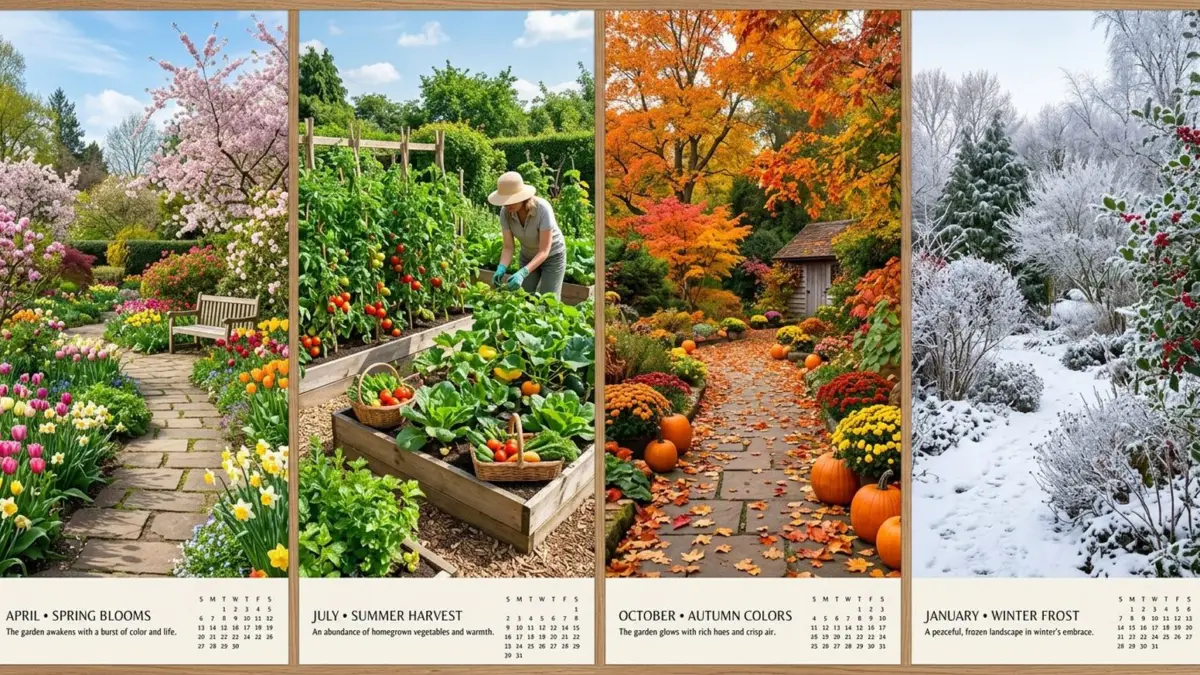
- The garden year at a glance
- Spring: sow and plant
- Summer: tend and harvest
- Autumn: plant and prepare
- Winter: protect and plan
- Skills that cut across the seasons
- Seasonal gardening in hot and subtropical climates
- Common mistakes and how to avoid them
- Tools and materials for the seasonal gardener
- When should I sow my first seeds?
- Can I plant trees in summer?
- Is winter pruning always right?
- How do I extend the growing season?
- What should I do if a late frost is forecast?
- How do I know my last frost date?
- Do I need to do anything in the garden in winter?
- What is the best way to plan the year?
- How do I garden in a very hot climate?
- What is the easiest habit that improves a garden?
- Explore the eight guides
- Conclusion: garden with the seasons
Ask experienced gardeners what separates good gardens from average ones, and many will say the same thing: timing. They sow when the soil is ready, prune when the plant is ready, plant trees when they will root best and protect tender plants just before the cold arrives. None of this is mysterious. It is simply knowing what the garden needs in each season and having a calendar you trust.
This guide is the foundation of the Seasonal Gardening pillar. It explains how the seasons work in a garden, how to find your own dates, what to do in each season and how to adapt the calendar to hot and subtropical climates. It then connects to eight focused guides for every season and task. Read it once to see the full year, then keep it as your map.
The big idea: plants follow conditions, not dates
A calendar is a useful shorthand, but plants do not read it. They respond to a few conditions:
- Temperature: seeds germinate in a certain soil temperature range, and tender plants die in frost.
- Day length: lettuce, spinach and coriander bolt as days lengthen; onions bulb according to day length; chrysanthemums flower in short days.
- Moisture: rain, drought and humidity decide watering, disease risk and growth.
- Dormancy: trees and shrubs rest in winter; pruning, planting and moving are best done at the right stage.
That is why the same job falls in March for one gardener and in May for another. The skill is learning to read your conditions: soil temperature, frost dates and the plants themselves. See The Seasonal Planting Calendar for the method.
Find your own calendar
- Find your frost dates. Look up the average last spring frost and first autumn frost for your area. In frost-free climates, note your cool and hot seasons and rainy period.
- Measure soil temperature. A soil thermometer in the top 5 cm tells you when to sow (see How to Plant Seeds Step by Step).
- Count backwards and forwards. Start tomatoes six to eight weeks before the last frost; plant out one to two weeks after it.
- Add your notes. Record what you do and what happens in a journal (see Planning for Next Year).
- Adjust each year. Weather varies; your calendar should flex.
The garden year at a glance
| Season | Main job | Typical tasks | Guide |
|---|---|---|---|
| Spring | Sow and plant | Clear beds, compost and mulch, prune, sow seeds, harden off, plant out after frost, feed, start pest watch | Spring Garden Tasks |
| Summer | Tend and harvest | Water deeply, mulch, deadhead, feed containers, prune after flowering, harvest, sow autumn crops | Summer Garden Maintenance |
| Autumn | Plant and prepare | Plant trees, shrubs and bulbs, collect leaves, clear spent crops, sow green manure, protect tender plants | Autumn Garden Tasks |
| Winter | Protect and plan | Prune dormant plants, repair, care for tools, start slow seeds, plan, feed birds | Winter Garden Care |
For a month-by-month version see The Gardener’s Year-Round Checklist.
Spring: sow and plant
As soil warms, everything begins at once. Start by clearing and top-dressing beds with compost, prune at the right time, sow cool-season crops and harden off seedlings, then plant tender crops after the last frost. Feed and mulch, and start checking for slugs, aphids and flea beetles before they build up. The key rule is to wait for workable soil: digging and sowing wet, cold ground does more harm than good. Full details: Spring Garden Tasks.
Summer: tend and harvest
Water deeply and early, mulch to hold moisture, deadhead flowers and harvest vegetables regularly to keep plants producing. Feed hungry plants such as tomatoes and containers, but ease off in extreme heat. Prune spring-flowering shrubs after they bloom, and sow second crops for autumn. Heat brings pests such as spider mites and aphids, so patrol weekly. Full details: Summer Garden Maintenance.
Autumn: plant and prepare
Autumn is the best planting season for trees, shrubs, perennials and spring bulbs, because warm soil and cooler weather help roots establish. Clear spent crops and diseased material but leave seed heads and shelter for wildlife, make leaf mould, mulch or green-manure empty beds, and protect tender plants and equipment before frost. Full details: Autumn Garden Tasks.
Winter: protect and plan
Winter is for protecting plants from cold and wet, pruning dormant trees and shrubs on dry days, repairing structures, looking after tools and starting slow seeds indoors. It is also the best time to review the year and plan the next. In mild climates, winter is the main growing season. Full details: Winter Garden Care.
Skills that cut across the seasons
- Succession planting keeps harvests and blooms continuous (see Succession Planting).
- Frost protection saves plants at the edges of the season (see Frost Protection Methods).
- Planning and record-keeping turn experience into a better garden each year (see Planning for Next Year).
Seasonal gardening in hot and subtropical climates
Where winters are mild and summers fierce, the garden year has a different rhythm.
| Period | What happens | What to do |
|---|---|---|
| Cool season (autumn to early spring) | Ideal temperatures for leafy crops, peas, carrots, cauliflower and flowers | Sow and plant intensively; plant trees and shrubs; prune and feed |
| Warm season (late winter to early summer) | Rising heat suits beans, cucumbers, okra, gourds and melons | Sow heat-lovers early; mulch; install irrigation |
| Heat peak | Growth slows; plants and people are stressed | Shade, mulch, dawn watering, heat-tolerant crops; improve soil and propagate |
| Monsoon or humid season | Heavy rain, humidity, fungal disease | Improve drainage, raise beds, thin plants for airflow, avoid overfeeding |
The principles are the same: know your conditions, count from your turning points and keep notes. Local gardeners, nurseries and agricultural offices are valuable sources of local calendar knowledge.
Common mistakes and how to avoid them
- Planting by date instead of conditions. Use soil temperature and frost dates.
- Sowing everything at once. Stagger sowings for continuous harvest.
- Pruning at the wrong time. Prune by flowering time.
- Skipping hardening off. Introduce seedlings gradually to outdoor conditions.
- Neglecting the quiet seasons. Winter planning and autumn soil care shape next year.
- Not protecting for frost. One cold night can undo a season.
- Failing to keep records. A journal makes the next year easier.
Tools and materials for the seasonal gardener
| Item | Why | Priority |
|---|---|---|
| Garden journal or calendar app | Records dates, results and plans | Essential |
| Soil thermometer | Sow at the right temperature | Highly useful |
| Min-max thermometer | Track frost and heat | Highly useful |
| Horticultural fleece, hoops and pegs | Frost protection | Essential in frosty climates |
| Shade cloth (30–50%) | Heat protection | Essential in hot climates |
| Compost bin and mulch | Feeds and protects soil all year | Essential |
| Seed trays and a bright window or lights | Early starts | Useful |
| Fancy “weather stations” and gadgets | Rarely improve results | Skip |
When should I sow my first seeds?
Count back from your last frost date: onions and peppers about 10 weeks before, tomatoes 6–8 weeks, and outdoors, hardy crops as soon as soil is workable. See The Seasonal Planting Calendar.
Can I plant trees in summer?
You can, but autumn (or early spring) is far better. Summer planting needs frequent watering and shade for the first season.
Is winter pruning always right?
For many trees and shrubs, yes, but not for plums and cherries (prune in summer) and not for spring-flowering shrubs (prune after flowering).
How do I extend the growing season?
Use fleece, cloches and cold frames, plant hardy and quick-maturing varieties, and sow in succession (see Succession Planting).
What should I do if a late frost is forecast?
Water the soil, cover tender plants with fleece on a frame before dusk and remove covers in the morning. See Frost Protection Methods.
How do I know my last frost date?
Check your local weather service or agricultural extension office for the average date, then add one or two weeks for tender crops.
Do I need to do anything in the garden in winter?
Yes, though less. Protect tender plants, prune dormant trees, maintain tools, feed birds and plan. See Winter Garden Care.
What is the best way to plan the year?
Review last year’s notes, draw a bed plan with crop rotation, order seed early and build a calendar from your own dates. See Planning for Next Year.
How do I garden in a very hot climate?
Treat the cool season as the main growing time, use shade and mulch in the heat and plan for monsoon humidity. Use the table above as a starting point.
What is the easiest habit that improves a garden?
A weekly walk with a notebook: look for pests, check moisture, harvest, weed and jot down dates.
Explore the eight guides
- Spring Garden Tasks: clean-up, planting, feeding and pest watch.
- Summer Garden Maintenance: watering, pruning, deadheading and harvest.
- Autumn Garden Tasks: bulbs, clean-up and winter preparation.
- Winter Garden Care: protection, planning and indoor projects.
- The Gardener’s Year-Round Checklist; what to do each month.
- Succession Planting: continuous harvest and bloom.
- Frost Protection Methods: row covers, cloches and when to act.
- Planning for Next Year: evaluate, order and prepare.
Pair them with Plant Growing Guides for the fundamentals, Vegetables & Herbs for crops and Soil, Water & Fertilizer for the ground beneath it all.
Conclusion: garden with the seasons
The seasons are not obstacles but a rhythm. When you work with them, sowing when the soil is ready, planting when roots will thrive, resting when the garden rests, gardening feels easier and results improve. Start by finding your frost dates, keep a simple journal and use each season’s guide as your checklist. Within a year or two you will have a calendar of your own, and a garden that feels as if it almost runs itself.
All Seasonal Gardening guides
Spring Garden Tasks: Clean-Up, Planting, Feeding and Pest Watch
A practical spring checklist: tidy beds, wake up the soil, prune at the right time, sow and plant out, feed and mulch, and start your pest…
Summer Garden Maintenance: Watering, Pruning, Deadheading and Harvest
Keep the garden thriving through heat and growth: water deeply, mulch, deadhead, feed containers, prune after flowering, harvest regularly and manage pests and shade.
Autumn Garden Tasks: Bulbs, Clean-Up and Winter Preparation
Autumn is the best time for planting trees, shrubs and spring bulbs. Follow this checklist for clearing beds, collecting leaves, feeding soil, protecting tender plants and…
Winter Garden Care: Protection, Planning and Indoor Projects
Winter is rest and preparation. Protect plants from cold and wet, prune dormant trees, maintain tools, feed the birds, start seeds indoors and plan the year…
The Gardener’s Year-Round Checklist: What to Do Each Month
A month-by-month garden calendar for temperate climates, with notes for hot and subtropical regions. Know exactly what to sow, plant, prune, feed and protect in every…
Succession Planting: Staggering for Continuous Harvest and Bloom
Avoid gluts and gaps. Learn the four succession methods (repeat sowing, intercropping, relay planting, mixed varieties), with sowing intervals for popular crops and flowers.
Frost Protection Methods: Row Covers, Cloches and When to Act
Know when frost threatens and how to protect plants: fleece and row covers, cloches, cold frames, mulch, watering tricks and moving pots. Includes what to protect…
Planning for Next Year: Evaluate, Order and Prepare
Use the quiet months to review what worked, learn from failures, design new beds, plan crop rotation, order seed and prepare soil and tools, so next…