Quick answers
- What is the difference between annuals and perennials?
- Annuals complete their life cycle in one season and must be replanted each year. Perennials live for three or more years, dying back in winter and regrowing from the same roots each spring.
- Which flowers bloom longer?
- Annuals usually flower non-stop from early summer to frost. Most perennials flower for two to six weeks, so a good border combines several types for continuous colour.
- Which is cheaper?
- Annuals are cheap to start but need replacing yearly. Perennials cost more up front but save money over time and can be divided into free plants every few years.
- What is a biennial?
- A plant that grows leaves in year one and flowers in year two, then dies. Foxgloves, wallflowers, sweet williams and parsley are common examples; many self-seed so they appear to be perennials.
Key takeaways
- Perennials are the backbone, annuals are the colour. Use both for a border that never goes dull.
- Aim for roughly 70% perennials and 30% annuals in a mixed border.
- Annuals fill gaps while perennials mature. Fast colour in year one, structure from year two.
- Divide perennials every three to five years to get free plants and keep them flowering.
- Tender perennials act as annuals in cold climates. Geraniums, fuchsias and salvias are examples.
- Deadheading doubles the flowering of annuals and many perennials.
Table of contents9 sections
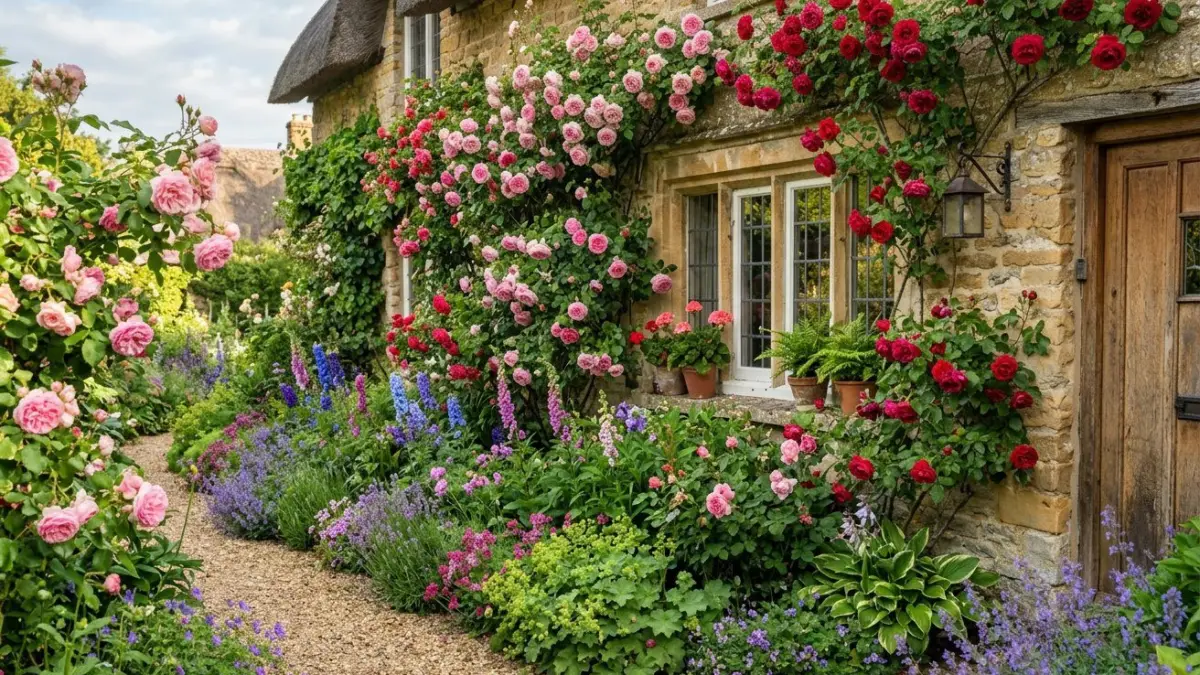
Every flower border is a conversation between two kinds of plant. Annuals are sprinters: they sprout, bloom flat out and die within a season. Perennials are marathon runners: slower to get going, but they come back stronger every year. Understanding what each does best, and how to combine them, is the secret to borders that look good in every month.
This guide compares the two groups, shows where each belongs and gives simple planting formulas. It forms part of the Flower Gardening pillar and works alongside Low-Maintenance Flower Borders and Flowers That Attract Pollinators.
Annuals, biennials and perennials compared
| Annuals | Biennials | Perennials | |
|---|---|---|---|
| Life cycle | One season | Two seasons | Three years or more |
| Flowering | Long, usually until frost | Second year only | Short burst, often 2–6 weeks |
| Cost over time | Recurring | Low (self-seed) | One-off; free divisions later |
| Effort | Sow or buy each year | Sow in summer for next year | Divide every 3–5 years |
| Best for | Gaps, containers, instant colour, cutting | Cottage style, naturalising | Permanent borders, structure |
| Examples | Zinnia, cosmos, marigold, petunia, sweet pea | Foxglove, wallflower, sweet william | Echinacea, salvia, daylily, peony, geranium (cranesbill) |
The strengths of annuals
- Speed: sown in spring, most are in full bloom within 8–12 weeks.
- Flexibility: change your colour scheme every year without commitment.
- Pollinators and cutting: zinnias, cosmos and sunflowers feed bees and fill vases (see Cutting Garden).
- Problem solving: they fill gaps where perennials have finished or not yet grown.
The trade-off is work: sowing, hardening off, planting out and, in autumn, clearing. Choose hardy annuals (calendula, cornflower, nigella) for direct sowing in autumn or early spring, and half-hardy ones (zinnia, cosmos, tagetes) once frost has passed. See How to Plant Seeds Step by Step.
The strengths of perennials
- Return on investment: one purchase gives years of flowers.
- Deep roots: they cope better with dry spells once established.
- Structure and texture: grasses, hostas, salvias and sedums provide form long after flowers fade.
- Free plants: division multiplies them at no cost.
The trade-offs: most have a short bloom season, and they take a year or two to fill out, so the first season can look sparse.
Combining them: the 70/30 border
A reliable formula for a mixed border is roughly 70% perennials (and shrubs) for structure and 30% annuals for colour. Perennials form the backbone and annuals weave between them.
- Choose a backbone. Pick 5–7 perennials with different flowering windows: spring (hellebores, geums), early summer (peonies, geraniums), midsummer (echinacea, salvia), late summer (rudbeckia, sedum) and autumn (asters, grasses).
- Plant in drifts. Odd numbers (3, 5, 7) of each perennial look natural and repeat the rhythm along the border.
- Add annuals in gaps. Tuck zinnias, cosmos or nicotiana between perennials in late spring, especially where spring bulbs and early perennials have faded.
- Edge with low annuals. Alyssum or marigolds at the front hide leaf decline and give a tidy finish.
- Review each autumn. Note what peaked when and where gaps appeared; adjust next year.
Where each type belongs
- Containers and hanging baskets: mostly annuals and tender perennials, because they bloom constantly.
- Permanent borders and island beds: perennials, shrubs and grasses, with annual fillers.
- Cottage and wildlife gardens: a mix of perennials and self-seeding annuals and biennials.
- Cutting beds: mostly annuals, sown in succession.
- Low-maintenance beds: tough perennials plus a few reliable self-seeders (see Low-Maintenance Flower Borders).
Care that makes the difference
- Deadhead annuals regularly; it prevents seed set and keeps flowers coming. Cut perennials like salvia and catmint back by a third after the first flush for a second bloom.
- Divide clump-forming perennials in spring or autumn every three to five years, when the centre dies out.
- Feed annuals in pots every two weeks; perennials need only an annual compost mulch.
- Cut back perennials in late winter, leaving seed heads for birds and structure.
Habits that undermine results
- Planting only perennials and ending up with a border that is empty for half the year
- Planting only annuals and facing the work of replanting every spring
- Crowding young perennials; give them room to grow into the space
- Forgetting to deadhead and wondering why flowering stops in August
- Planting tender perennials outdoors before frost has passed
Tips that make it easier
- Let a few annuals self-seed such as calendula, nigella and poppies. They return by themselves.
- Group by watering needs: sun-loving drought-tolerant perennials together, thirsty annuals in pots.
- Take cuttings of tender perennials in late summer to overwinter indoors (see Propagation by Cuttings).
What to read next
Plan a full-season border with 12 Flowering Plants for Full Sun and Shade-Loving Flowers, add spring colour with Flower Bulbs 101, and choose colours with Garden Color Theory. Back to Flower Gardening.
More in Flower Gardening
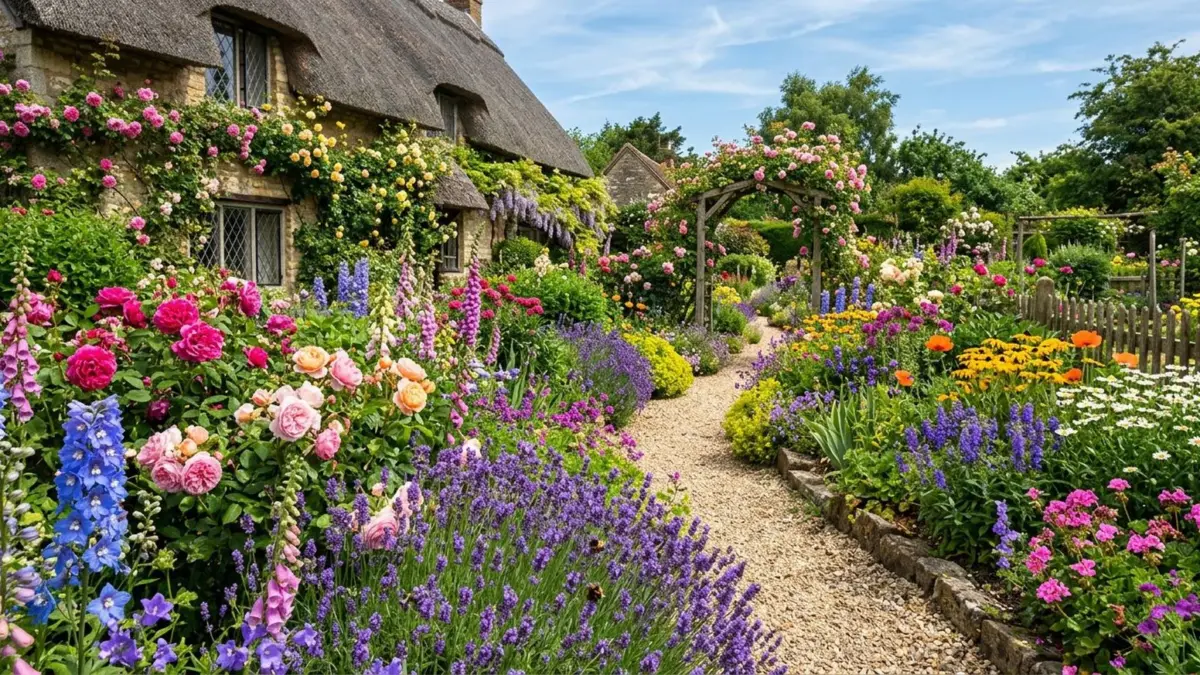
Cutting Garden: Growing Flowers for Bouquets
Plan, plant and harvest a cutting garden that fills your home with fresh flowers from spring to frost: the best varieties, row layout, succession sowing and…
12 Flowering Plants That Laugh at Full Sun
Six-plus hours of blazing sun kills fussy flowers but powers these proven performers: the heat-proof bloomers that flower hardest exactly where others fry.
Shade-Loving Flowers: 10 Gorgeous Picks for Dark Corners
That shady corner is not a dead zone. From impatiens to hydrangeas, discover flowers that turn low light into your garden's most elegant room.