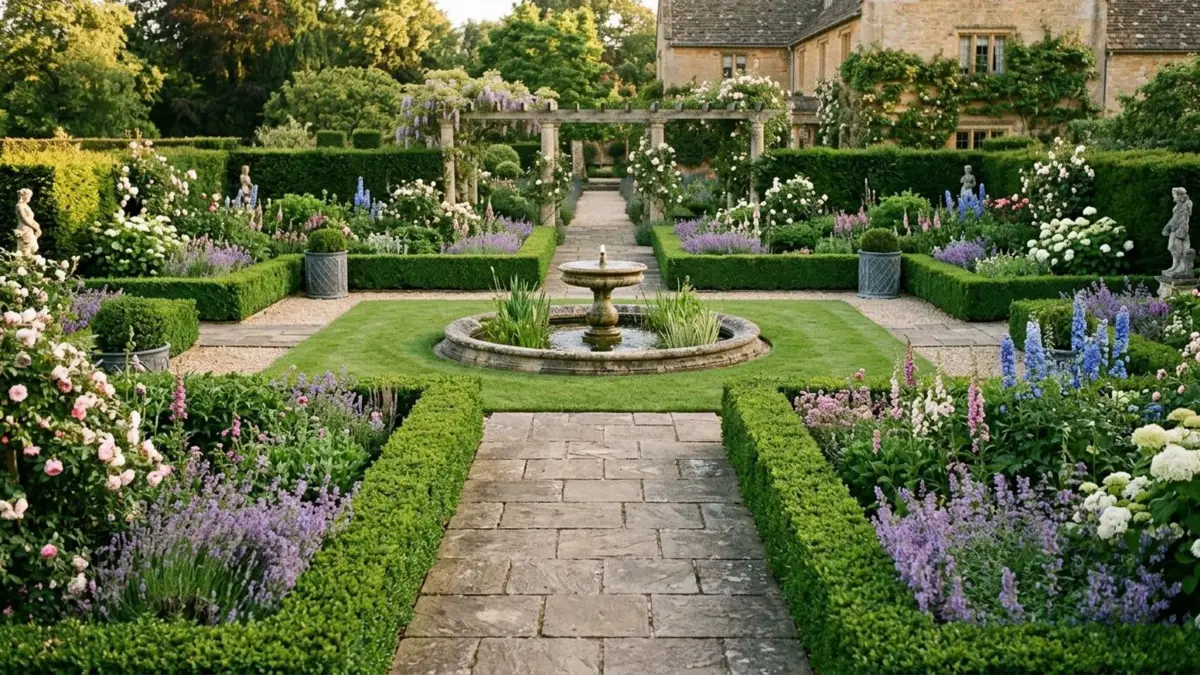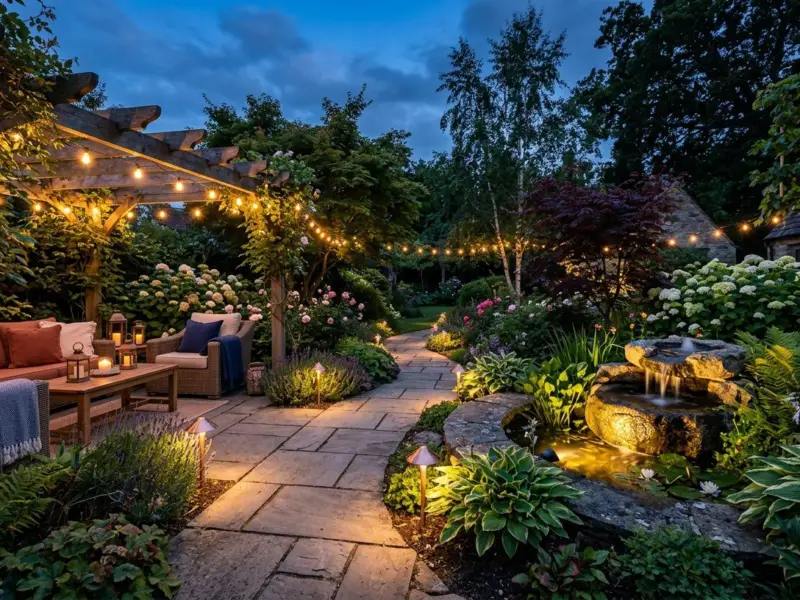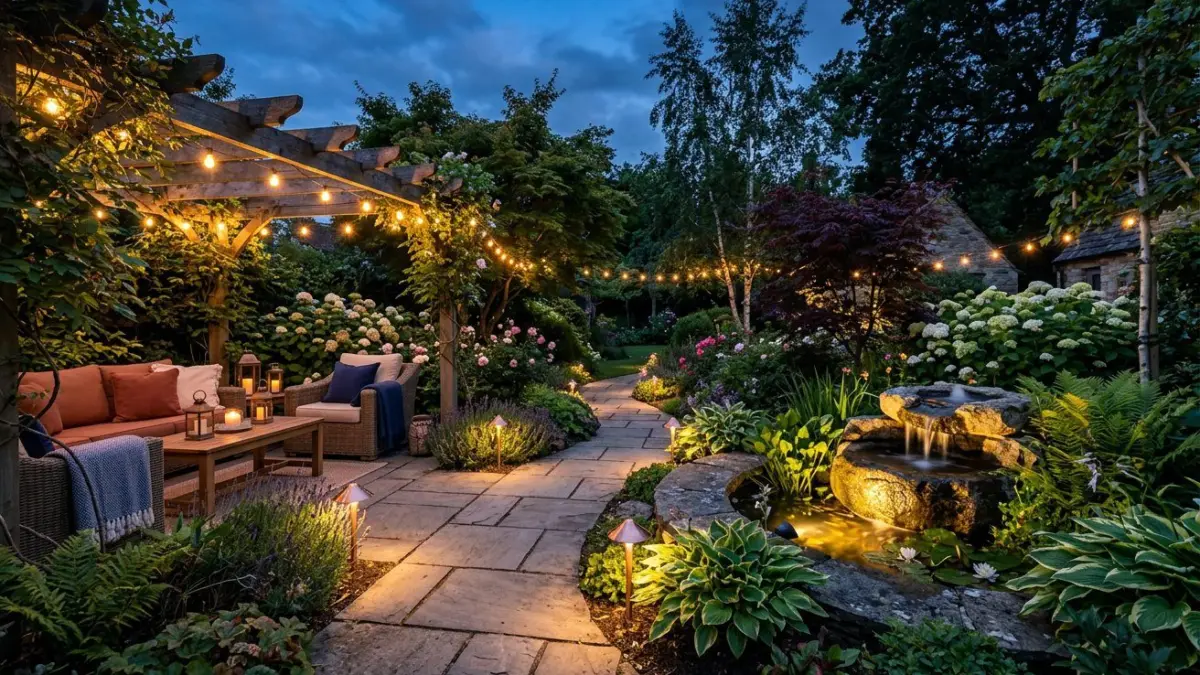
Hardscape is what your garden looks like in February — and what your feet feel every day. Paths, edging and paved areas carry the structure while plants sleep, and choosing them well is half of design.
Material Cheat Sheet
- Gravel: cheapest, best drainage, DIY in a weekend
- Stepping stones: fast, charming, plantable edges
- Brick & pavers: formal, durable, need a firm base
- Stepping log slices / deck boards: soft, warm, budget-friendly
Design the Line First
Paths do more than carry feet; they aim the eye. A gently curving path hides its end and makes small gardens feel larger (the destination trick from our small garden guide); a straight path lends formality and speed. Whatever the line, make it honestly walkable: 60–90 cm wide for one person, 1.2 m+ for two abreast — stingy paths get cut across, and the worn diagonal tells the truth about your design.
Lay a Gravel Path This Weekend
Mark the route, remove 10 cm of soil, lay landscape fabric, edge both sides (steel, brick or timber — edging is what separates “path” from “spilled gravel”), then fill with 5–7 cm of gravel. Compact, rake, done. For stepping stones, set each on a bed of sand level with the soil so mowers glide over and feet do not stub. Serious paved patios need a compacted base — that is the one job worth hiring out.
Drainage: The Invisible Design Layer
Water always wins. Slope hard surfaces 1–2% away from the house, let gravel and permeable joints drink the rain, and solve low spots before paving them — the standing-water test and fixes live in our soil and drainage guide. Freeze-thaw climates especially punish trapped water under paving.
Soften the Edges
Hardscape alone is a parking lot. Let thyme and ajuga stitch path edges, spill a trailing groundcover over walls (picks in our border guide), and leave planting pockets in stonework. The ratio professionals aim for: about one-third hardscape, two-thirds planting.
Common Mistakes to Avoid
- Skipping fabric under gravel — weeds and sinking stones within a year.
- No edging — gravel migrates into lawn and beds with every rain.
- Flat paving in rainy climates — puddles become mosquito nurseries.
Frequently Asked Questions
Gravel or mulch for a garden path?
Gravel for main routes (stays firm); bark mulch for casual bed-side strolls (softer, cheaper, feeds soil but needs topping up — see our mulching guide).
How do I stop weeds in a path?
Fabric plus edge restraint plus 5 cm+ of gravel prevents nearly all; stragglers pull from loose gravel in seconds. Persistent invaders get the organic treatment from our remedies guide.
Next in the hub: no yard? Build upward with balcony and terrace gardens, or see the whole design hub.
The Desire-Line Audit for garden paths
Before any path or patio is planned, watch where feet actually go: worn shortcuts across lawns, the gate people really use, the corner that collects chairs. Desire lines are the garden’s own design document, written by use. Professional redesigns begin by photographing these traces for a week — then either paving the line the feet chose or building a destination worth rerouting them for.
Fighting desire lines with fences and signs never works for long. Every element placed against them requires maintenance forever; every element placed along them maintains itself.
The Maintenance Budget for garden paths
Every design carries a hidden operating cost measured in weekly minutes. Lawn: the highest at 30–60. Flower borders: 15–30 in season. Trees and mulched shrub beds: minutes. Hardscape with container accents: near zero. Honest designers budget this column first — a beautiful plan demanding hours you do not have becomes a source of guilt, not joy.
The working formula: list the plan’s elements, write each one’s weekly minutes, total them against your true availability, then trade down elements until the budget balances. The garden that gets tended is the one designed to be tended.
Deep Dive: What Experienced Growers Know About garden paths
The width test happens before any material purchase: walk the route carrying the widest thing you regularly carry — a wheelbarrow, a ladder — and add ten centimeters. Paths sized by furniture rather than footsteps never develop the worn shortcut that confesses a stingy design. For curves, lay a garden hose on the ground and live with the line for a week before committing; the hose reveals how the path will actually feel walked daily.
Key Takeaways
- Garden Room: A partially enclosed zone that reads as its own space.
- Hardscape: The built surfaces — paths, walls, paving — that carry the garden's bones.
- Drift: A repeated planting group of one species; rhythm in plant form.
- Advance/Recede: Hot colors pull forward, cool colors push back — space-shaping by hue.
More Questions About Garden Paths
Can I lay a path over lawn without digging?
Yes — stepping stones set on sand at grass height, mowable edges and all. For gravel or paving, dig properly; shortcuts there migrate.
How do I stop gravel spreading everywhere?
Steel or brick edging installed proud of the surface, fabric underneath, and 5–7 cm of stone. The edging does ninety percent of the work.
Is a sloped path a drainage problem?
Manageable — slope it across, not down the walk, and add a shallow drain channel where water wants to cross. Water always wins unless invited around.
Field Questions Answered
Is it worth hiring a designer for a small garden?
For one consultation with a master plan, often yes — small gardens concentrate every mistake. The plan guides years of your own labor.
What paving suits hot climates?
Light colors that stay walkable, permeable joints that cool, and shade from a structure or tree over the main seating surface.
How do I make a rental garden portable?
Containers, trellis panels in freestanding frames, and a lighting kit on solar. Design everything to survive the move — because it must.
When should trees be part of the design?
First — they take longest and shape everything: shade, views, scale. The tree decision is the plan's opening move, not its decoration.
Common Mistakes to Avoid with Garden Paths
- Buying plants before the light map exists.
- One of everything at the nursery; no repetition, no rhythm.
- Hardscape laid flat — puddles, ice, mosquitoes.
- Paths too narrow, then cut across forever after.
- Tiny pots and fussy décor shrinking an already small garden.
Further Field Questions
Where should the seating go?
Where the evening light falls and the best view faces — then build the garden toward that chair. The seat is the design's center of gravity.
How do I design on a slope?
Terraces, steps, and water-wise planting bands; never fight water downhill — route it, slow it, and plant the bands it crosses.
Is it worth hiring a designer for a small garden?
For one consultation with a master plan, often yes — small gardens concentrate every mistake. The plan guides years of your own labor.
What paving suits hot climates?
Light colors that stay walkable, permeable joints that cool, and shade from a structure or tree over the main seating surface.
How do I make a rental garden portable?
Containers, trellis panels in freestanding frames, and a lighting kit on solar. Design everything to survive the move — because it must.
When should trees be part of the design?
First — they take longest and shape everything: shade, views, scale. The tree decision is the plan's opening move, not its decoration.
Further Field Questions
Where should the seating go?
Where the evening light falls and the best view faces — then build the garden toward that chair. The seat is the design's center of gravity.
How do I design on a slope?
Terraces, steps, and water-wise planting bands; never fight water downhill — route it, slow it, and plant the bands it crosses.
Is it worth hiring a designer for a small garden?
For one consultation with a master plan, often yes — small gardens concentrate every mistake. The plan guides years of your own labor.
What paving suits hot climates?
Light colors that stay walkable, permeable joints that cool, and shade from a structure or tree over the main seating surface.
How do I make a rental garden portable?
Containers, trellis panels in freestanding frames, and a lighting kit on solar. Design everything to survive the move — because it must.
When should trees be part of the design?
First — they take longest and shape everything: shade, views, scale. The tree decision is the plan's opening move, not its decoration.
Further Field Questions
Where should the seating go?
Where the evening light falls and the best view faces — then build the garden toward that chair. The seat is the design's center of gravity.
How do I design on a slope?
Terraces, steps, and water-wise planting bands; never fight water downhill — route it, slow it, and plant the bands it crosses.
Is it worth hiring a designer for a small garden?
For one consultation with a master plan, often yes — small gardens concentrate every mistake. The plan guides years of your own labor.
What paving suits hot climates?
Light colors that stay walkable, permeable joints that cool, and shade from a structure or tree over the main seating surface.
How do I make a rental garden portable?
Containers, trellis panels in freestanding frames, and a lighting kit on solar. Design everything to survive the move — because it must.
When should trees be part of the design?
First — they take longest and shape everything: shade, views, scale. The tree decision is the plan's opening move, not its decoration.
Further Field Questions
Where should the seating go?
Where the evening light falls and the best view faces — then build the garden toward that chair. The seat is the design's center of gravity.
How do I design on a slope?
Terraces, steps, and water-wise planting bands; never fight water downhill — route it, slow it, and plant the bands it crosses.
Is it worth hiring a designer for a small garden?
For one consultation with a master plan, often yes — small gardens concentrate every mistake. The plan guides years of your own labor.
What paving suits hot climates?
Light colors that stay walkable, permeable joints that cool, and shade from a structure or tree over the main seating surface.
How do I make a rental garden portable?
Containers, trellis panels in freestanding frames, and a lighting kit on solar. Design everything to survive the move — because it must.
When should trees be part of the design?
First — they take longest and shape everything: shade, views, scale. The tree decision is the plan's opening move, not its decoration.
Further Field Questions
Where should the seating go?
Where the evening light falls and the best view faces — then build the garden toward that chair. The seat is the design's center of gravity.
How do I design on a slope?
Terraces, steps, and water-wise planting bands; never fight water downhill — route it, slow it, and plant the bands it crosses.
Is it worth hiring a designer for a small garden?
For one consultation with a master plan, often yes — small gardens concentrate every mistake. The plan guides years of your own labor.
What paving suits hot climates?
Light colors that stay walkable, permeable joints that cool, and shade from a structure or tree over the main seating surface.
How do I make a rental garden portable?
Containers, trellis panels in freestanding frames, and a lighting kit on solar. Design everything to survive the move — because it must.
When should trees be part of the design?
First — they take longest and shape everything: shade, views, scale. The tree decision is the plan's opening move, not its decoration.
Further Field Questions
Where should the seating go?
Where the evening light falls and the best view faces — then build the garden toward that chair. The seat is the design's center of gravity.
How do I design on a slope?
Terraces, steps, and water-wise planting bands; never fight water downhill — route it, slow it, and plant the bands it crosses.
Is it worth hiring a designer for a small garden?
For one consultation with a master plan, often yes — small gardens concentrate every mistake. The plan guides years of your own labor.
What paving suits hot climates?
Light colors that stay walkable, permeable joints that cool, and shade from a structure or tree over the main seating surface.
How do I make a rental garden portable?
Containers, trellis panels in freestanding frames, and a lighting kit on solar. Design everything to survive the move — because it must.
When should trees be part of the design?
First — they take longest and shape everything: shade, views, scale. The tree decision is the plan's opening move, not its decoration.