Quick answers
- How do I use a monthly garden checklist in my climate?
- Treat it as a pattern, then shift it to your own dates. Match each task to your last and first frost dates or, in warm climates, to the cool and hot seasons, and keep notes to refine it.
- What is the busiest month in the garden?
- In temperate climates, April to June: sowing, planting out, weeding and watering all peak together. In subtropical regions, the busiest months are the start of the cool season and the weeks before the heat.
- What can I do in the garden in the quietest months?
- Plan, order seed, maintain tools, prune dormant plants on dry days, protect tender plants and start slow seeds indoors.
- Where can I find my frost dates?
- Your local weather service or agricultural extension office publishes average last spring and first autumn frost dates. Use them with the seasonal planting calendar.
Key takeaways
- Use the checklist as a framework and adjust it to your frost dates and climate.
- Every month has a main job: plan, sow, plant, water, harvest, clean or protect.
- Weekly habits matter more than big jobs: water, weed, check pests, harvest.
- Keep a garden journal. Your own dates beat any generic calendar.
- In hot climates, shift the year: the cool season is for growing, the hot season is for protecting.
- Do the right thing at the right time, and the garden does most of the rest.
Table of contents7 sections
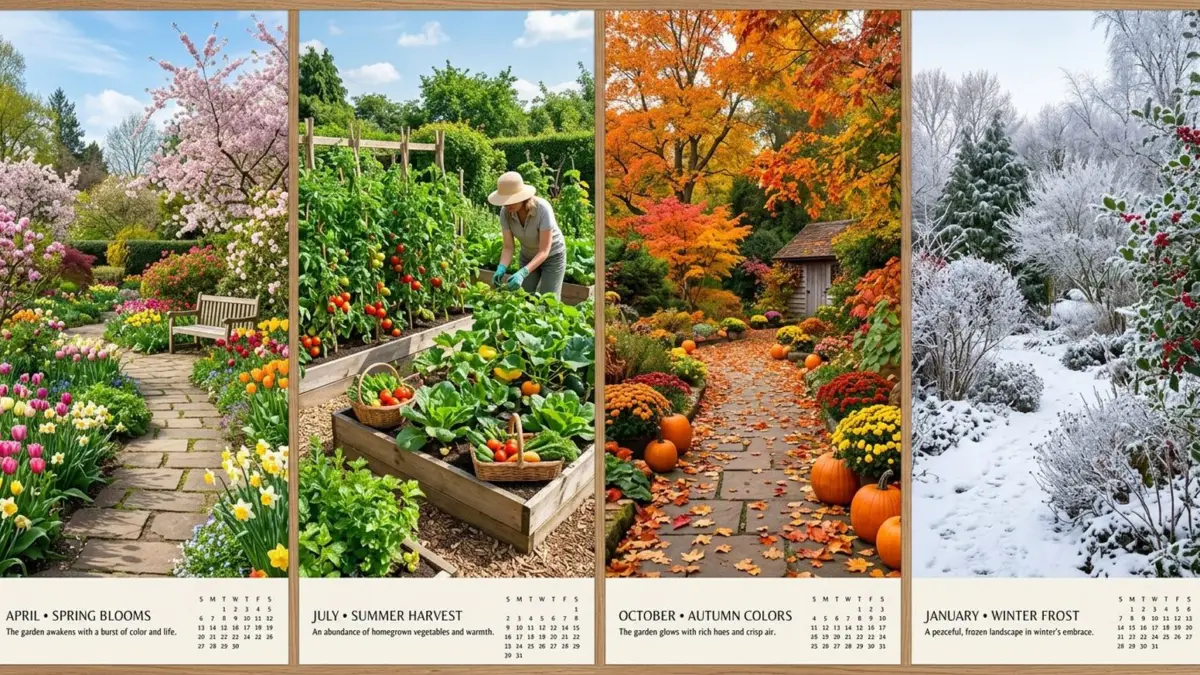
The garden never stops, but the work changes completely from month to month. Knowing what belongs where saves effort, avoids mistakes and means jobs are done at the moment they matter most. This checklist covers the full year for a typical temperate climate in the northern hemisphere. If you garden in the southern hemisphere, shift the months by six. If you garden in a hot, subtropical region, read the climate section at the end and adjust.
It is part of the Seasonal Gardening pillar and summarises the detail in Spring, Summer, Autumn and Winter guides. Combine it with The Seasonal Planting Calendar to turn the month names into your own dates.
The checklist, month by month
| Month | Main jobs |
|---|---|
| January | Plan the year and order seed; prune apples, pears and wisteria on dry days; clean tools and pots; check stored bulbs and tubers; feed birds |
| February | Start onions, leeks and peppers indoors; chit potatoes; prune summer-flowering shrubs and roses late in the month; mulch beds; plant bare-root trees if soil is workable |
| March | Sow tomatoes, brassicas and hardy annuals indoors; sow peas, broad beans and spinach outdoors; divide perennials; feed shrubs and roses; repair lawns |
| April | Sow beetroot, carrots, lettuce and radish; plant potatoes; harden off seedlings; prune spring-flowering shrubs after flowering; watch for slugs and aphids |
| May | Plant out tender crops after frost; sow beans, courgettes and sweetcorn; plant summer bulbs and bedding; stake perennials; water new plantings; mulch |
| June | Water deeply; pinch out tomatoes and tie in; deadhead roses; sow second crops; prune spring-flowering shrubs; thin fruit; take softwood cuttings |
| July | Harvest regularly; feed tomatoes and containers; water in the morning; trim hedges; take semi-ripe cuttings; sow autumn and winter crops |
| August | Harvest and preserve; deadhead; collect seed; prune summer-fruiting shrubs; plant autumn crops and winter salads; order spring bulbs |
| September | Plant bulbs and perennials; overseed lawns; harvest apples and squash; sow green manures; divide perennials; clean greenhouse |
| October | Plant trees, shrubs and tulips; rake leaves into leaf mould; lift tender tubers; protect pots; cut back diseased foliage; plant garlic |
| November | Mulch beds; wrap tender plants; plant bare-root trees and roses; tidy and store tools; check stored crops; drain irrigation |
| December | Protect plants from frost and snow; prune dormant fruit; maintain tools; enjoy festive greenery and lighting (see Seasonal Lighting Displays); review the year |
Weekly habits all year
- Look at everything. A ten-minute walk spots pests, disease and drought early.
- Water by need, deeply, in the morning (see Watering Plants the Right Way).
- Weed little and often before weeds set seed.
- Harvest and deadhead regularly in the growing season.
- Clean tools after each use (see Garden Hygiene).
Turn the checklist into your own calendar
- Find your frost dates. Look up the average last spring and first autumn frost.
- Shift the months. If your last frost is a month later than the checklist assumes, push the spring tasks back by a month.
- Add your crops. Use the seasonal planting calendar to count back from frost dates for seed sowing.
- Write it down. Put dates in a notebook or phone calendar with reminders.
- Review each season. Note what worked, what was early or late and adjust next year (see Planning for Next Year).
Adjusting for hot and subtropical climates
Where winters are mild and summers are hot, the year has two main growing seasons and a heat or monsoon break:
| Period (typical) | Main jobs |
|---|---|
| Cool season (autumn to early spring) | Sow and grow leafy greens, peas, carrots, cauliflower, cabbage, coriander, flowers; plant trees and shrubs; prune; feed |
| Warm season (late winter to early summer) | Sow beans, cucumbers, okra, gourds, melons; plant out tomatoes early; mulch; set up irrigation |
| Heat peak | Shade cloth, mulch, early-morning watering, heat-tolerant crops, propagation and soil improvement; avoid transplanting |
| Monsoon or humid season | Improve drainage; watch for fungal disease; sow quick crops; avoid over-feeding |
Pitfalls to watch for
- Following a calendar from another climate without adjusting
- Planting by date instead of by soil temperature
- Letting jobs pile up until a single exhausting weekend
- Skipping record-keeping, so the same mistakes repeat
Shortcuts worth knowing
- Put recurring tasks on repeating phone reminders: sowing, feeding, pruning, pest checks.
- Photograph the same view every month for a visual calendar.
- Do one small job on dry, quiet days so big jobs never pile up.
Related guides worth your time
Plan staggered crops with Succession Planting, prepare for cold with Frost Protection Methods and map out next year with Planning for Next Year. Back to Seasonal Gardening.
More in Seasonal Gardening
Succession Planting: Staggering for Continuous Harvest and Bloom
Avoid gluts and gaps. Learn the four succession methods (repeat sowing, intercropping, relay planting, mixed varieties), with sowing intervals for popular crops and flowers.
Frost Protection Methods: Row Covers, Cloches and When to Act
Know when frost threatens and how to protect plants: fleece and row covers, cloches, cold frames, mulch, watering tricks and moving pots. Includes what to protect…
Planning for Next Year: Evaluate, Order and Prepare
Use the quiet months to review what worked, learn from failures, design new beds, plan crop rotation, order seed and prepare soil and tools, so next…