How to Plant a Tree Properly (The 10-Minute Professional Method)

There is an old nursery saying: better to plant a fifty-rupee tree in a hundred-rupee hole than the reverse. Planting depth is the single biggest killer of new trees — get one rule right and your tree’s survival odds double overnight.

The One Rule That Matters Most

  • Find the root flare — where trunk widens into roots
  • Flare stays visible above soil, always
  • Hole: wide as a bowl, no deeper than the root ball
  • Buried flare = slow suffocation, often 3–5 years later

Step 1 — Dig Wide, Not Deep

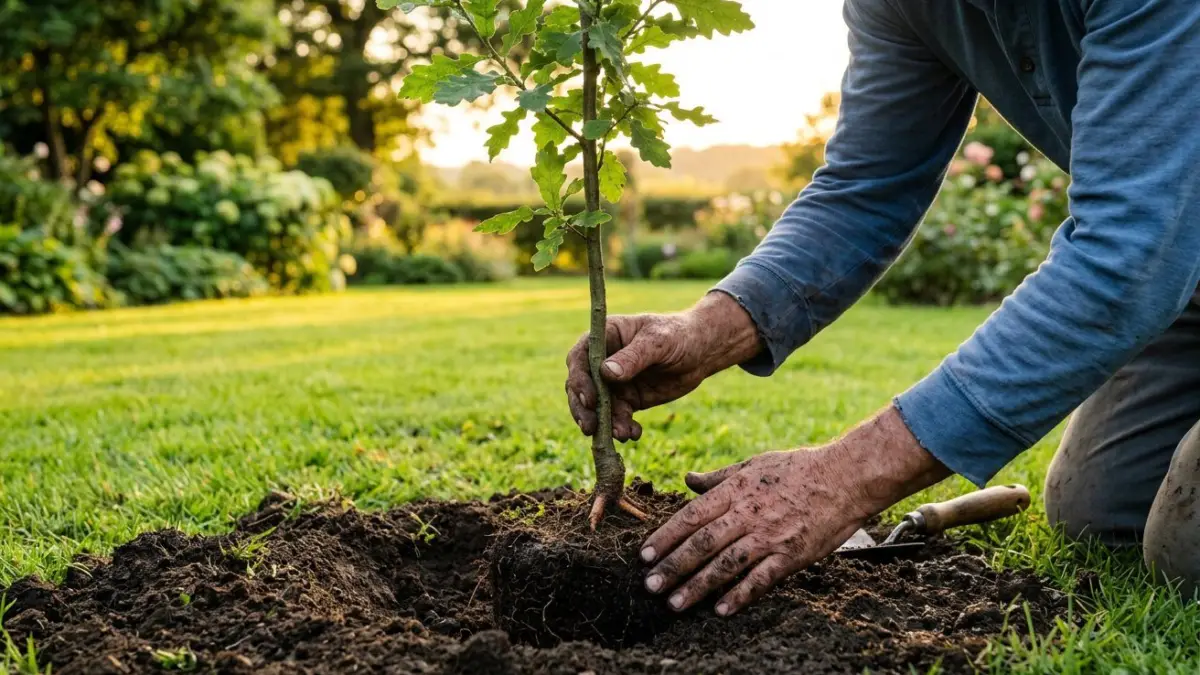
Dig a hole two to three times wider than the root ball, but no deeper. Loosen the sides with your spade so roots can turn into them. A deep narrow hole is a well that collects water and drowns roots; a wide shallow one invites roots outward into real soil.

Step 2 — Free the Root Flare and Untangle Roots

Remove the top of the burlap, wire basket or — most importantly — scrape away any soil piled over the trunk until you find the root flare. Container trees often come root-bound: score the sides and spread circling roots outward. Roots left circling will girdle the trunk years later.

Step 3 — Set, Backfill, Water In

Set the tree so the flare sits level with or slightly above the lawn. Backfill with the native soil you dug out — no compost pockets, which discourage roots from leaving the hole. Water deeply to settle, and build a 8–10 cm soil berm around the edge as a watering basin. Long-term moisture strategy continues in our tree watering and mulching guide.

Step 4 — Stake Only If Needed

Stake only in windy sites, and loosely — the trunk must be able to sway, because sway is what makes trunks thick. Remove stakes within a year; forgotten stakes strangle trees.

Common Mistakes to Avoid

  • Amending the hole heavily — roots circle the “good soil” instead of growing out.
  • Pruning the top to “balance” the roots — the leaves make the root-growing energy.
  • Planting under power lines or 60 cm from a wall; mature size deserves foresight — plan with our shade tree selection guide.

Frequently Asked Questions

When is the best time to plant a tree?

Autumn and late winter, when the tree is dormant and soil is workable. Container-grown trees can go in during the cooler weeks of spring too. Avoid summer heat — the stress regime described in our seasonal calendar applies double to trees.

Should I add fertilizer in the planting hole?

No. Fresh fertilizer burns new roots. Wait a year; feed lightly after that following our fertilizer fundamentals.

Next in this hub: choose your tree wisely with the best shade trees for home gardens, or explore the full trees hub.

The First-Year Calendar for tree planting

New trees run on a twelve-month contract. Months 1–3: root ball moisture checks twice weekly; berm basin watering deep; zero fertilizer; mulch ring maintained. Months 4–6: weekly checks; first flush of growth inspected for pests; stakes inspected and loosened if tight. Months 7–9: heat is the exam — deep soaks at the first morning wilt, never daily sprinkles; no pruning beyond broken wood. Months 10–12: taper watering to train roots outward; remove stakes; first formative corrections only if a leader or crossing branch demands it.

The calendar’s quiet genius is subtraction: every month you successfully do less, the tree does more.

Reading Tree Stress Before It Shows for tree planting

Trees telegraph trouble a season early to anyone reading: smaller-than-normal leaves mean roots struggling; early autumn color in late summer means stress banking; sparse bud set in spring announces last summer’s drought; epicormic shoots (sprouts along the trunk) mean the canopy is failing to feed itself. Walk each tree monthly with those four signals in mind — ten seconds per tree — and problems arrive as adjustments rather than emergencies.

The one signal that overrides everything: the flare. Soil or mulch creeping over it undoes years of health silently, so the monthly walk ends where the tree begins.

Deep Dive: What Experienced Growers Know About tree planting

The nursery industry plants trees deep — sometimes several inches of soil above the flare — because it survives the sales yard. Your first job at planting is therefore archaeological: scrape gently around the trunk until the flare’s widening appears, then set the tree so that flare sits at or a hair above final grade. The dug soil you removed is the only backfill; a tree amended into a private compost pocket grows roots that circle the pocket and never claim the yard.

Key Takeaways

  • Root Flare: The trunk's widening where it meets roots; must stay visible for life.
  • Girdling Root: A circling root that strangles the trunk as both widen; prevented by root spreading at planting.
  • Dripline: The ground circle under the outermost foliage where feeder roots concentrate.
  • Branch Collar: The swollen junction tissue holding the tree's sealing chemistry; cuts go outside it.

More Questions About Tree Planting

How wide should the hole really be?

Two to three times the root ball, sides scarred so roots can turn into them — wide and shallow, never deep and narrow.

Should I prune the top to balance root loss?

No — leaves build the roots. Remove only broken or rubbing branches at planting.

When can I remove the stakes?

Within a year, once roots anchor — usually the following autumn. Sway builds trunk strength; rigid staking builds dependency.

Field Questions Answered

How close can I plant a tree to a wall?

Half the mature canopy width, minimum — closer only with proven deep-rooted, well-mannered species like olive or crape myrtle.

Do trees need fertilizer every year?

Healthy trees in mulched soil usually feed themselves; feed only on a diagnosed deficiency. Fertilizer on stressed trees delays the real fix.

Can I plant under an established tree?

Only tough dry-shade plants, in raised pockets of compost — never dig into the root zone or the canopy's feeder roots pay for it.

How much does a tree actually drink?

A mature shade tree can transpire 200–400 liters on a hot day — the case for deep, infrequent watering that reaches, not sprinkles that tease.

Common Mistakes to Avoid with Tree Planting

  • Planting with the root flare buried under backfill or mulch.
  • Dug a deep narrow hole instead of a wide shallow one.
  • Staking tight and forgetting it — sway builds trunk taper; rigid stakes build dependency.
  • Amending only the planting hole, creating a pot in the ground roots refuse to leave.
  • Pruning more than a quarter of the canopy in one year, forcing weak regrowth.

Further Field Questions

How close can I plant a tree to a wall?

Half the mature canopy width, minimum — closer only with proven deep-rooted, well-mannered species like olive or crape myrtle.

Do trees need fertilizer every year?

Healthy trees in mulched soil usually feed themselves; feed only on a diagnosed deficiency. Fertilizer on stressed trees delays the real fix.

Can I plant under an established tree?

Only tough dry-shade plants, in raised pockets of compost — never dig into the root zone or the canopy's feeder roots pay for it.

How much does a tree actually drink?

A mature shade tree can transpire 200–400 liters on a hot day — the case for deep, infrequent watering that reaches, not sprinkles that tease.

When is a tree officially 'established'?

When it survives a normal dry spell without supplemental water — usually two to three seasons after planting.

Should I prune a newly planted tree to 'balance' it?

No — leaves feed the roots that establish it. Remove only broken or crossing wood; shaping waits for year two or three.

Further Field Questions

How close can I plant a tree to a wall?

Half the mature canopy width, minimum — closer only with proven deep-rooted, well-mannered species like olive or crape myrtle.

Do trees need fertilizer every year?

Healthy trees in mulched soil usually feed themselves; feed only on a diagnosed deficiency. Fertilizer on stressed trees delays the real fix.

Can I plant under an established tree?

Only tough dry-shade plants, in raised pockets of compost — never dig into the root zone or the canopy's feeder roots pay for it.

How much does a tree actually drink?

A mature shade tree can transpire 200–400 liters on a hot day — the case for deep, infrequent watering that reaches, not sprinkles that tease.

When is a tree officially 'established'?

When it survives a normal dry spell without supplemental water — usually two to three seasons after planting.

Should I prune a newly planted tree to 'balance' it?

No — leaves feed the roots that establish it. Remove only broken or crossing wood; shaping waits for year two or three.

Further Field Questions

How close can I plant a tree to a wall?

Half the mature canopy width, minimum — closer only with proven deep-rooted, well-mannered species like olive or crape myrtle.

Do trees need fertilizer every year?

Healthy trees in mulched soil usually feed themselves; feed only on a diagnosed deficiency. Fertilizer on stressed trees delays the real fix.

Can I plant under an established tree?

Only tough dry-shade plants, in raised pockets of compost — never dig into the root zone or the canopy's feeder roots pay for it.

How much does a tree actually drink?

A mature shade tree can transpire 200–400 liters on a hot day — the case for deep, infrequent watering that reaches, not sprinkles that tease.

When is a tree officially 'established'?

When it survives a normal dry spell without supplemental water — usually two to three seasons after planting.

Should I prune a newly planted tree to 'balance' it?

No — leaves feed the roots that establish it. Remove only broken or crossing wood; shaping waits for year two or three.

Further Field Questions

How close can I plant a tree to a wall?

Half the mature canopy width, minimum — closer only with proven deep-rooted, well-mannered species like olive or crape myrtle.

Do trees need fertilizer every year?

Healthy trees in mulched soil usually feed themselves; feed only on a diagnosed deficiency. Fertilizer on stressed trees delays the real fix.

Can I plant under an established tree?

Only tough dry-shade plants, in raised pockets of compost — never dig into the root zone or the canopy's feeder roots pay for it.

How much does a tree actually drink?

A mature shade tree can transpire 200–400 liters on a hot day — the case for deep, infrequent watering that reaches, not sprinkles that tease.

When is a tree officially 'established'?

When it survives a normal dry spell without supplemental water — usually two to three seasons after planting.

Should I prune a newly planted tree to 'balance' it?

No — leaves feed the roots that establish it. Remove only broken or crossing wood; shaping waits for year two or three.

Further Field Questions

How close can I plant a tree to a wall?

Half the mature canopy width, minimum — closer only with proven deep-rooted, well-mannered species like olive or crape myrtle.

Do trees need fertilizer every year?

Healthy trees in mulched soil usually feed themselves; feed only on a diagnosed deficiency. Fertilizer on stressed trees delays the real fix.

Can I plant under an established tree?

Only tough dry-shade plants, in raised pockets of compost — never dig into the root zone or the canopy's feeder roots pay for it.

How much does a tree actually drink?

A mature shade tree can transpire 200–400 liters on a hot day — the case for deep, infrequent watering that reaches, not sprinkles that tease.

When is a tree officially 'established'?

When it survives a normal dry spell without supplemental water — usually two to three seasons after planting.

Should I prune a newly planted tree to 'balance' it?

No — leaves feed the roots that establish it. Remove only broken or crossing wood; shaping waits for year two or three.