Color is the fastest lever in garden design — one season’s replant can turn a noisy bed into a composition. The rules come from the artist’s color wheel, and once you know them, you will never again buy “one of everything” at the nursery.
Palettes That Always Work
- Monochrome: one hue in shades — instantly elegant
- Complementary: opposites (purple + yellow) — maximum energy
- Analogous: neighbors (blue-violet-pink) — calm and rich
- White garden: luminous at dusk, classic by moonlight
Learn What Colors Do to Space
Hot colors — red, orange, yellow — advance: they shout and pull the eye forward, ideal near patios and entrances. Cool colors — blue, violet, soft pink — recede, stretching small gardens and cooling hot walls. This single fact is the small-garden secret from our space guide, and it costs nothing but plant choice.
Build a Palette, Then Repeat It
Choose two or three colors plus green, and repeat them through the bed in drifts of 3–5 plants — the repetition rule from our border formula. Scattered single colors read as noise; repeated colors read as intent. Foliage counts: silvers and chartreuses are the great connectors that make neighbors agree.
The Classic Combinations
Purple + yellow
Salvia beside marigold, iris withcoreopsis — complementary drama that photographs brilliantly.
Blue, white and silver
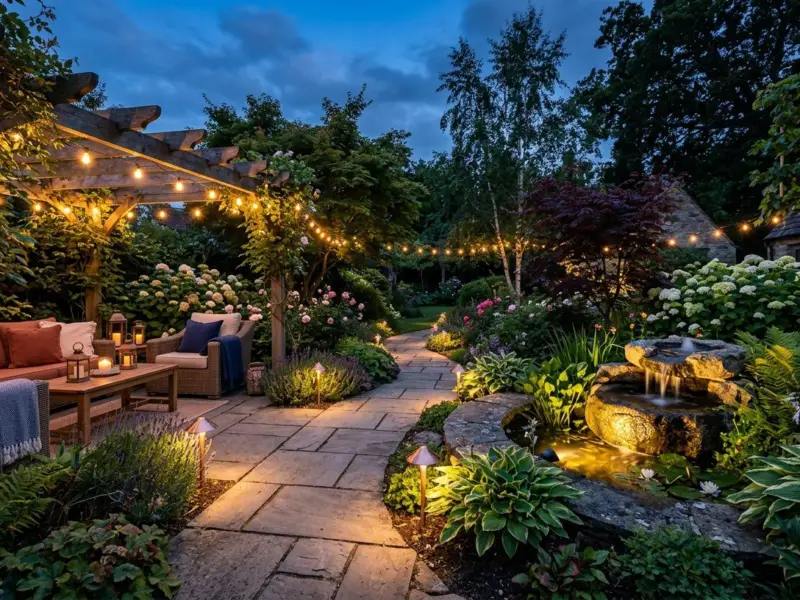
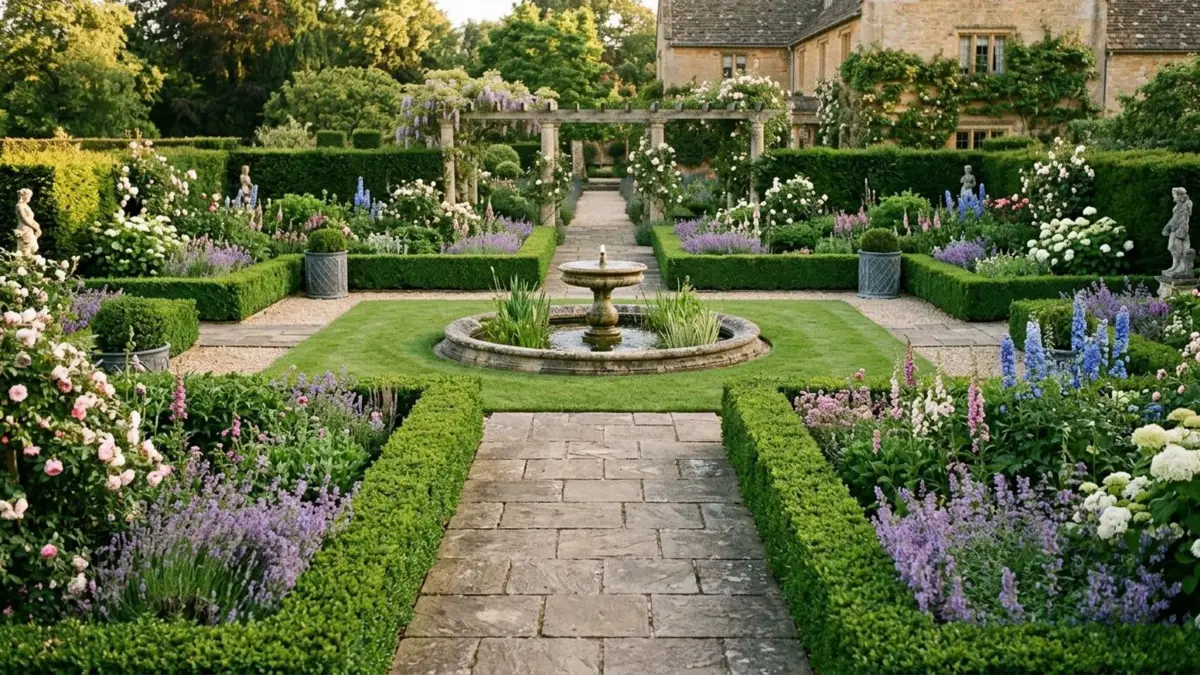
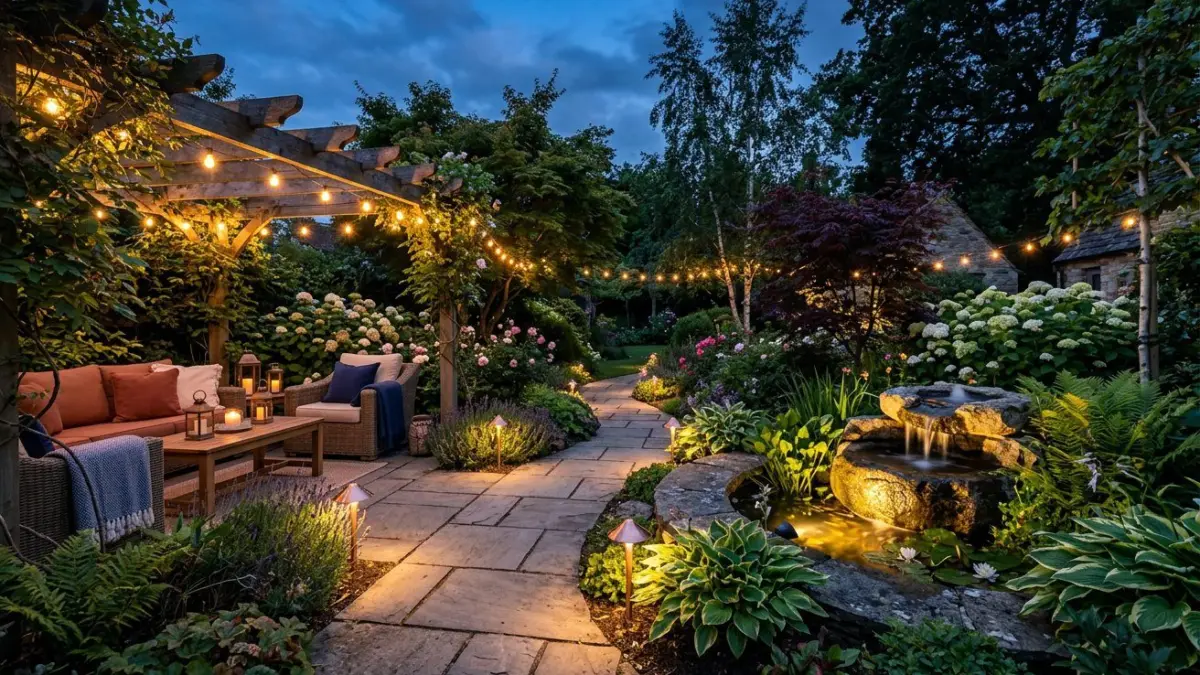
The moonlight border: delphinium, white lavender, dusty miller — cool, calming, and luminous in the evening, which matters if you garden after work (and ties into our lighting guide).
Hot border
Red cannas, orange nasturtium, yellow lantana — tropical energy for sunny heat, using performers from our full-sun list.
Plan for Color Drift
Great beds shift key through the season: spring pastels, summer saturated, autumn golds. Sketch your palette per month using the planting calendar, and let bulbs carry the early acts per our bulb guide.
Common Mistakes to Avoid
- Rainbow beds — every color once equals no color at all.
- Forgetting green is a color — leaves carry the show between blooms.
- Ignoring light: colors read hotter at noon and paler at dusk; view the bed at both.
Frequently Asked Questions
How many colors is too many?
Three hues plus green is the professional ceiling for one view. More is possible in cottage style, but even then repetition must outnumber variety.
What is the easiest palette for beginners?
Blue-violet with white and silver: nearly every easy plant — lavender, salvia, alyssum, dusty miller — exists in those tones, and mistakes are invisible within them.
Light it up next: water features and garden lighting, or the full garden design hub.
The Desire-Line Audit for garden color
Before any path or patio is planned, watch where feet actually go: worn shortcuts across lawns, the gate people really use, the corner that collects chairs. Desire lines are the garden’s own design document, written by use. Professional redesigns begin by photographing these traces for a week — then either paving the line the feet chose or building a destination worth rerouting them for.
Fighting desire lines with fences and signs never works for long. Every element placed against them requires maintenance forever; every element placed along them maintains itself.
The Maintenance Budget for garden color
Every design carries a hidden operating cost measured in weekly minutes. Lawn: the highest at 30–60. Flower borders: 15–30 in season. Trees and mulched shrub beds: minutes. Hardscape with container accents: near zero. Honest designers budget this column first — a beautiful plan demanding hours you do not have becomes a source of guilt, not joy.
The working formula: list the plan’s elements, write each one’s weekly minutes, total them against your true availability, then trade down elements until the budget balances. The garden that gets tended is the one designed to be tended.
Deep Dive: What Experienced Growers Know About garden color
Value beats hue in real gardens: pale tints read at dusk while deep saturated colors vanish — which is why white gardens perform in the evening and why dark flowers need silver or light foliage as separation. Test any palette at the hours you actually use the garden, not at nursery noon. The palette that photographs at 7pm is the one that will feel alive when you are home to enjoy it.
Key Takeaways
- Drift: A repeated planting group of one species; rhythm in plant form.
- Advance/Recede: Hot colors pull forward, cool colors push back — space-shaping by hue.
- Dripline: The outer leaf circle of trees; the lawn's shade boundary.
- Topdressing: A thin compost layer over lawns or beds that feeds without digging.
More Questions About Garden Color
How many colors is too many?
Three hues plus green per view for intentionality; cottage style bends the rule only through heavy repetition of each color.
What pairs with an existing red garden?
Silvers and deep purples cool and frame red's heat; white gives it contrast pauses. Adding orange competes; adding blue argues.
Do colors affect garden 'temperature'?
Real enough to plan by: hot palettes read energetic near seating, cool palettes read restful at distance. Match hue temperature to zone use.
Field Questions Answered
How do I make a rental garden portable?
Containers, trellis panels in freestanding frames, and a lighting kit on solar. Design everything to survive the move — because it must.
When should trees be part of the design?
First — they take longest and shape everything: shade, views, scale. The tree decision is the plan's opening move, not its decoration.
Where should the seating go?
Where the evening light falls and the best view faces — then build the garden toward that chair. The seat is the design's center of gravity.
How do I design on a slope?
Terraces, steps, and water-wise planting bands; never fight water downhill — route it, slow it, and plant the bands it crosses.
Common Mistakes to Avoid with Garden Color
- Buying plants before the light map exists.
- One of everything at the nursery; no repetition, no rhythm.
- Hardscape laid flat — puddles, ice, mosquitoes.
- Paths too narrow, then cut across forever after.
- Tiny pots and fussy décor shrinking an already small garden.
Further Field Questions
Where should the seating go?
Where the evening light falls and the best view faces — then build the garden toward that chair. The seat is the design's center of gravity.
How do I design on a slope?
Terraces, steps, and water-wise planting bands; never fight water downhill — route it, slow it, and plant the bands it crosses.
Is it worth hiring a designer for a small garden?
For one consultation with a master plan, often yes — small gardens concentrate every mistake. The plan guides years of your own labor.
What paving suits hot climates?
Light colors that stay walkable, permeable joints that cool, and shade from a structure or tree over the main seating surface.
How do I make a rental garden portable?
Containers, trellis panels in freestanding frames, and a lighting kit on solar. Design everything to survive the move — because it must.
When should trees be part of the design?
First — they take longest and shape everything: shade, views, scale. The tree decision is the plan's opening move, not its decoration.
Further Field Questions
Where should the seating go?
Where the evening light falls and the best view faces — then build the garden toward that chair. The seat is the design's center of gravity.
How do I design on a slope?
Terraces, steps, and water-wise planting bands; never fight water downhill — route it, slow it, and plant the bands it crosses.
Is it worth hiring a designer for a small garden?
For one consultation with a master plan, often yes — small gardens concentrate every mistake. The plan guides years of your own labor.
What paving suits hot climates?
Light colors that stay walkable, permeable joints that cool, and shade from a structure or tree over the main seating surface.
How do I make a rental garden portable?
Containers, trellis panels in freestanding frames, and a lighting kit on solar. Design everything to survive the move — because it must.
When should trees be part of the design?
First — they take longest and shape everything: shade, views, scale. The tree decision is the plan's opening move, not its decoration.
Further Field Questions
Where should the seating go?
Where the evening light falls and the best view faces — then build the garden toward that chair. The seat is the design's center of gravity.
How do I design on a slope?
Terraces, steps, and water-wise planting bands; never fight water downhill — route it, slow it, and plant the bands it crosses.
Is it worth hiring a designer for a small garden?
For one consultation with a master plan, often yes — small gardens concentrate every mistake. The plan guides years of your own labor.
What paving suits hot climates?
Light colors that stay walkable, permeable joints that cool, and shade from a structure or tree over the main seating surface.
How do I make a rental garden portable?
Containers, trellis panels in freestanding frames, and a lighting kit on solar. Design everything to survive the move — because it must.
When should trees be part of the design?
First — they take longest and shape everything: shade, views, scale. The tree decision is the plan's opening move, not its decoration.
Further Field Questions
Where should the seating go?
Where the evening light falls and the best view faces — then build the garden toward that chair. The seat is the design's center of gravity.
How do I design on a slope?
Terraces, steps, and water-wise planting bands; never fight water downhill — route it, slow it, and plant the bands it crosses.
Is it worth hiring a designer for a small garden?
For one consultation with a master plan, often yes — small gardens concentrate every mistake. The plan guides years of your own labor.
What paving suits hot climates?
Light colors that stay walkable, permeable joints that cool, and shade from a structure or tree over the main seating surface.
How do I make a rental garden portable?
Containers, trellis panels in freestanding frames, and a lighting kit on solar. Design everything to survive the move — because it must.
When should trees be part of the design?
First — they take longest and shape everything: shade, views, scale. The tree decision is the plan's opening move, not its decoration.
Further Field Questions
Where should the seating go?
Where the evening light falls and the best view faces — then build the garden toward that chair. The seat is the design's center of gravity.
How do I design on a slope?
Terraces, steps, and water-wise planting bands; never fight water downhill — route it, slow it, and plant the bands it crosses.
Is it worth hiring a designer for a small garden?
For one consultation with a master plan, often yes — small gardens concentrate every mistake. The plan guides years of your own labor.
What paving suits hot climates?
Light colors that stay walkable, permeable joints that cool, and shade from a structure or tree over the main seating surface.
How do I make a rental garden portable?
Containers, trellis panels in freestanding frames, and a lighting kit on solar. Design everything to survive the move — because it must.
When should trees be part of the design?
First — they take longest and shape everything: shade, views, scale. The tree decision is the plan's opening move, not its decoration.
Further Field Questions
Where should the seating go?
Where the evening light falls and the best view faces — then build the garden toward that chair. The seat is the design's center of gravity.
How do I design on a slope?
Terraces, steps, and water-wise planting bands; never fight water downhill — route it, slow it, and plant the bands it crosses.
Is it worth hiring a designer for a small garden?
For one consultation with a master plan, often yes — small gardens concentrate every mistake. The plan guides years of your own labor.
What paving suits hot climates?
Light colors that stay walkable, permeable joints that cool, and shade from a structure or tree over the main seating surface.
How do I make a rental garden portable?
Containers, trellis panels in freestanding frames, and a lighting kit on solar. Design everything to survive the move — because it must.
When should trees be part of the design?
First — they take longest and shape everything: shade, views, scale. The tree decision is the plan's opening move, not its decoration.