Common Garden Pests & Organic Control That Actually Works

Organic pest control is not wishful thinking — it is targeted work. Each pest has a biology, and each biology has a weak point. Learn to identify by damage pattern, apply the right countermeasure at the right moment, and chemicals stay in the shed forever.

Identify by Damage

  • Curling sticky tips → aphids
  • Yellow speckled leaves + fine webbing → spider mites
  • White fluttering cloud when disturbed → whiteflies
  • Chunks missing from leaves, black droppings → caterpillars
  • Plant wilts despite moist soil, lifts like carpet → root grubs

Aphids — Blast, Then Bio-Control

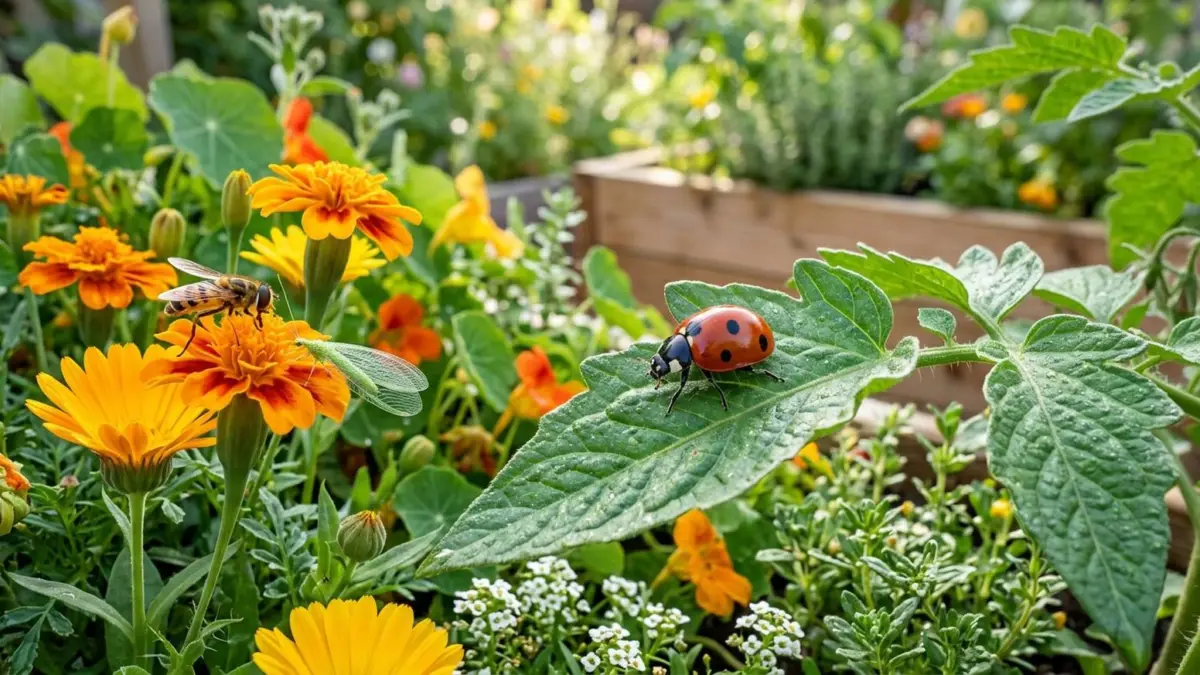
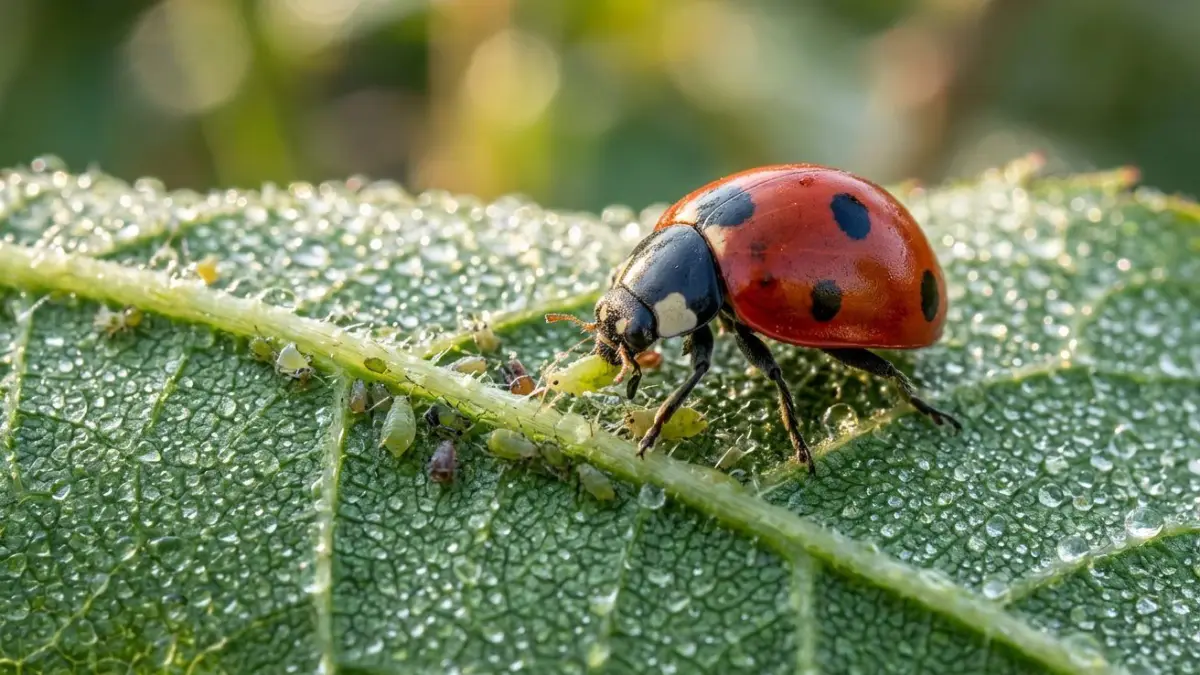
A sharp water spray knocks colonies off and most never climb back. Follow with insecticidal soap on undersides, and let ladybugs finish the job — one ladybug larva eats hundreds of aphids, as detailed in our allies guide. Cut down excess nitrogen fertilizer; soft fast growth is aphid candy, per our feeding guide.

Spider Mites — Humidity Is the Weapon

Mites explode in hot dry weather. Hose undersides repeatedly, raise humidity around the plant, and rotate soap or neem sprays every 5–7 days for three rounds — missing undersides is why “it didn’t work.” Indoors, the same treatment applies per our houseplant diagnostic.

Whiteflies — Trap and Interrupt

Yellow sticky traps thin adults; neem or soap on leaf undersides hits the nymphs; repeated at 5–7 day intervals to break the egg-laying cycle. Vacuuming leaves at dawn (literally, gently, with a hand vac) is a strangely effective professional trick.

Caterpillars — Inspect and BTK

Hand-pick at dusk (flashlight optional, satisfaction guaranteed) and spray BTK — a biological bacterium deadly only to caterpillars — on brassicas and fruit trees. Netting seedlings prevents the whole drama; the timing comes from the calendar.

Grubs and Soil Pests

Wilting despite moist soil means check the roots. Beneficial nematodes watered into soil hunt grubs invisibly and safely — the same allies theme from our microbe guide.

Common Mistakes to Avoid

  • Spraying at noon — sprays scorch leaves and beneficials are flying; spray evenings.
  • Killing the “pests” that are actually allies — ladybug and lacewing larvae look fierce; check our ID guide first.
  • One spray and done — most products need 3 rounds to catch hatching cycles.

Frequently Asked Questions

Is neem really effective?

Yes, as a growth-disruptor and deterrent rather than a knockdown killer — expect results over a week, not an hour. It is gentlest on allies once dry, which is why it anchors our remedies toolkit.

When should I finally use chemical pesticide?

When a structural plant’s life is threatened and organic methods have failed through full cycles. Even then, choose targeted over broad-spectrum and spray at dusk to spare pollinators.

Next in the hub: learn the diseases with disease identification, or browse the full pests and diseases hub.

The Threshold Ladder for organic pest control

Response scales with evidence, not emotion. Level 1 — scattered pests, no spread: observe; note in the log; squish by hand. Level 2 — damage visible on a quarter of the plant: targeted treatment at dusk — water blast, soap, neem — repeated on the 5–7 day cycle. Level 3 — spreading daily, allies absent: escalate to the stronger tool the pest’s biology allows (BTK for caterpillars, netting, removal). Level 4 — structural plant at risk: every option on the table, targeted and timed to spare pollinators.

Most gardeners live at the wrong level — acting at 1 (wasting allies) or waiting past 3 (losing crops). The ladder prices each decision honestly.

The Tool Hygiene Protocol for organic pest control

Tools move disease faster than wind: pruners between blighted and healthy stems, the shovel between infected beds, even the watering can’s spore-laden rim. The protocol is thirty seconds of discipline — isopropyl wipes or 10% bleach dip between sick plants, a dedicated bucket for diseased clippings (never the compost), gloves washed after handling mildew, and blades sharpened clean so cuts seal fast.

Outbreaks traced backwards so often end at a tool that the protocol is prevention’s cheapest line item: a wipe that saves a rose, a bucket that saves a bed.

Deep Dive: What Experienced Growers Know About organic pest control

Threshold thinking separates organic pest control from wishful gardening: a few aphids are food for the allies you recruited; a colony exploding past the ladybugs is action time. The scale: scattered pests — watch; damage visible on a quarter of the plant — targeted spray at dusk; spreading daily — escalate to the next tool. Acting below threshold wastes the free labor; waiting past it loses the crop. The threshold is a judgment you learn in one season of scouting.

Key Takeaways

  • Ipm: Integrated pest management: prevention first, chemicals last, monitoring throughout.
  • Disease Triangle: Host + pathogen + environment; remove any leg to prevent disease.
  • Btk: Bacillus thuringiensis kurstaki — biological caterpillar control, nothing else touched.
  • Damping Off: Seedling collapse at the soil line; prevented by airflow, cinnamon, careful water.

More Questions About Organic Pest Control

Does dish soap really kill aphids?

Pure liquid soap does — detergents with degreasers burn leaves. One tablespoon per liter, undersides included, dusk applications, three rounds.

How do I stop cabbage moths without spray?

Insect netting from transplant day, plus BTK when holes appear. Exclusion first, biology second — the brassica order of operations.

Are neem and soap compatible in one spray?

Yes — neem emulsifies with a soap drop, and the combination covers soft bodies plus feeding disruption in one dusk round.

Field Questions Answered

What should I do the moment I see unknown damage?

Photograph it, note the pattern (leaves? stems? fruit?), check for allies, and wait one day before acting — unless the pest is visibly migrating. Twenty minutes of identification beats a week of wrong treatment.

Is it true that healthy plants resist pests better?

Documented and dramatic: properly watered, fed and spaced plants emit different chemistry and physically resist what stressed neighbors surrender. Prevention is plant health.

How do I know a spray actually worked?

Count, don't guess: mark three leaves, count pests before, recount at day 5 — 80% down means the cycle worked; otherwise change tool, not just dose.

Can I prevent mildew entirely?

In most gardens, yes: morning soil-level water, air-spaced planting, resistant varieties, and weekly bicarbonate before symptoms. Prevention is the whole game.

Common Mistakes to Avoid with Organic Pest Control

  • Spraying before identifying — the wrong weapon recruits the next problem.
  • Killing ladybug larvae and lacewing nymphs as 'ugly bugs'.
  • Broad-spectrum sprays that blitz allies and leave pests to rebound alone.
  • Composting diseased plants; most home piles never reach sterilizing heat.
  • Watering leaves at evening — the standing mildew reservation.

Further Field Questions

What should I do the moment I see unknown damage?

Photograph it, note the pattern (leaves? stems? fruit?), check for allies, and wait one day before acting — unless the pest is visibly migrating. Twenty minutes of identification beats a week of wrong treatment.

Is it true that healthy plants resist pests better?

Documented and dramatic: properly watered, fed and spaced plants emit different chemistry and physically resist what stressed neighbors surrender. Prevention is plant health.

How do I know a spray actually worked?

Count, don't guess: mark three leaves, count pests before, recount at day 5 — 80% down means the cycle worked; otherwise change tool, not just dose.

Can I prevent mildew entirely?

In most gardens, yes: morning soil-level water, air-spaced planting, resistant varieties, and weekly bicarbonate before symptoms. Prevention is the whole game.

What's worth buying versus making?

Buy: neem, BTK, netting, sticky traps, copper — precision products. Make: soap spray, garlic-chili, compost tea — fresh, cheap, effective. Buy the hard, make the fresh.

When do I call a professional arborist?

Trunk decay, large-limb work, anything near power lines, and any tree you value showing internal rot. Arborists are cheaper than funerals and lawsuits.

Further Field Questions

What should I do the moment I see unknown damage?

Photograph it, note the pattern (leaves? stems? fruit?), check for allies, and wait one day before acting — unless the pest is visibly migrating. Twenty minutes of identification beats a week of wrong treatment.

Is it true that healthy plants resist pests better?

Documented and dramatic: properly watered, fed and spaced plants emit different chemistry and physically resist what stressed neighbors surrender. Prevention is plant health.

How do I know a spray actually worked?

Count, don't guess: mark three leaves, count pests before, recount at day 5 — 80% down means the cycle worked; otherwise change tool, not just dose.

Can I prevent mildew entirely?

In most gardens, yes: morning soil-level water, air-spaced planting, resistant varieties, and weekly bicarbonate before symptoms. Prevention is the whole game.

What's worth buying versus making?

Buy: neem, BTK, netting, sticky traps, copper — precision products. Make: soap spray, garlic-chili, compost tea — fresh, cheap, effective. Buy the hard, make the fresh.

When do I call a professional arborist?

Trunk decay, large-limb work, anything near power lines, and any tree you value showing internal rot. Arborists are cheaper than funerals and lawsuits.

Further Field Questions

What should I do the moment I see unknown damage?

Photograph it, note the pattern (leaves? stems? fruit?), check for allies, and wait one day before acting — unless the pest is visibly migrating. Twenty minutes of identification beats a week of wrong treatment.

Is it true that healthy plants resist pests better?

Documented and dramatic: properly watered, fed and spaced plants emit different chemistry and physically resist what stressed neighbors surrender. Prevention is plant health.

How do I know a spray actually worked?

Count, don't guess: mark three leaves, count pests before, recount at day 5 — 80% down means the cycle worked; otherwise change tool, not just dose.

Can I prevent mildew entirely?

In most gardens, yes: morning soil-level water, air-spaced planting, resistant varieties, and weekly bicarbonate before symptoms. Prevention is the whole game.

What's worth buying versus making?

Buy: neem, BTK, netting, sticky traps, copper — precision products. Make: soap spray, garlic-chili, compost tea — fresh, cheap, effective. Buy the hard, make the fresh.

When do I call a professional arborist?

Trunk decay, large-limb work, anything near power lines, and any tree you value showing internal rot. Arborists are cheaper than funerals and lawsuits.

Further Field Questions

What should I do the moment I see unknown damage?

Photograph it, note the pattern (leaves? stems? fruit?), check for allies, and wait one day before acting — unless the pest is visibly migrating. Twenty minutes of identification beats a week of wrong treatment.

Is it true that healthy plants resist pests better?

Documented and dramatic: properly watered, fed and spaced plants emit different chemistry and physically resist what stressed neighbors surrender. Prevention is plant health.

How do I know a spray actually worked?

Count, don't guess: mark three leaves, count pests before, recount at day 5 — 80% down means the cycle worked; otherwise change tool, not just dose.

Can I prevent mildew entirely?

In most gardens, yes: morning soil-level water, air-spaced planting, resistant varieties, and weekly bicarbonate before symptoms. Prevention is the whole game.

What's worth buying versus making?

Buy: neem, BTK, netting, sticky traps, copper — precision products. Make: soap spray, garlic-chili, compost tea — fresh, cheap, effective. Buy the hard, make the fresh.

When do I call a professional arborist?

Trunk decay, large-limb work, anything near power lines, and any tree you value showing internal rot. Arborists are cheaper than funerals and lawsuits.

Further Field Questions

What should I do the moment I see unknown damage?

Photograph it, note the pattern (leaves? stems? fruit?), check for allies, and wait one day before acting — unless the pest is visibly migrating. Twenty minutes of identification beats a week of wrong treatment.

Is it true that healthy plants resist pests better?

Documented and dramatic: properly watered, fed and spaced plants emit different chemistry and physically resist what stressed neighbors surrender. Prevention is plant health.

How do I know a spray actually worked?

Count, don't guess: mark three leaves, count pests before, recount at day 5 — 80% down means the cycle worked; otherwise change tool, not just dose.

Can I prevent mildew entirely?

In most gardens, yes: morning soil-level water, air-spaced planting, resistant varieties, and weekly bicarbonate before symptoms. Prevention is the whole game.

What's worth buying versus making?

Buy: neem, BTK, netting, sticky traps, copper — precision products. Make: soap spray, garlic-chili, compost tea — fresh, cheap, effective. Buy the hard, make the fresh.

When do I call a professional arborist?

Trunk decay, large-limb work, anything near power lines, and any tree you value showing internal rot. Arborists are cheaper than funerals and lawsuits.