Quick answers
- How do I make my flower border look fuller?
- Fill gaps with annuals while perennials establish. Plant in groups rather than singles. Accept that new borders take 2-3 seasons to reach full effect.
- What flowers bloom all summer long?
- Few plants bloom continuously, but many come close with deadheading: cosmos, zinnias, marigolds, salvia, coneflower, lavender.
- When should I divide perennials?
- Generally, divide spring-blooming perennials in autumn and summer-blooming perennials in spring.
- How do I keep rabbits and deer from eating my flowers?
- Layered defence works best: physical barriers, repellents, and plant choices to reduce appeal.
Key takeaways
- Design for height layering. Tall back, medium middle, short front makes every border look intentional.
- Repetition creates cohesion. The same plant in three places turns a collection into a garden.
- Match plants to conditions before matching them to aesthetics. A beautiful plant in the wrong place fails.
- Understand each plant category role: perennials are backbone, annuals are fill, bulbs are season extenders.
- Deadheading is communication with the plant. Removing spent flowers tells the plant to try again.
- Plan for the whole season, not just peak bloom. A border that looks good in August but bare in April has a gap.
- Accept that borders evolve. The first year matches the plan; the third year matches the garden.
- Spring bulb foliage must die back naturally. That green leaves the bulb for next year bloom.
Table of contents47 sections
- A Garden That Blooms in Every Month
- How to Use This Hub
- The Seasonal Rhythm of Flower Gardening
- Your First 30 Days with Flower Gardening
- The Science, Briefly
- 10 Mistakes That Sink Gardeners in This Topic
- Myths Worth Retiring
- The Toolkit: What You Actually Need
- Plain-Language Glossary
- Regional Notes
- How This Hub Connects to the Rest of the Site
- The Deeper Why: Flowers Are the Garden’s Clock
- Advanced Field Notes
- Common Objections, Answered
- Three Field Confessions
- The 7-Day Starter Plan
- What is the longest-blooming flower for beginners?
- How do I get color in a north-facing bed?
- Why did my tulips bloom once and never return?
- How often should I really deadhead?
- Can I plant bulbs in spring for summer bloom?
- What's the most common flower-bed mistake?
- How do I get color in the first year of perennials?
- Are fertilomer spikes or granules better for roses?
- Why do my sunflowers face the fence?
- Do I need to deadhead hydrangeas?
- What single plant feeds the most pollinators here?
- Guides at a Glance
- Revision Cards: The Guides at a Glance
- Seasonal Checklist, Condensed
- Pace Yourself: The Long View
- Advanced Vocabulary, Applied
- Study Notes: The Guides in Brief
- Frequently Asked: The Index
- Practice Drills for This Week
Flowers are why many of us started gardening, and with a little system, they can bloom in every month rather than one glorious week. This hub organizes the flower world into six practical guides: full-sun performers, shade specialists, roses demystified, bulbs for year-round color, pollinator magnets and low-maintenance borders that look designed, not labored.
Read them as a path if you are planning a new bed, or cherry-pick the one that solves today’s problem. Every guide cross-links to this hub and its siblings, and the timing guides connect to the seasonal planting calendar so your blooms arrive exactly when the garden needs them.
Want flowers that also work hard? Pair this hub with pest and disease care to keep blooms healthy without chemicals.
A Garden That Blooms in Every Month
Most gardens bloom the way amateurs sing: one big moment, then silence. A great flower garden is closer to a choir in rotation, something always in voice, season after season, because the gardener arranged it that way on purpose. That arrangement is a learnable system, and this hub teaches it: light-matched plant selection, season-staggered bloomers, color used deliberately, and maintenance habits that multiply flowers instead of merely keeping plants alive.
The six guides below divide the flower world by the decisions you actually face. Which sun-lovers will shrug off your hottest bed? What genuinely thrives in that dark corner? How do roses stop being frightening? How do bulbs sequence themselves into a year-round relay? Which plants feed the pollinators that quietly run your garden? And how do you assemble a border that looks designed without consuming your weekends?
Flowers reward system-building more than any other branch of gardening. A vegetable fails visibly; a flower border quietly drifts toward average. The craft here is choosing plants whose needs match your conditions, right plant, right place, then layering bloom times so the show never closes. Master that and even a modest garden earns the word beautiful.
Read the hub as a curriculum, then plant something this week. Flower gardening is the most immediately rewarding subject on this site: your first correctly placed zinnia blooms within eight weeks.
How to Use This Hub
| Guide | What you will learn | Time to apply |
|---|---|---|
| Flowering Plants for Full Sun | The heat-proof performers and how to layer them by height | One season to master |
| Shade-Loving Flowers | Diagnosing shade levels and the plants that glow in each | One weekend of planting |
| How to Grow Roses | The annual cycle: choose, plant, feed, prune, defend | One full year cycle |
| Flower Bulbs 101 | Bulb types, depth rules, and season sequencing | One autumn + one spring |
| Flowers That Attract Pollinators | Season-long nectar design that doubles as pest control | One planting season |
| Low-Maintenance Flower Borders | The 60-30-10 formula and triangle planting | One weekend to build |
The Sun Lovers
Full-sun flowers are survivors engineered for openness: small or waxy leaves, deep roots, and blooms built for pollinators that fly in heat. The guide profiles the reliable twelve, zinnia and vinca among annuals, bougainvillea and lantana among shrub-level perennials, portulaca carpeting the worst spot you own, then teaches the three-tier height layering that turns them from a collection into a border. The recurring lesson: in blazing beds, drainage and deep-and-rare watering beat daily fussing, and deadheading is a yield command, not tidiness.
The Shade Specialists
Shade is not one condition but three, light, partial and deep, each with its own cast. The guide first teaches diagnosis (an afternoon of honest observation, including root competition under trees), then matches plants: impatiens and begonias for reliable color, hydrangeas as the showpiece of bright shade, clivia for dry under-tree zones, and the foliage performers that function as flowers in deep shade. Its design secret: in low light, white and silver do the work of color, and pale palettes turn dark corners luminous at dusk.
Roses Without Fear
The rose guide compresses centuries of diva mythology into one annual cycle. Choose by type (hybrid tea for cutting, floribunda for mass color, climbers for architecture, shrubs for toughness) and climate (own-root in heat, hardy grafts in cold). Then run the year: winter’s fearless prune to 4-6 canes, spring’s little-and-often feeding, summer’s five-leaflet deadheading and soil-level watering, and constant airflow discipline. Black spot, when it comes, is a management problem with a checklist, never compost the leaves, never wet the foliage at night.
The Bulb Relay
Bulbs are pre-packaged miracles with a timing logic: true bulbs, corms, tubers and rhizomes each carry different instructions, but all obey the depth rule (2-3× their height) with famous exceptions like iris rhizomes baking in sun. The guide sequences cool-season plantings (tulip, daffodil, freesia) against warm-season ones (dahlia, gladiolus, tuberose) into a relay that never drops the baton, then defends the most violated rule in bulb gardening: foliage must yellow naturally for six weeks after bloom, because those tired leaves are next year’s flower being built.
The Pollinator Bar
Pollinator planting is the rare case where beauty and function are one decision. The guide designs a season-long nectar supply, cool-season herbs in flower, summer’s lavender and zinnia drifts, autumn’s asters, planted in landing-zone clusters rather than single signposts. It explains shape matching (flat tops for butterflies, tubes for long-tongued bees), lets herbs flower for the patrol force of hoverflies and parasitic wasps, and warns against the two great betrayals: systemic pesticides in nectar, and double-flowered pretties that are nectar deserts.
Borders That Behave
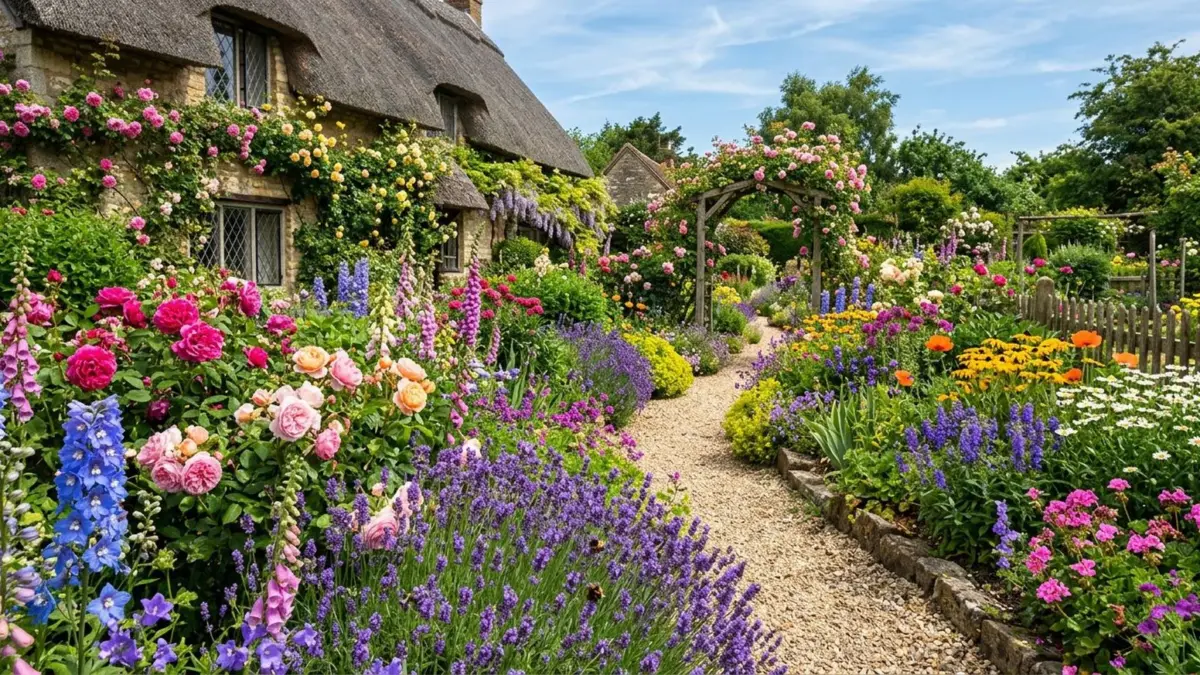
The low-maintenance border is a system with a formula: 60% structure plants for the skeleton, 30% seasonal perennials for the wardrobe, 10% accents for jewelry, every plant in groups of three or five, arranged as offset triangles. The guide walks the build: right plant-right place selection, tier placement by height, groundcover-and-mulch floor that evicts weeds, and a two-or-three-color palette repeated in drifts. The result is the border strangers photograph and owners barely water.
The Seasonal Rhythm of Flower Gardening
Late winter. Start zinnia and cosmos under cover in cold climates; direct-sow sweet peas and nasturtiums early where winters are mild. Order dahlias and gladiolus before selection thins. Prune roses as buds swell.
Spring. The bulb payoff: resist cutting any post-bloom foliage. Plant summer bulbs after soil warms; sow sun-lovers directly as nights soften; divide overcrowded perennials as new growth starts.
Summer. Deadhead on a weekly rhythm, feed little and often, and water deep-and-rare at soil level. Stake tall performers before storms, not after. Sow autumn performers in gaps.
Autumn. The bulb-planting season: tulips and daffodils go in as nights cool. Divide peonies and iris; mulch borders after the first light frost; leave some seed heads and hollow stems for winter wildlife.
Your First 30 Days with Flower Gardening
Weekend one: map your light honestly: one full day of observation, hour by hour, noting which beds get morning versus afternoon sun. Buy three sun-lovers and two shade plants matched to what you saw, not what looked pretty at the nursery.
First month: plant one three-tier corner of a bed (tall, mid, trailing), start a weekly deadheading habit, and sow one row of zinnia for fast feedback. Keep a bloom diary: what flowered, for how long.
First season: order one bulb relay for autumn planting, recruit pollinators with a lavender-and-herb-flower drift, and rebuild one bed with the 60-30-10 formula. By season’s end your diary becomes next year’s planting plan, the moment flower gardening turns from luck into design.
The Science, Briefly
Three botanical facts quietly run this hub. Photoperiod and vernalization: many bulbs and biennials measure winter cold (vernalization) and day length before blooming, the reason tulips need a chill and autumn planting matters. Deadheading versus senescence: a plant’s agenda after bloom is seed; removing spent flowers before seed set re-triggers bloom production, effectively freezing the plant in its reproductive attempt. Anthocyanin and heat: hot colors often fade fast in extreme heat while blues and whites hold, one reason cool palettes both look larger and photograph better at dusk in hot-climate borders.
10 Mistakes That Sink Gardeners in This Topic
- Choosing plants for tag-color while ignoring the light numbers on the same tag.
- Wet leaves overnight: the standing invitation to mildew and black spot.
- Cutting bulb foliage six weeks early, shrinking next year's bloom.
- Planting one of everything; borders need repetition, not variety shows.
- Crowding new plantings for instant fullness and harvesting a mildew factory.
- Feeding high-nitrogen lawn fertilizer near borders, leaves surge, blooms vanish.
- Skipping deadheading and wondering why flowering stopped in July.
- Double-flowered everything: nectar deserts for the pollinators your garden needs.
- No mulch on the border floor, weeds and evaporation fill the vacuum.
- Judging the border at planting size; it lives or dies at year-two maturity.
Myths Worth Retiring
“Roses need chemicals to survive.” Modern shrub and landscape roses, given sun, air and the annual prune, mostly shrug off disease. Chemistry is a rescue, not a lifestyle.
“Shade means no flowers.” It means different flowers: and foliage that functions as flower. Deep-shade gardens fail only when planted with sun-lovers.
“Perennials come back forever.” Many are short-lived by nature; borders persist because gardeners divide, replace and reseed on rotation, not because every plant is immortal.
“Bulbs are set-and-forget.” In warm climates most tulips are annuals and need lifting or pre-chilling; the forget-proof bulbs are daffodils and freesias.
The Toolkit: What You Actually Need
- A bypass pruner dedicated to deadheading: clean cuts, wiped between plants
- A soil knife (hori-hori) for bulb planting and perennial division
- Long-reach watering wand with a shut-off valve for soil-level watering
- Plant supports and grow-through grids, installed early
- Bulb planter or auger bit for drills of daffodils in minutes
- A light meter app or honest afternoon of observation notes
- Quality mulch by the bag for the border floor
- A bloom diary: the cheapest design tool in flower gardening
Plain-Language Glossary
- Deadheading
- Removing spent blooms before seed set to re-trigger flowering.
- Vernalization
- The cold exposure many bulbs and biennials require before blooming.
- Naturalizing
- Bulbs that return and multiply yearly, spreading into drifts.
- Cuticle
- The leaf's waxy layer; hardened by sun exposure in full-sun plants.
- Dead spot
- The nectar gap in a border's season, design it out with relay planting.
- Interveinal yellowing
- Yellow between green veins, signaling nutrient or pH lockout.
- Corm
- A solid bulb-like stem base (gladiolus, freesia), usually one-season.
- Rhizome
- A creeping horizontal stem (iris, canna) that must ride near or above soil.
- Bract
- A modified leaf that acts as the flower's color, bougainvillea's 'petals' are bracts.
- Bolting
- The rush to flower and seed, ending leaf production, the herb grower's deadline.
- Basal foliage
- The low leaf clump that powers next year's bulb and perennial growth.
- Self-seeding
- Annuals that replant themselves; welcome in cottage borders, managed elsewhere.
Regional Notes
Hot and dry: the sun-lover list becomes the whole garden, bougainvillea, lantana, portulaca, and evening-watered silver foliage carries the show; cool-season color (pansies, stock) fills winter. Humid tropics: bloom year-round but disease-humidity demands spacing and airflow; hibiscus, ixora and heliconia replace the temperate cast. Cold climates: the bulb relay doubles in importance, spring is mostly bulbs, and annuals started indoors carry short summers. Coastal: wind selects for flexible stems and low profiles; sea thrift, lavender and grasses anchor the exposed side.
How This Hub Connects to the Rest of the Site
Flowers plug into everything: the design hub supplies their composition rules, the pollinator border feeds the kitchen garden’s yields, and the pest hub protects blooms without killing the pollinators that make them. A flower border is the site’s ecosystem in miniature.
The Deeper Why: Flowers Are the Garden’s Clock
Every flower is a timestamp. Learn a border’s bloom sequence and you learn to read the year itself, not the calendar’s approximation but the living version, written in your own soil. Gardeners who build continuous bloom stop experiencing seasons as weather and start experiencing them as relay: the hellebores handing to the tulips, the tulips to the hardy geraniums, the geraniums to the dahlias, the dahlias to the asters, the asters to the seedheads that carry the watch into winter.
This is why flower gardening rewards the long game disproportionately. The bloom diary you keep this year becomes next year’s planting chart; the gaps you notice this September become next spring’s bulb order. Within three seasons the border runs on data instead of luck, and visitors assume a talent that is actually a filing system.
Advanced Field Notes
- The Chelsea chop (cutting perennials back by a third in late May) delays bloom by two weeks and doubles stem count, free height control and staggered flowering in one snip.
- Deadhead into the foliage, not above it: stem-stubs die back and invite botrytis; clean cuts to a leaf joint seal and hide.
- Bulb drifts beat bulb rows: throw handfuls and plant where they land, the naturalized look photographs as if it designed itself, because in a sense it did.
- One hot-color accent per cool border focuses the eye like a single red cushion on a grey sofa, restraint makes the accent worth ten scattered ones.
- Self-seeders are free plants with opinions: welcome nigella, calendula and verbascum where they land, edit ruthlessly elsewhere, the border becomes self-renewing at the cost of discipline.
Common Objections, Answered
“Perennials are expensive.” They are expensive once. Divided at year three, a single plant becomes five; by year five, a border of purchased perennials has funded two more borders and an acquaintance who trades divisions.
“My garden is too hot/cold/shaded for flowers.” Every climate on this planet has a native bloom calendar and a nursery trade serving it. The failures come from planting another climate’s calendar, not from climate itself.
“Deadheading feels endless.” Five minutes with morning coffee, secateurs in hand, is meditation with a dividend, the border reblooms the attention you pay it, almost literally.
Three Field Confessions
The all-purple year. A border designed entirely from a mood board in winter read as one flat note by June, beautiful, silent, and boring by July. The fix was not more flowers but one gold-accented drift, and the lesson: palettes need contrast notes the way songs need rests.
The tulips I beheaded early. Knotting bulb foliage ‘tidily’ in late spring, two years running, shrank the blooms until the third spring’s display was an embarrassment of miniatures. The leaves forgive everything except an early haircut; the rebate took two patient seasons.
The rose that taught pruning. Feared pruning for two years, polite snips, leggy canes, stingy blooms. One fearless winter prune to knee height, per the guide, delivered the spring flush the previous two summers combined. Fear was the only disease it had.
The 7-Day Starter Plan
Day 1: map the light: one full day of hourly notes per bed. Day 2: shop only from the plant list your light map justified. Day 3: plant one three-tier corner. Day 4: sow zinnia and cosmos for fast feedback. Day 5: start the deadheading habit with five minutes on the newest bed. Day 6: order one autumn bulb relay, early, mid, late varieties of at least two species. Day 7: begin the bloom diary: one line per week, what opened and what faded.
A week in, the flower garden has light-matched plants, layers, feedback crops, a maintenance habit, and a data system, the entire professional method in miniature.
What is the longest-blooming flower for beginners?
Zinnia among annuals: from early summer to frost with deadheading; vinca close behind in heat. Bougainvillea tops perennials in warm climates.
How do I get color in a north-facing bed?
Impatiens, begonias and clivia for flowers; hostas, ferns and white-variegated foliage as the color-carriers in deeper shade.
Why did my tulips bloom once and never return?
Warm winters fail their vernalization, or foliage was cut early. In hot climates treat them as annuals or pre-chill; daffodils instead naturalize.
How often should I really deadhead?
Weekly minimum on repeat bloomers, zinnia, rose, marigold. Five minutes daily beats an hour monthly; the plant re-blooms on your schedule.
Can I plant bulbs in spring for summer bloom?
Yes for warm-season bulbs: dahlia, gladiolus, canna, tuberose. Spring is also when tulips and daffodils finish and need their foliage kept.
What's the most common flower-bed mistake?
Shopping by bloom color while ignoring the light requirement printed on the same tag, the sun-lovers scorch, the shade-lovers stretch, and both disappoint.
How do I get color in the first year of perennials?
Interplant annuals at 30-centimeter spacing between the young perennials; remove them as the permanent cast fills in year two.
Are fertilomer spikes or granules better for roses?
Granules, little and often, spikes concentrate salts in one cylinder and feed unevenly. Even nutrition makes even growth.
Why do my sunflowers face the fence?
They face the brightest open sky, plant them on the border's north edge where nothing blocks their south, and they stand straighter.
Do I need to deadhead hydrangeas?
Only for looks: and timing matters by type: old-wood bloomers deadhead by midsummer; new-wood types anytime before spring.
What single plant feeds the most pollinators here?
Lavender in most climates, borage close behind, long bloom, open shape, endless nectar, and both grow from cheap seed.
Guides at a Glance
- Flowering Plants for Full Sun: The heat-proof performers and how to layer them by height
- Shade-Loving Flowers: Diagnosing shade levels and the plants that glow in each
- How to Grow Roses: The annual cycle: choose, plant, feed, prune, defend
- Flower Bulbs 101: Bulb types, depth rules, and season sequencing
- Flowers That Attract Pollinators: Season-long nectar design that doubles as pest control
- Low-Maintenance Flower Borders: The 60-30-10 formula and triangle planting
What does “Deadheading” mean in practice?
Removing spent blooms before seed set to re-trigger flowering.
What does “Vernalization” mean in practice?
The cold exposure many bulbs and biennials require before blooming.
What does “Naturalizing” mean in practice?
Bulbs that return and multiply yearly, spreading into drifts.
What does “Cuticle” mean in practice?
The leaf's waxy layer; hardened by sun exposure in full-sun plants.
What does “Dead spot” mean in practice?
The nectar gap in a border's season, design it out with relay planting.
What does “Interveinal yellowing” mean in practice?
Yellow between green veins, signaling nutrient or pH lockout.
Revision Cards: The Guides at a Glance
Flowering Plants for Full Sun: The heat-proof performers and how to layer them by height. Budget: One season to master.
Shade-Loving Flowers: Diagnosing shade levels and the plants that glow in each. Budget: One weekend of planting.
How to Grow Roses: The annual cycle: choose, plant, feed, prune, defend. Budget: One full year cycle.
Flower Bulbs 101: Bulb types, depth rules, and season sequencing. Budget: One autumn + one spring.
Flowers That Attract Pollinators: Season-long nectar design that doubles as pest control. Budget: One planting season.
Low-Maintenance Flower Borders: The 60-30-10 formula and triangle planting. Budget: One weekend to build.
Seasonal Checklist, Condensed
- Late winter. Start zinnia and cosmos under cover in cold climates; direct-sow sweet peas and nasturtiums early where winters are mild.
- Spring. The bulb payoff: resist cutting any post-bloom foliage.
- Summer. Deadhead on a weekly rhythm, feed little and often, and water deep-and-rare at soil level.
- Autumn. The bulb-planting season: tulips and daffodils go in as nights cool.
Pace Yourself: The Long View
- Weekend one: map your light honestly: one full day of observation, hour by hour, noting which beds get morning versus afternoon sun.
- First month: plant one three-tier corner of a bed (tall, mid, trailing), start a weekly deadheading habit, and sow one row of zinnia for fast feedback.
- First season: order one bulb relay for autumn planting, recruit pollinators with a lavender-and-herb-flower drift, and rebuild one bed with the 60-30-10 formula.
Advanced Vocabulary, Applied
- Corm: A solid bulb-like stem base (gladiolus, freesia), usually one-season.
- Rhizome: A creeping horizontal stem (iris, canna) that must ride near or above soil.
- Bract, A modified leaf that acts as the flower's color, bougainvillea's 'petals' are bracts.
- Bolting, The rush to flower and seed, ending leaf production, the herb grower's deadline.
- Basal Foliage: The low leaf clump that powers next year's bulb and perennial growth.
- Self-Seeding: Annuals that replant themselves; welcome in cottage borders, managed elsewhere.
Study Notes: The Guides in Brief
- The Sun Lovers: Full-sun flowers are survivors engineered for openness: small or waxy leaves, deep roots, and blooms built for pollinators that fly in heat.
- The Shade Specialists: Shade is not one condition but three, light, partial and deep, each with its own cast.
- Roses Without Fear: The rose guide compresses centuries of diva mythology into one annual cycle.
- The Bulb Relay: Bulbs are pre-packaged miracles with a timing logic: true bulbs, corms, tubers and rhizomes each carry different instructions, but all obey the depth rule (2-3× their height) with famous exceptions like iris rhizomes baking in sun.
- The Pollinator Bar: Pollinator planting is the rare case where beauty and function are one decision.
- Borders That Behave: The low-maintenance border is a system with a formula: 60% structure plants for the skeleton, 30% seasonal perennials for the wardrobe, 10% accents for jewelry, every plant in groups of three or five, arranged as offset triangles.
Frequently Asked: The Index
- What is the longest-blooming flower for beginners?
- How do I get color in a north-facing bed?
- Why did my tulips bloom once and never return?
- How often should I really deadhead?
- Can I plant bulbs in spring for summer bloom?
- What's the most common flower-bed mistake?
- How do I get color in the first year of perennials?
- Are fertilomer spikes or granules better for roses?
- Why do my sunflowers face the fence?
- Do I need to deadhead hydrangeas?
- What single plant feeds the most pollinators here?
Practice Drills for This Week
- Drill 1: Deadheading: find this concept in your own garden this week and write one line about it in the log.
- Drill 2: Vernalization: find this concept in your own garden this week and write one line about it in the log.
- Drill 3: Naturalizing: find this concept in your own garden this week and write one line about it in the log.
- Drill 4: Cuticle: find this concept in your own garden this week and write one line about it in the log.
- Drill 5: Dead Spot: find this concept in your own garden this week and write one line about it in the log.
- Drill 6: Interveinal Yellowing: find this concept in your own garden this week and write one line about it in the log.
- Drill 1: Deadheading: find this concept in your own garden this week and write one line about it in the log.
- Drill 2: Vernalization: find this concept in your own garden this week and write one line about it in the log.
- Drill 3: Naturalizing: find this concept in your own garden this week and write one line about it in the log.
- Drill 4: Cuticle: find this concept in your own garden this week and write one line about it in the log.
- Drill 5: Dead Spot: find this concept in your own garden this week and write one line about it in the log.
- Drill 6: Interveinal Yellowing: find this concept in your own garden this week and write one line about it in the log.
All Flower Gardening guides
12 Flowering Plants That Laugh at Full Sun
Six-plus hours of blazing sun kills fussy flowers but powers these proven performers: the heat-proof bloomers that flower hardest exactly where others fry.
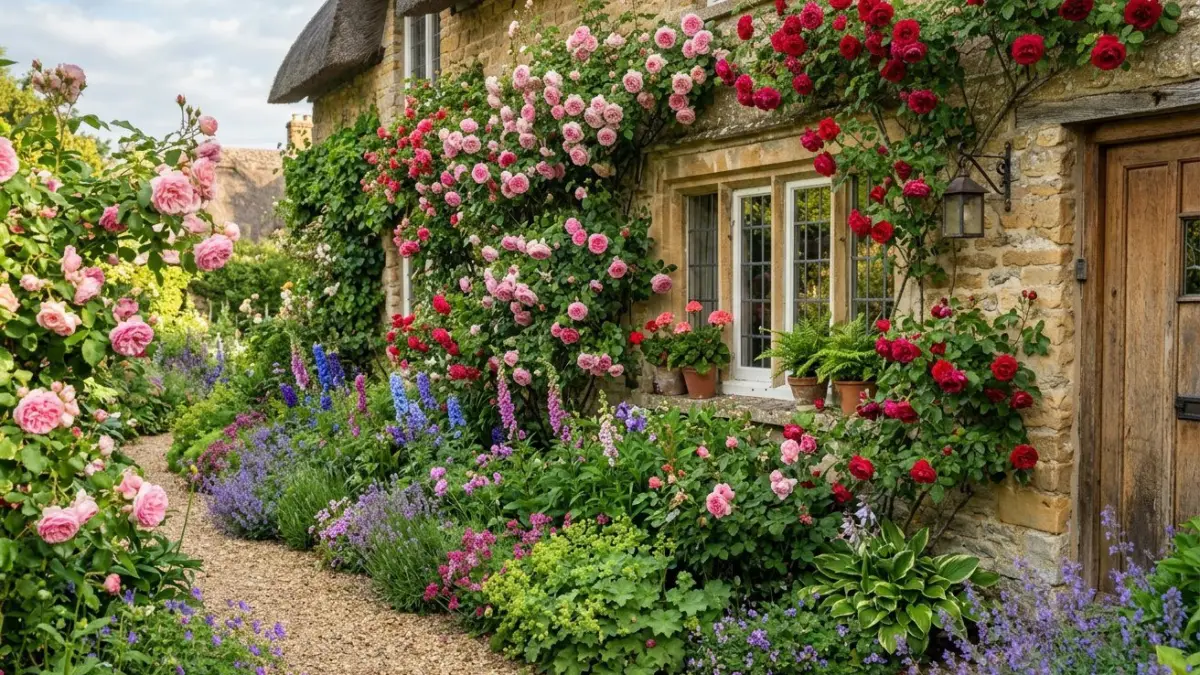
Shade-Loving Flowers: 10 Gorgeous Picks for Dark Corners
That shady corner is not a dead zone. From impatiens to hydrangeas, discover flowers that turn low light into your garden's most elegant room.
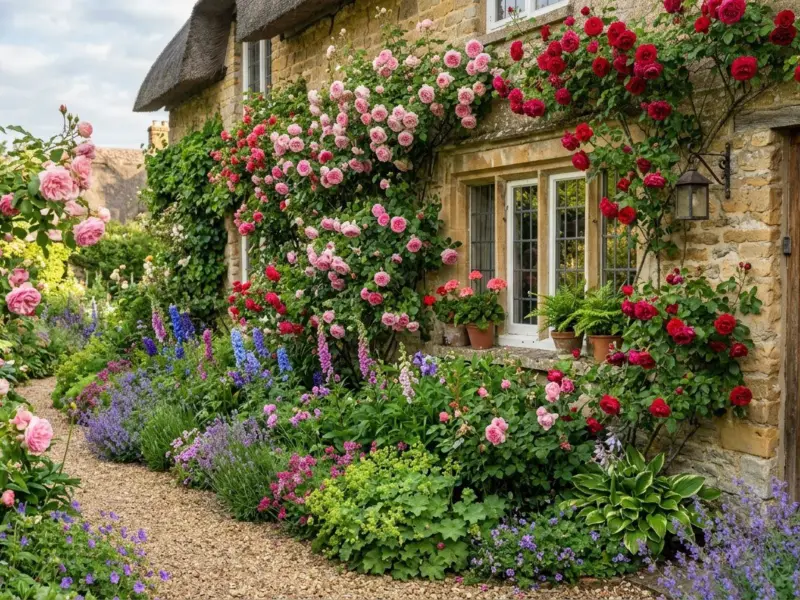
How to Grow Roses: The Complete Care Cycle
Choosing, planting, feeding, pruning and disease-proofing roses: one seasonal cycle that turns the world's most feared flower into an easy favorite.
Flower Bulbs 101: Planting for Year-Round Bloom
Tulips to tuberoses: understand true bulbs, corms, tubers and rhizomes, then sequence them so something spectacular emerges every single month.
Flowers That Attract Pollinators: Build a Buzzing Garden
Bees, butterflies and hoverflies will pollinate your vegetables and patrol your pests, if you plant the nectar bar they actually want, season-long.
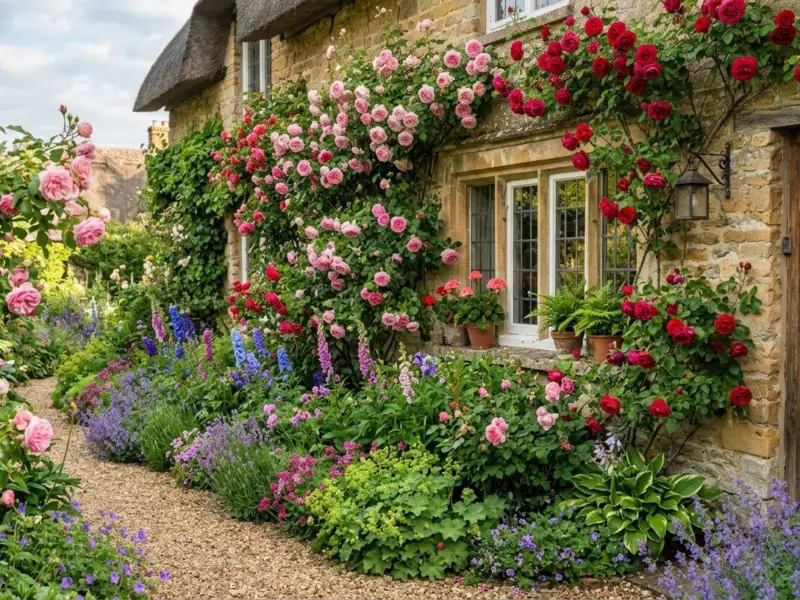
Low-Maintenance Flower Borders That Look Professionally Designed
The 60-30-10 rule, plant triangles, groundcover mulch and the 'right plant, right place' principle, a border formula that halves your gardening time.
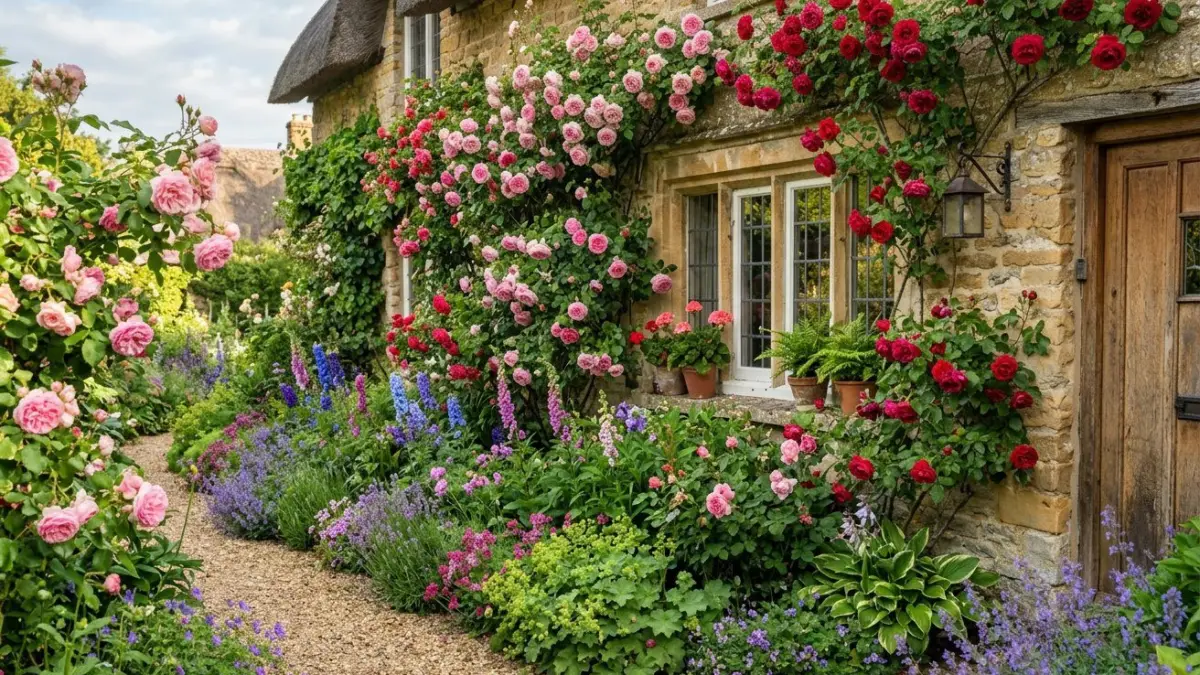
Annuals vs Perennials: What to Plant Where
Annuals give instant, non-stop colour for one season; perennials build a lasting garden that returns year after year. Learn how to choose, combine and care for…
Cutting Garden: Growing Flowers for Bouquets
Plan, plant and harvest a cutting garden that fills your home with fresh flowers from spring to frost: the best varieties, row layout, succession sowing and…