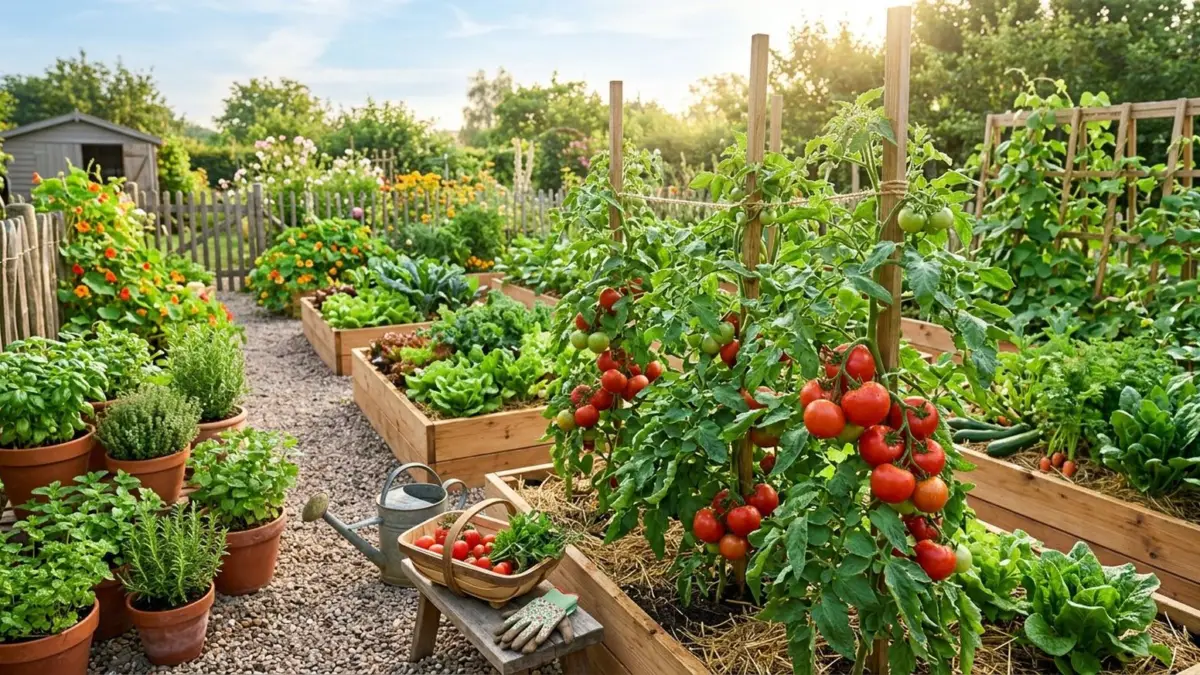
The difference between a thriving vegetable garden and an abandoned one is decided before a single seed is bought. Get the site, the bed and the soil right — and size the whole thing honestly — and growing food becomes the easiest gardening you do.
Start Smart
- Sun first: vegetables need 6–8 hours of direct light
- Start small: a 3×3 meter bed feeds a family’s salads
- Reach matters: no bed wider than 1.2 m — you must reach the middle
- Soil is the crop: spend more on compost than on seeds
Step 1 — Read Your Site
Track the sun for one day: morning sun is gentle, afternoon sun is fierce, and both count toward the six-hour minimum. Keep the bed within sight of your kitchen door — the walk to “just check” is where gardens die. Note water access, because hauling cans across a yard lasts exactly one hot week; the permanent fix is covered in our drip irrigation guide.
Step 2 — Build the Bed
In-ground bed
Cheapest and fine for decent soil: mark the shape, strip the grass, and double-dig in compost. It is slow work once, then done forever.
Raised bed
Perfect for poor or rocky ground: 30–40 cm tall frames filled with a 60/40 blend of topsoil and compost. They warm earlier in spring, drain beautifully, and save your back — the same mix logic as our potting mix guide, scaled up.
Step 3 — Prepare the Soil Like a Pro
Work compost into the top 20–30 cm, rake level, and water deeply a day before planting. If your soil’s identity is a mystery, solve it first with our soil type guide — sandy and clay soils need different compost rhythms. A pH check answers why nothing thrived before; the numbers are decoded in our soil pH guide.
Step 4 — Plan the First Season
Choose 4–6 crops from the genuinely easy list in our beginner vegetables guide, sow cool and warm seasons separately per the calendar, and keep pathways mulched from day one. Row labels and a simple notebook turn next year’s plan from guesswork into data.
Common Mistakes to Avoid
- Starting too big — enthusiasm shrinks faster than a 10×10 bed needs.
- Planting in shade because the sunny spot was “for the lawn.”
- Skipping soil prep; seeds cannot outrun poor ground.
Frequently Asked Questions
How much can a small garden actually produce?
A well-run 3×3 m bed yields 40–90 kg of vegetables a year in most climates — salads, herbs, tomatoes and beans for a family through the season.
Do I need to test my soil?
A basic pH and texture check, yes — they cost little and redirect effort enormously. The interpretation is plain-language in our pH guide.
Next step: pick your crops with easy vegetables for beginners, or explore the full kitchen garden hub.
The Bed-Rotation Planner for starting a vegetable garden
Rotation is the cheapest pesticide and fertilizer ever invented: moving plant families breaks the pest and disease cycles that build in familiar soil, and alternates heavy feeders with soil-builders. The working four-block scheme: 1 fruiting crops (tomato, pepper, squash — the hungry ones), 2 roots and bulbs (carrot, onion — light feeders that loosen soil), 3 legumes (beans, peas — nitrogen bankers), 4 leaf crops (salad, brassicas). Each family advances one block yearly.
Even a four-bed balcony rotation works at pot scale. The log makes it function: without last year’s map, rotation is just a nice idea.
The Harvest-Extension Toolkit for starting a vegetable garden
Every crop’s season has both edges, and both are movable. Earlier: pre-warm soil with black plastic, transplant under cloches, choose fast varieties. Later: succession sow past the usual window, shade cloth through the first heat, and cold frames that add a month at each end of the cool seasons. Longer within the season: cut-and-come-again harvesting, frequent picking, and feeding at fruit set keep plants producing instead of winding down.
The toolkit’s net effect is a garden that feeds you weeks earlier, months longer, and refuses the empty gaps that make grocery stores necessary again.
Deep Dive: What Experienced Growers Know About starting a vegetable garden
The kitchen-door rule is siting’s quiet giant: a bed visible from your daily path gets tended daily, and daily tending — five minutes of observation and harvest — outproduces weekly marathons at every scale. Every other siting factor (sun mapping, water access, wind exposure) supports it, but the walk test predicts abandoned gardens better than any soil analysis. Choose the bed you will actually visit.
Key Takeaways
- Bolting: The crop's rush to flower and seed under stress or long days; ends harvest.
- Cut And Come Again: Harvesting outer leaves so the plant regrows — salad economics.
- Blossom-End Rot: Black sunken fruit base from calcium interrupted by uneven water.
- Chitting: Pre-sprouting seed potatoes in light before planting.
More Questions About Starting A Vegetable Garden
Is a raised bed worth the lumber cost?
For poor or contaminated soil, absolutely; for decent soil, in-ground beds work fine and cost only labor. The reach rule matters more than the frame.
How do I deal with grass under a new bed?
Strip it, or smother with cardboard and 15 cm of compost — the no-dig method converts lawn to bed in one afternoon.
What's the minimum viable garden?
One square meter of the easiest five crops by the kitchen door. It will outproduce a neglected tenfold plot every season.
Field Questions Answered
How many hours of sun is the honest minimum?
Fruiting crops: six plus. Leafy crops and herbs: four manages. Below that, grow mushrooms or move the garden.
What's the best first-year fertilizer plan?
Compost in the bed at planting, then nothing until fruit set — then low-N feed every three weeks. Beginners overfeed nitrogen and harvest leaves.
How do I keep salad through summer heat?
Shade cloth at 30–50%, heat-tolerant varieties, and sowing in the shadiest bed. Or treat summer as salad's off-season and preserve the habit for autumn.
Can I plant a second crop where the first finished?
Immediately — that is succession's whole point. Radish after peas, salad after garlic, autumn brassicas after early beans.
Common Mistakes to Avoid with Starting A Vegetable Garden
- Planting more bed than your week can honestly water and weed.
- Beds beyond arm's reach — the middle third never gets tended.
- Full-sun crops in the only convenient spot; shade obedience beats convenience.
- Sowing everything the first warm weekend; soil temperature votes, not sunshine.
- Skipping thinning — crowded carrots and beets never size up.
Further Field Questions
How many hours of sun is the honest minimum?
Fruiting crops: six plus. Leafy crops and herbs: four manages. Below that, grow mushrooms or move the garden.
What's the best first-year fertilizer plan?
Compost in the bed at planting, then nothing until fruit set — then low-N feed every three weeks. Beginners overfeed nitrogen and harvest leaves.
How do I keep salad through summer heat?
Shade cloth at 30–50%, heat-tolerant varieties, and sowing in the shadiest bed. Or treat summer as salad's off-season and preserve the habit for autumn.
Can I plant a second crop where the first finished?
Immediately — that is succession's whole point. Radish after peas, salad after garlic, autumn brassicas after early beans.
Why are my herbs weak and leggy?
Not enough sun or not enough cutting. Herbs want harsh light and harsher harvests; the pampered windowsill basil is a candle burning at both ends.
What earns the most per square meter?
Herbs, salad, and vertically grown cherry tomatoes — high grocery price, small footprint, continuous harvest. Zucchini wins volume, not value.
Further Field Questions
How many hours of sun is the honest minimum?
Fruiting crops: six plus. Leafy crops and herbs: four manages. Below that, grow mushrooms or move the garden.
What's the best first-year fertilizer plan?
Compost in the bed at planting, then nothing until fruit set — then low-N feed every three weeks. Beginners overfeed nitrogen and harvest leaves.
How do I keep salad through summer heat?
Shade cloth at 30–50%, heat-tolerant varieties, and sowing in the shadiest bed. Or treat summer as salad's off-season and preserve the habit for autumn.
Can I plant a second crop where the first finished?
Immediately — that is succession's whole point. Radish after peas, salad after garlic, autumn brassicas after early beans.
Why are my herbs weak and leggy?
Not enough sun or not enough cutting. Herbs want harsh light and harsher harvests; the pampered windowsill basil is a candle burning at both ends.
What earns the most per square meter?
Herbs, salad, and vertically grown cherry tomatoes — high grocery price, small footprint, continuous harvest. Zucchini wins volume, not value.
Further Field Questions
How many hours of sun is the honest minimum?
Fruiting crops: six plus. Leafy crops and herbs: four manages. Below that, grow mushrooms or move the garden.
What's the best first-year fertilizer plan?
Compost in the bed at planting, then nothing until fruit set — then low-N feed every three weeks. Beginners overfeed nitrogen and harvest leaves.
How do I keep salad through summer heat?
Shade cloth at 30–50%, heat-tolerant varieties, and sowing in the shadiest bed. Or treat summer as salad's off-season and preserve the habit for autumn.
Can I plant a second crop where the first finished?
Immediately — that is succession's whole point. Radish after peas, salad after garlic, autumn brassicas after early beans.
Why are my herbs weak and leggy?
Not enough sun or not enough cutting. Herbs want harsh light and harsher harvests; the pampered windowsill basil is a candle burning at both ends.
What earns the most per square meter?
Herbs, salad, and vertically grown cherry tomatoes — high grocery price, small footprint, continuous harvest. Zucchini wins volume, not value.
Further Field Questions
How many hours of sun is the honest minimum?
Fruiting crops: six plus. Leafy crops and herbs: four manages. Below that, grow mushrooms or move the garden.
What's the best first-year fertilizer plan?
Compost in the bed at planting, then nothing until fruit set — then low-N feed every three weeks. Beginners overfeed nitrogen and harvest leaves.
How do I keep salad through summer heat?
Shade cloth at 30–50%, heat-tolerant varieties, and sowing in the shadiest bed. Or treat summer as salad's off-season and preserve the habit for autumn.
Can I plant a second crop where the first finished?
Immediately — that is succession's whole point. Radish after peas, salad after garlic, autumn brassicas after early beans.
Why are my herbs weak and leggy?
Not enough sun or not enough cutting. Herbs want harsh light and harsher harvests; the pampered windowsill basil is a candle burning at both ends.
What earns the most per square meter?
Herbs, salad, and vertically grown cherry tomatoes — high grocery price, small footprint, continuous harvest. Zucchini wins volume, not value.
Further Field Questions
How many hours of sun is the honest minimum?
Fruiting crops: six plus. Leafy crops and herbs: four manages. Below that, grow mushrooms or move the garden.
What's the best first-year fertilizer plan?
Compost in the bed at planting, then nothing until fruit set — then low-N feed every three weeks. Beginners overfeed nitrogen and harvest leaves.
How do I keep salad through summer heat?
Shade cloth at 30–50%, heat-tolerant varieties, and sowing in the shadiest bed. Or treat summer as salad's off-season and preserve the habit for autumn.
Can I plant a second crop where the first finished?
Immediately — that is succession's whole point. Radish after peas, salad after garlic, autumn brassicas after early beans.
Why are my herbs weak and leggy?
Not enough sun or not enough cutting. Herbs want harsh light and harsher harvests; the pampered windowsill basil is a candle burning at both ends.
What earns the most per square meter?
Herbs, salad, and vertically grown cherry tomatoes — high grocery price, small footprint, continuous harvest. Zucchini wins volume, not value.
Further Field Questions
How many hours of sun is the honest minimum?
Fruiting crops: six plus. Leafy crops and herbs: four manages. Below that, grow mushrooms or move the garden.
What's the best first-year fertilizer plan?
Compost in the bed at planting, then nothing until fruit set — then low-N feed every three weeks. Beginners overfeed nitrogen and harvest leaves.
How do I keep salad through summer heat?
Shade cloth at 30–50%, heat-tolerant varieties, and sowing in the shadiest bed. Or treat summer as salad's off-season and preserve the habit for autumn.
Can I plant a second crop where the first finished?
Immediately — that is succession's whole point. Radish after peas, salad after garlic, autumn brassicas after early beans.
Why are my herbs weak and leggy?
Not enough sun or not enough cutting. Herbs want harsh light and harsher harvests; the pampered windowsill basil is a candle burning at both ends.
What earns the most per square meter?
Herbs, salad, and vertically grown cherry tomatoes — high grocery price, small footprint, continuous harvest. Zucchini wins volume, not value.