Quick answers
- Floor
- Interlocking deck tiles transform concrete instantly and protect surfaces from pot rings.
- Railing
- Railing planters double your growing line, herbs and trailing flowers at perfect picking height. Confirm they are secured against gusts.
- Vertical
- A wall trellis or plant ladder adds the third dimension; climbers on a balcony screen give privacy and green in one move, the same wall-as-garden logic from our small-space guide.
- Which vegetables actually produce on a balcony?
- Cherry tomatoes, chilies, lettuce, herbs and bush beans, the full lineup with pot sizes is in our container vegetable guide.
Key takeaways
- Check load limits, soil + pots are heavier than they feel
- Wind is the #1 plant killer up high, shield before styling
- Big pots beat many small pots, fewer, deeper, more stable
- Map your sun for one full day before buying anything
Table of contents19 sections
- Step 1: Audit Structure and Sun
- Step 2: Break the Wind
- Step 4: Style It as a Room
- Slip-ups to steer clear of
- The Maintenance Budget for balcony gardening
- The Desire-Line Audit for balcony gardening
- Deep Dive: What Experienced Growers Know About balcony gardening
- Terminology made simple
- Slip-ups to steer clear of
A balcony garden is design at its most concentrated: every centimeter earns its place, wind and weight set the rules, and the payoff is a private green room in the sky. Here is the complete setup, from structure to styling.
Step 1: Audit Structure and Sun
Know your weight budget: a large planted pot can exceed 100 kg; distribute heavy items near walls and load-bearing edges, and prefer lightweight fiberglass or fabric containers. Then track sun honestly: a south-facing balcony grows the full sun-lover list from our full-sun guide, while north faces thrive with the picks in our low-light roster plus shade-tolerant annuals.
Step 2: Break the Wind
Upper-floor wind strips moisture and snaps stems. Solid glass or slatted screens cut it while keeping light; sturdy grasses like miscanthus flex and slow the breeze naturally. Watering must adapt too: windy balconies need the daily container rhythm from our container guide, and self-watering pots earn their price here.
Step 4: Style It as a Room
Add the chair before the plants, a garden you cannot sit in is a chore. Layer lighting (next stop: our lighting guide), keep the palette to two or three colors per our color theory, and stage one statement plant as the room’s anchor.
Slip-ups to steer clear of
- Blocking the drain with runoff soil, every pot needs a saucer, every saucer needs a gap.
- Lightweight plastic in wind: top-heavy plants sail over railings.
- Ignoring building rules on railings and drainage, charming until the neighbor below objects.
How do I create privacy with plants?
Fast climbers on a trellis screen, or a row of tall planters with bamboo-type grasses. Combine both for instant screening that matures into lushness.
Next in the hub: paint with confidence via garden color theory, or return to the garden design hub.
The Maintenance Budget for balcony gardening
Every design carries a hidden operating cost measured in weekly minutes. Lawn: the highest at 30-60. Flower borders: 15-30 in season. Trees and mulched shrub beds: minutes. Hardscape with container accents: near zero. Honest designers budget this column first, a beautiful plan demanding hours you do not have becomes a source of guilt, not joy.
The working formula: list the plan’s elements, write each one’s weekly minutes, total them against your true availability, then trade down elements until the budget balances. The garden that gets tended is the one designed to be tended.
The Desire-Line Audit for balcony gardening
Before any path or patio is planned, watch where feet actually go: worn shortcuts across lawns, the gate people really use, the corner that collects chairs. Desire lines are the garden’s own design document, written by use. Professional redesigns begin by photographing these traces for a week; then either paving the line the feet chose or building a destination worth rerouting them for.
Fighting desire lines with fences and signs never works for long. Every element placed against them requires maintenance forever; every element placed along them maintains itself.
Deep Dive: What Experienced Growers Know About balcony gardening
Wind is the balcony’s hidden variable: it strips moisture faster than any sun schedule predicts and physically batters tall growth. Break it before styling: slatted screens slow air while solid glass deflects it upward, and both preserve light. Then match pots to the physics: low, wide, heavy-based containers that cannot sail, in light colors that cannot cook. A balcony garden is a wind garden first; every successful one starts with the breeze map.
Terminology made simple
- Hardscape: The built surfaces, paths, walls, paving, that carry the garden's bones.
- Drift: A repeated planting group of one species; rhythm in plant form.
- Advance/Recede: Hot colors pull forward, cool colors push back, space-shaping by hue.
- Dripline: The outer leaf circle of trees; the lawn's shade boundary.
How much weight can a balcony really take?
Check your building's spec, but as physics: a large planted pot exceeds 100 kg. Distribute heavy pots near walls and load-bearing edges.
Which plants survive high-floor wind?
Tough, flexible foliage, lavender, grasses, rosemary, geraniums. Delicate large-leaf tropicals shred; save them for the screen's lee side.
How do I water without annoying downstairs neighbors?
Self-watering containers with reservoirs, saucers under everything, and water in the morning. Drainage discipline is neighborliness.
What paving suits hot climates?
Light colors that stay walkable, permeable joints that cool, and shade from a structure or tree over the main seating surface.
How do I make a rental garden portable?
Containers, trellis panels in freestanding frames, and a lighting kit on solar. Design everything to survive the move, because it must.
When should trees be part of the design?
First; they take longest and shape everything: shade, views, scale. The tree decision is the plan's opening move, not its decoration.
Where should the seating go?
Where the evening light falls and the best view faces; then build the garden toward that chair. The seat is the design's center of gravity.
Slip-ups to steer clear of
- Buying plants before the light map exists.
- Hardscape laid flat: puddles, ice, mosquitoes.
How do I design on a slope?
Terraces, steps, and water-wise planting bands; never fight water downhill, route it, slow it, and plant the bands it crosses.
Is it worth hiring a designer for a small garden?
For one consultation with a master plan, often yes, small gardens concentrate every mistake. The plan guides years of your own labor.
More in Garden Design
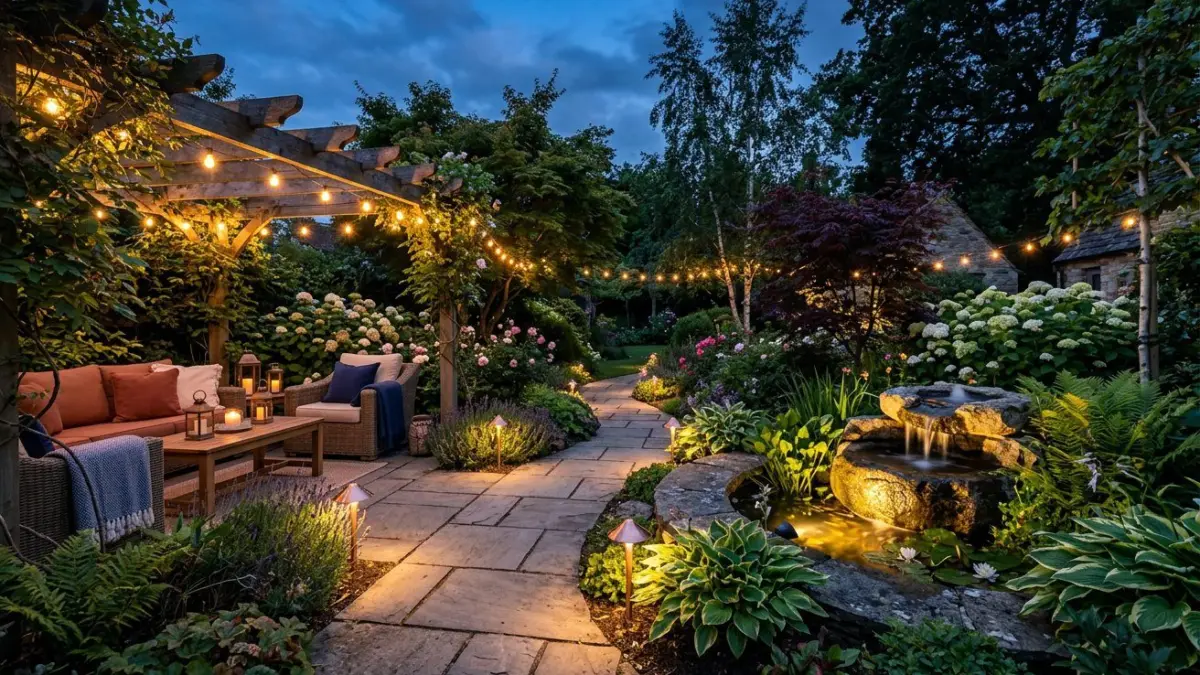
Garden Color Theory: Paint Your Beds Like an Artist
The color wheel applied to real beds: monochrome elegance, complementary drama, analogous calm, plus the white-garden trick and seasonal color drift.
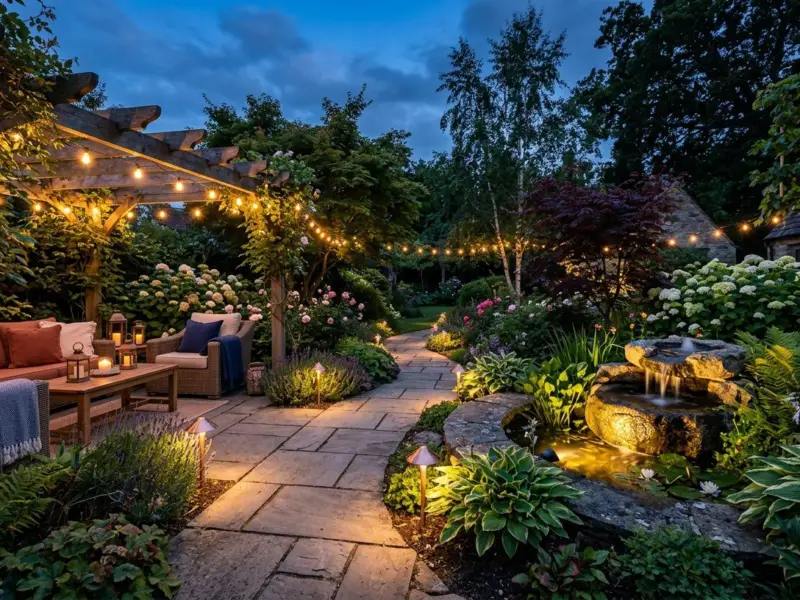
Water Features & Garden Lighting: The Evening Transformation
Solar vs wired lighting, layering light like a pro, and choosing a water feature that soothes without becoming a chore, design your after-dark garden.
Garden Design Principles: Balance, Scale, Rhythm and Unity
The handful of design principles professionals use to make gardens look right: balance, proportion, rhythm, focal points, contrast and unity. Learn them once and apply them…