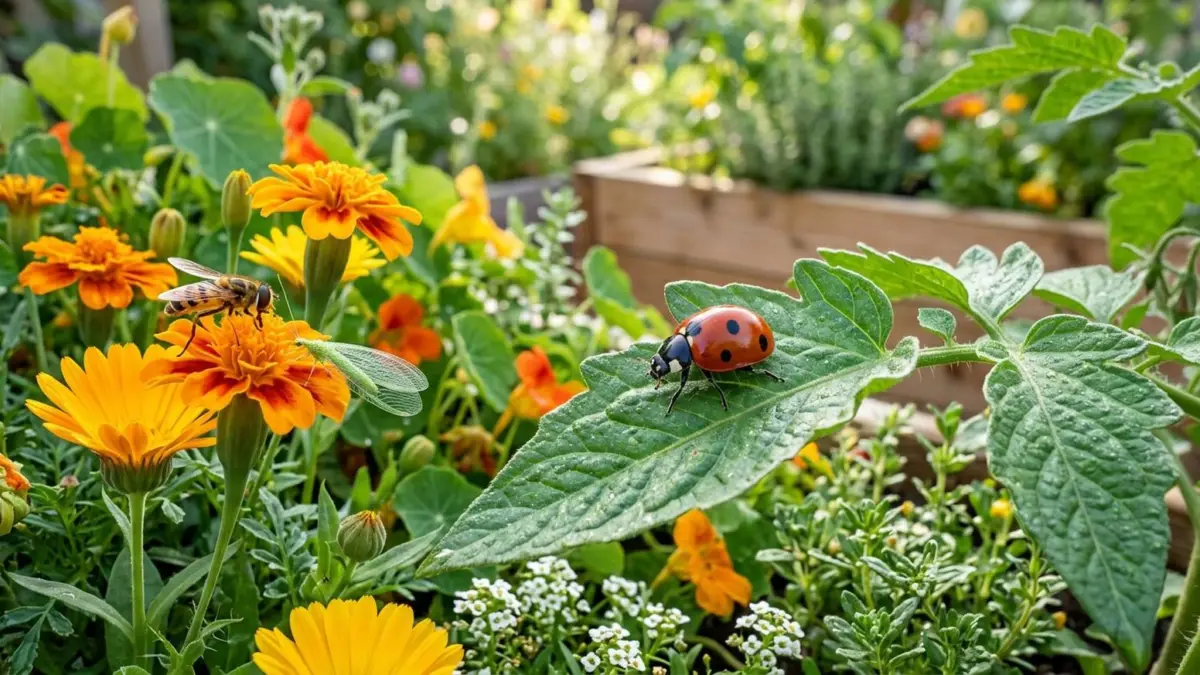
Quick answers
- How do I identify what is eating my plants?
- Look at the damage pattern. Holes with intact edges often mean caterpillars or beetles. Skeletonised leaves suggest caterpillars or slugs. Sap-sucking pests cause stippling. Slime trails point to slugs.
- When should I worry about garden pests?
- When damage threatens the plant health or your harvest. A few aphids on a strong plant are not a crisis. Significant defoliation or spreading disease are signals to act.
- What is the most effective organic pest control?
- Prevention first, then cultural controls, then physical controls, then biological controls, and finally organic sprays as last resort. Healthy plants resist pests better.
- How do I tell if a plant has a disease or a pest problem?
- Pests are usually visible; you can see the insect or animal. Diseases are usually not; you see symptoms but not the pathogen. When you cannot find a pest, suspect disease.
Key takeaways
- Identify before you act. Treating the wrong problem wastes time and can harm beneficials.
- Prevention is far more effective than treatment. Most serious problems are preventable with good practices.
- Tolerate some damage. A few holes in leaves are normal garden ecology, not emergencies.
- Start with the least toxic option. Hand-picking, water blasts, and physical barriers work for many problems.
- Diversity is pest management. Mixed plantings create a garden that resists pest outbreaks naturally.
- Sanitation matters. Remove diseased material promptly. Clean tools between plants.
- Learn the beneficial insects. Ladybirds, lacewings, hoverflies are your allies. Recognize and protect them.
- When you must spray, do it right. Identify the pest, choose the right product, and follow label instructions.
Table of contents47 sections
- The Calm Gardener's Emergency Manual
- How to Use This Hub
- The Seasonal Rhythm of Pests, Diseases & Natural Care
- Your First 30 Days with Pests, Diseases & Natural Care
- The Science, Briefly
- 10 Mistakes That Sink Gardeners in This Topic
- Myths Worth Retiring
- The Toolkit: What You Actually Need
- Plain-Language Glossary
- Regional Notes
- How This Hub Connects to the Rest of the Site
- The Deeper Why: Emergency Skills Define Gardeners
- Advanced Field Notes
- Common Objections, Answered
- Three Field Confessions
- The 7-Day Starter Plan
- What is the first response to any unknown plant problem?
- Are neem and soap sprays safe for pollinators?
- Why do pest problems keep coming back every year?
- When do chemicals become justified?
- How do I attract ladybugs that stay?
- Is one whitefly worth treating?
- Do organic gardens get fewer pests?
- How far apart should I plant for disease prevention?
- Are yellow leaves always disease?
- What do I do with a plant that keeps failing yearly?
- Can I save seeds from a diseased plant's fruit?
- Guides at a Glance
- Revision Cards: The Guides at a Glance
- Seasonal Checklist, Condensed
- Pace Yourself: The Long View
- Advanced Vocabulary, Applied
- Study Notes: The Guides in Brief
- Frequently Asked: The Index
- Practice Drills for This Week
Every gardener eventually meets aphids, mildew or a mysterious wilt, the difference between panic and calm is a diagnostic system. This hub builds exactly that: organic pest control that actually works, disease identification by symptom, the beneficial insects fighting on your side, a natural remedies toolkit, wildlife protection for birds, deer and neighbors’ cats, and the master skill of preventing problems before they start.
Prevention runs through every other hub on this site, proper spacing from the design hub, watering discipline from the growing guides, soil health from this pillar’s sibling hub: because a healthy plant is the best pesticide ever formulated. Use these six guides as your emergency room and your insurance policy.
The Calm Gardener's Emergency Manual
Every gardener eventually meets the aphid explosion, the mildew wave or the Tuesday-morning mystery wilt. The difference between panic and procedure is a diagnostic system, and this hub is that system: identify by symptom, treat with the gentlest effective tool, recruit the allies already on your payroll, and prevent so thoroughly that emergencies become rare visitors instead of annual residents.
The hub’s philosophy is the integrated pest management pyramid: prevention and habitat at the base, targeted biological and mechanical controls in the middle, and chemicals, organic or otherwise, as the narrow apex, reserved for genuine, identified threats. Most garden advice inverts that pyramid. Yours will not.
The six guides divide the battlefield by skill, not by enemy: reading pest damage as a signature, reading disease the same way, meeting the beneficial insects who eat your problems, mixing the seven sprays worth knowing, fencing out the mammals and birds humanely, and running the ten-point prevention checklist that makes most of this page unnecessary.
Begin with prevention if you are building; begin with identification if something is eating your garden right now. Both paths converge on the same truth: a healthy, biodiverse garden is the best pesticide ever formulated.
How to Use This Hub
| Guide | What you will learn | Time to apply |
|---|---|---|
| Common Garden Pests, Organic Control | Identify by damage, strike the biology's weak point | One season of scouting |
| Plant Diseases: Identify & Treat | The big five signatures and their exact protocols | One season of practice |
| Beneficial Insects | Meet the pest patrol; stop evicting your staff | One recruitment season |
| Natural Remedies Toolkit | Seven tested sprays with exact ratios and limits | One afternoon mixing |
| Protecting from Wildlife | Barriers first, scent second, surrender nothing | One weekend of fencing |
| Prevention Master Guide | The 10-point checklist that prices problems at zero | A lifetime habit |
Read the Damage, Not the Bug
Most gardeners chase insects; professionals read damage. Curling sticky tips announce aphids; yellow stippling with fine webbing convicts spider mites; a white flutter when disturbed is whitefly; missing chunks with black droppings indict caterpillars; a wilting plant that lifts like worn carpet names the grubs below. Each signature pairs with a targeted countermeasure, blast, soap, BTK, nematodes, timed to the pest’s life cycle rather than your frustration. The guide’s rule: never spray an unidentified enemy, because the wrong weapon usually recruits more pests.
The Disease Triangle
Plant disease needs a susceptible host, a pathogen and the right weather, remove one leg and the triangle collapses. The five common fungal signatures each come with a protocol: powdery mildew’s potassium bicarbonate and airflow, black spot’s sanitation-and-dry-leaves discipline, blight’s ruthless removal and rotation, rust’s copper at first sight, root rot’s repot-and-repent. The meta-lesson underneath them all: wet leaves, still air and stressed plants are the three ingredients you control cheapest, which is why morning soil-level watering outranks any fungicide.
Your Hired Hands
The beneficials guide ends the tragedy of gardeners squashing their own security team. Ladybug larvae, alligator-bodied, often smudged with aphid remains, eat hundreds of aphids each; lacewing larvae are hungrier still; hoverfly larvae patrol unseen; parasitic wasps turn aphids into bronze mummies. Recruitment is habitat work: small-flowered nectar plants for the adults, a water dish with pebble islands, messy corners for overwintering, and the discipline to skip broad-spectrum sprays that kill allies faster than pests and send populations rebounding without their predators.
Seven Sprays Worth Knowing
The remedies guide is a recipe book with ratios and warnings: pure-soap insecticidal spray for soft bodies, neem as the slow feeding-disruptor and deterrent, baking soda’s mildew interference, the garlic-chili mammal deterrent, cinnamon against damping-off, diatomaceous earth’s physical abrasion, and compost tea as preventive biology. Each lists the failure mode that gives homemade sprays their bad reputation, detergents that burn, midday oil that cooks, strength mistaken for effectiveness, and the dusk-spray timing that keeps allies safe once dry.
Fencing Out the Hungry
Wildlife protection runs on a ladder: barriers first, always; scent and motion second; plant choice as the passive defense underneath. Netting goes taut on frames at first fruit color, loose netting traps the wildlife it meant to discourage. Deer demand two meters or a double fence they refuse to calculate; rabbits yield to 60 centimeters buried 15; cats abandon seedbeds confronted with prickly texture. Motion-activated water is the one gadget with a real record, and the guide’s hard rule, no poisons, ever, protects the owls, cats and hawks already working your side.
Prevention Pays Ten to One
The prevention guide is the checklist professionals run: right plant right place, mature-size spacing for airflow, morning soil-level watering, mulch everywhere soil shows, yearly rotation, tool hygiene between sick plants, resistant varieties where history says so, quarantine for new arrivals, a weekly five-minute scouting walk, and feeding the soil rather than just the plant. None of it is dramatic; all of it is cheap. The guide prices it honestly: every hour here saves ten in the emergency sections above.
The Seasonal Rhythm of Pests, Diseases & Natural Care
Late winter. Dormant-oil and hygiene season: clean up overwintering sites, prune out cankers and mummified fruit, sterilize the tool kit, and plan rotations and resistant varieties for the year.
Spring. Scouting begins: five minutes weekly on leaf undersides and stem bases. First aphid waves get the water blast and the allies; netting goes up before fruit colors. Damping-off watch on seedlings.
Summer. Peak pressure: mildew in humid spells, mites in dry heat, caterpillar generations stacking. Spray at dusk only, keep the water deep and morning-only, and hand-pick on principle; it works.
Autumn. Sanitation pays the year’s dividend: remove diseased material, refresh mulch to block soil splash, clean and store stakes and cages, and note this year’s failures for next year’s variety list.
Your First 30 Days with Pests, Diseases & Natural Care
This week: install the scouting walk: same time weekly, coffee in hand, undersides checked. Buy the four ingredients of the remedy kit: pure soap, neem, baking soda, cinnamon.
This month: plant one nectar drift for the allies (dill, alyssum, yarrow), set the water dish with pebbles, and resolve the netting-before-color rule for anything birds love.
This season: run the ten-point prevention checklist against your own garden and fix the three cheapest failures. Keep a one-line incident log: pest, plant, response, outcome. By year’s end you will have a personalized field guide no book can sell you.
The Science, Briefly
Pest management’s foundations are three ecological facts. The disease triangle: infection requires host susceptibility, pathogen presence and favorable environment: gardeners control the environment leg cheapest, which is why airflow, dry leaves and morning water outrank sprays. Predator-prey dynamics: pest populations rebound from crashes faster than their predators recolonize, so broad-spectrum sprays manufacture the next outbreak: the reason targeted tools and habitat recruitment outperform chemical waves. Exclusion beats control: a physical barrier that stops the first colonization costs nothing forever, while every treatment after establishment repeats forever.
10 Mistakes That Sink Gardeners in This Topic
- Spraying before identifying: the wrong weapon recruits the next problem.
- Killing ladybug larvae and lacewing nymphs as 'ugly bugs'.
- Broad-spectrum sprays that blitz allies and leave pests to rebound alone.
- Composting diseased plants; most home piles never reach sterilizing heat.
- Watering leaves at evening: the standing mildew reservation.
- Loose netting that tangles birds instead of excluding them.
- One soap spray and declaring failure; cycles need three rounds at 5-7 days.
- Spraying at noon in sun, phytotoxic burns on whatever you aimed at.
- Traps and poisons that travel up the food chain to owls and cats.
- Skipping autumn cleanup and hosting next year's outbreaks over winter.
Myths Worth Retiring
“Organic means harmless to everything.” Neem harms aquatic life; soap kills what it touches, allies included until dry. Organic is a tool class, not a magic shield.
“Sevin-style one-shot solutions are fine occasionally.” Broad-spectrum pyrethroids are the single most common cause of recurring mite and aphid nightmares. The occasional shot costs a season’s balance.
“Companion planting repels pests by smell.” Evidence supports companions as habitat and confusion, not force-fields. Plant marigolds for the hoverflies they feed, not the nematode fences they were sold as.
“A few aphids demand action.” A few aphids are lunch being arranged. Action begins at damage thresholds, and often the best action is patience.
The Toolkit: What You Actually Need
- A 10× hand lens: half of identification is seeing the tiny truth
- Yellow sticky traps for whitefly, fungus gnat and leafminer monitoring
- A dedicated 1-liter pump sprayer, labeled and kept for plant sprays only
- Pure potassium soap, cold-pressed neem, baking soda, cinnamon: the kit
- Insect netting plus a frame, taut, sized before the birds find the fruit
- Copper or sulfur fungicide for the two diseases that genuinely warrant it
- A sharp blade and alcohol wipes for tool hygiene between sick plants
- The scouting notebook: date, plant, symptom, action, result
Plain-Language Glossary
- IPM
- Integrated pest management: prevention first, chemicals last, monitoring throughout.
- Disease triangle
- Host + pathogen + environment; remove any leg to prevent disease.
- BTK
- Bacillus thuringiensis kurstaki: biological caterpillar control, nothing else touched.
- Damping off
- Seedling collapse at the soil line; prevented by airflow, cinnamon, careful water.
- Honeydew
- Aphid and scale excretion: the sticky shine that also grows sooty mold.
- Mummy
- An aphid parasitized by wasps, turned bronze and swollen; a good-luck charm.
- Phytotoxicity
- Spray burn from wrong strength, wrong time or wrong product.
- Exclusion
- Barriers that prevent pests arriving, always cheaper than removal.
- Systemic pesticide
- Absorbed into plant tissue including nectar; the pollinator betrayal.
- Threshold
- The damage level where action beats patience: IPM's trigger.
- Sanitation
- Removing overwintering sites and diseased material; prevention's boring half.
- Resistant variety
- A cultivar bred to shrug a specific disease; the cheapest spray there is.
Regional Notes
Hot and dry: mites and thrips thrive in the aridity, humidity management and exclusion netting lead; fungal pressure drops. Humid tropics: fungal disease is the permanent adversary, airflow, resistant varieties and copper discipline carry the program; pests breed in overlapping generations year-round. Cold winters: the freeze resets many pests; your real battle is spring sanitation against survivors; slugs own the wet weeks. Coastal: mild and damp: slugs, snails and mildew headline, and the scouting walk earns its coffee daily.
How This Hub Connects to the Rest of the Site
Defense completes the site: soil health grows the resilient plant, the pollinator border staffs the allies, watering discipline removes the fungus’s weather, and every hub’s harvest arrives intact because this hub holds the line.
The Deeper Why: Emergency Skills Define Gardeners
Anyone can garden in the easy weeks. The craft shows at 7am with the first mildew map across a rose you love, or the evening the seedlings lie felled, and the gardener who diagnosed, acted at the right threshold, and moved on without drama is the one this hub builds. Emergency competence changes the emotional economy of the entire hobby: problems stop being crises and become the interesting part, because you own a system for them.
The system’s parts are deliberately unglamorous, a notebook, a lens, a dusk-spray discipline, a tolerance for small populations, but their compound effect is a garden that spends its seasons producing rather than panicking. Prevention, patience, identification, targeted action: this sequence is the closest thing gardening has to a superpower.
Advanced Field Notes
- The baggie test identifies everything: one suspect leaf in a damp bag overnight releases spider mites, spores or larvae visibly by morning, the field lab that ends guess-spraying.
- Sticky traps are censuses, not controls: their real job is counting, gnat booms and whitefly trends read weekly off the card, informing thresholds before damage does.
- Prune diseased wood last, after healthy plants, tools disinfected between cuts: and burn or bin the debris; the compost pile is not a hospital.
- Resistant varieties are the silent pesticide: one seed catalog line-item (VF, resistant, tolerant) replaces a season’s spray program for the diseases your log says you fight annually.
- Pest pressure maps to plant stress: the aphid explosion always traces to the sprinkler change, the skipped watering, or the crowd you planted against advice, fix the stress, the pests disperse.
Common Objections, Answered
“Identification is too slow when damage spreads.” It is the fastest route: the baggie test and the lens resolve most mysteries overnight, while wrong treatments guarantee a second, longer timeline.
“Organic methods failed for me before.” Organic tools fail at wrong strength, wrong hour, wrong cycle, one spray, noon, no repeat. The toolkit page’s ratios and the 5-7 day rhythm are the difference between ‘organic doesn’t work’ and ‘I hadn’t used it yet’.
“I don’t have time for scouting walks.” Five minutes weekly replaces the ten-hour rescue, the arithmetic that convinces every gardener exactly once, one way or the other.
Three Field Confessions
The ladybug larvae I executed. Squirted with soap as ‘weird aphid monsters’, alligator-shaped, exactly as the guides warn. The aphid population doubled within the fortnight, freed from its best predator. Now the lens confirms every ID before any spray; the larvae get introduces as staff.
The blight I composted. Tomato plants with late blight, tidily composted with everything else: and the following season’s tomatoes inherited the disease with their own beds. Home piles rarely sterilize; diseased material leaves the property now, no debate.
The spray I aimed at nothing. A mystery leaf curl treated with three different remedies across three weeks, water, then soap, then neem, before a baggie test revealed thrips. Identification first, treatment second: the order that turns three wasted weeks into one decisive evening.
The 7-Day Starter Plan
Day 1: establish the weekly scouting route, same path, three inspection stops, a notebook. Day 2: assemble the remedy shelf: pure soap, neem, baking soda, cinnamon, isopropyl wipes, one labeled sprayer. Day 3: plant the ally nectar drift, dill, alyssum, yarrow, and set the pebble water dish. Day 4: net or frame anything birds and caterpillars historically find first. Day 5: run the ten-point prevention checklist against the garden; fix the three cheapest failures. Day 6: clean and sharpen tools; label the diseased-clippings bucket. Day 7: write this year’s rotation and resistant-variety plan for the beds that failed last year.
One week converts reaction into a system, scouting, allies, barriers, hygiene, and data, all standing guard before the season’s first invasion.
What is the first response to any unknown plant problem?
Photograph it, identify by damage pattern, and check for allies before any spray. Twenty minutes of identification beats a week of wrong treatment.
Are neem and soap sprays safe for pollinators?
Once dry, both are low-risk; wet, they kill what they contact. Spray at dusk, avoid open blooms, and let dry overnight.
Why do pest problems keep coming back every year?
Overwintering sites plus broad-spray rebound. Autumn sanitation, rotation and habitat for allies break the cycle that sprays alone perpetuate.
When do chemicals become justified?
When an identified threat endangers a valuable plant and targeted organic tools have failed through complete cycles: and then targeted, dusk-timed, bloom-safe.
How do I attract ladybugs that stay?
Plant their nectar sources (dill, yarrow, alyssum), keep some aphids as working bait, provide water and messy corners, and stop spraying. Local recruitment beats released beetles, which mostly fly away.
Is one whitefly worth treating?
No: one whitefly is data. Thresholds decide treatment, and thresholds are counts, not sightings.
Do organic gardens get fewer pests?
They get balanced ecosystems: pests arrive and allies persist. Balance means small populations, not zero, zero usually means something is poisoning the neighborhood.
How far apart should I plant for disease prevention?
To mature width, honestly, the label's spacing is the disease program. Airflow is a free fungicide that never expires.
Are yellow leaves always disease?
Usually cultural: water, light, age, or nutrition. Disease yellowing arrives with spots, patterns, or wilts, the pattern is the diagnosis.
What do I do with a plant that keeps failing yearly?
Stop replanting the same species there: the site or soil pathogen has voted. Change the plant, the soil, or the spot, three honest options.
Can I save seeds from a diseased plant's fruit?
Rarely wise: seed transmits some viruses and bacteria. Buy certified seed for the families with known seed-borne diseases: tomatoes, brassicas, cucurbits.
Guides at a Glance
- Common Garden Pests, Organic Control: Identify by damage, strike the biology's weak point
- Plant Diseases: Identify & Treat: The big five signatures and their exact protocols
- Beneficial Insects: Meet the pest patrol; stop evicting your staff
- Natural Remedies Toolkit: Seven tested sprays with exact ratios and limits
- Protecting from Wildlife: Barriers first, scent second, surrender nothing
- Prevention Master Guide: The 10-point checklist that prices problems at zero
What does “IPM” mean in practice?
Integrated pest management: prevention first, chemicals last, monitoring throughout.
What does “Disease triangle” mean in practice?
Host + pathogen + environment; remove any leg to prevent disease.
What does “BTK” mean in practice?
Bacillus thuringiensis kurstaki: biological caterpillar control, nothing else touched.
What does “Damping off” mean in practice?
Seedling collapse at the soil line; prevented by airflow, cinnamon, careful water.
What does “Honeydew” mean in practice?
Aphid and scale excretion: the sticky shine that also grows sooty mold.
What does “Mummy” mean in practice?
An aphid parasitized by wasps, turned bronze and swollen; a good-luck charm.
Revision Cards: The Guides at a Glance
Common Garden Pests, Organic Control: Identify by damage, strike the biology's weak point. Budget: One season of scouting.
Plant Diseases: Identify & Treat: The big five signatures and their exact protocols. Budget: One season of practice.
Beneficial Insects: Meet the pest patrol; stop evicting your staff. Budget: One recruitment season.
Natural Remedies Toolkit: Seven tested sprays with exact ratios and limits. Budget: One afternoon mixing.
Protecting from Wildlife: Barriers first, scent second, surrender nothing. Budget: One weekend of fencing.
Prevention Master Guide: The 10-point checklist that prices problems at zero. Budget: A lifetime habit.
Seasonal Checklist, Condensed
- Late winter. Dormant-oil and hygiene season: clean up overwintering sites, prune out cankers and mummified fruit, sterilize the tool kit, and plan rotations and resistant varieties for the year..
- Spring. Scouting begins: five minutes weekly on leaf undersides and stem bases.
- Summer. Peak pressure: mildew in humid spells, mites in dry heat, caterpillar generations stacking.
- Autumn. Sanitation pays the year’s dividend: remove diseased material, refresh mulch to block soil splash, clean and store stakes and cages, and note this year’s failures for next year’s variety list..
Pace Yourself: The Long View
- This week: install the scouting walk: same time weekly, coffee in hand, undersides checked.
- This month: plant one nectar drift for the allies (dill, alyssum, yarrow), set the water dish with pebbles, and resolve the netting-before-color rule for anything birds love..
- This season: run the ten-point prevention checklist against your own garden and fix the three cheapest failures.
Advanced Vocabulary, Applied
- Phytotoxicity: Spray burn from wrong strength, wrong time or wrong product.
- Exclusion, Barriers that prevent pests arriving, always cheaper than removal.
- Systemic Pesticide: Absorbed into plant tissue including nectar; the pollinator betrayal.
- Threshold, The damage level where action beats patience, IPM's trigger.
- Sanitation: Removing overwintering sites and diseased material; prevention's boring half.
- Resistant Variety: A cultivar bred to shrug a specific disease; the cheapest spray there is.
Study Notes: The Guides in Brief
- Read the Damage, Not the Bug: Most gardeners chase insects; professionals read damage.
- The Disease Triangle: Plant disease needs a susceptible host, a pathogen and the right weather, remove one leg and the triangle collapses.
- Your Hired Hands: The beneficials guide ends the tragedy of gardeners squashing their own security team.
- Seven Sprays Worth Knowing: The remedies guide is a recipe book with ratios and warnings: pure-soap insecticidal spray for soft bodies, neem as the slow feeding-disruptor and deterrent, baking soda's mildew interference, the garlic-chili mammal deterrent, cinnamon against damping-off, diatomaceous earth's physical abrasion, and compost tea as preventive biology.
- Fencing Out the Hungry: Wildlife protection runs on a ladder: barriers first, always; scent and motion second; plant choice as the passive defense underneath.
- Prevention Pays Ten to One: The prevention guide is the checklist professionals run: right plant right place, mature-size spacing for airflow, morning soil-level watering, mulch everywhere soil shows, yearly rotation, tool hygiene between sick plants, resistant varieties where history says so, quarantine for new arrivals, a weekly five-minute scouting walk, and feeding the soil rather than just the plant.
Frequently Asked: The Index
- What is the first response to any unknown plant problem?
- Are neem and soap sprays safe for pollinators?
- Why do pest problems keep coming back every year?
- When do chemicals become justified?
- How do I attract ladybugs that stay?
- Is one whitefly worth treating?
- Do organic gardens get fewer pests?
- How far apart should I plant for disease prevention?
- Are yellow leaves always disease?
- What do I do with a plant that keeps failing yearly?
- Can I save seeds from a diseased plant's fruit?
Practice Drills for This Week
- Drill 1: Ipm: find this concept in your own garden this week and write one line about it in the log.
- Drill 2: Disease Triangle: find this concept in your own garden this week and write one line about it in the log.
- Drill 3: Btk: find this concept in your own garden this week and write one line about it in the log.
- Drill 4: Damping Off: find this concept in your own garden this week and write one line about it in the log.
- Drill 5: Honeydew: find this concept in your own garden this week and write one line about it in the log.
- Drill 6: Mummy: find this concept in your own garden this week and write one line about it in the log.
- Drill 1: Ipm: find this concept in your own garden this week and write one line about it in the log.
- Drill 2: Disease Triangle: find this concept in your own garden this week and write one line about it in the log.
- Drill 3: Btk: find this concept in your own garden this week and write one line about it in the log.
- Drill 4: Damping Off: find this concept in your own garden this week and write one line about it in the log.
- Drill 5: Honeydew: find this concept in your own garden this week and write one line about it in the log.
- Drill 6: Mummy: find this concept in your own garden this week and write one line about it in the log.
All Pests & Diseases guides
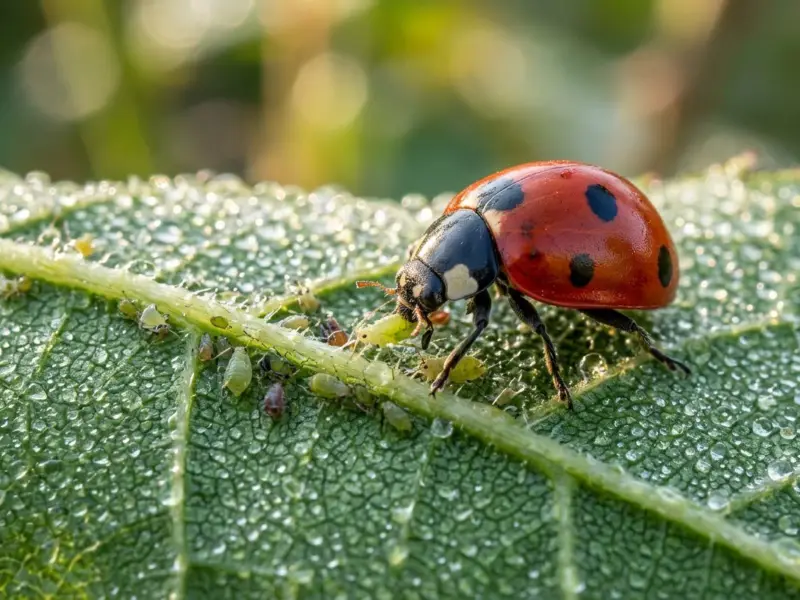
Common Garden Pests & Organic Control That Actually Works
Aphids, whiteflies, spider mites, caterpillars, grubs: identify each by its damage, then apply the specific organic counter-measure, ranked by effectiveness.
Plant Diseases: Identify and Treat the Big Five
Powdery mildew, black spot, blight, rust and root rot, symptom photos in words, immediate treatment, and the prevention that stops recurrences.

Beneficial Insects: Your Garden’s Best Hired Hands
Ladybugs, lacewings, hoverflies, parasitic wasps and earthworms: meet the pest patrol, learn to attract them, and stop accidentally killing your own staff.
7 Natural Remedies Every Gardener Should Know How to Make
Insecticidal soap, neem oil spray, baking-soda fungicide, garlic-chili deterrent and more: tested recipes with exact ratios, plus when NOT to use each.
Protecting Your Garden from Birds, Deer, Cats & Critters
Humane barriers, scent deterrents, netting done right and companion strategies, keep birds, deer, rabbits and neighborhood cats out without war on wildlife.

Preventing Garden Problems Before They Start (The Master Guide)
The 10-point prevention checklist professionals run: spacing, sanitation, rotation, resistant varieties, watering discipline and seasonal scouting, cheaper than any cure.
Garden Hygiene: Sanitation Practices That Prevent Problems
Clean tools, tidy beds, quarantined plants and smart rotation stop most pests and diseases before they start. Learn the simple routines professional growers use, with a…
Troubleshooting Wilt, Yellowing and Mystery Symptoms
A step-by-step diagnostic guide for the symptoms that baffle gardeners most: wilting, yellow leaves, spots, holes, curling, stunting and blossom end rot. Work out the cause…