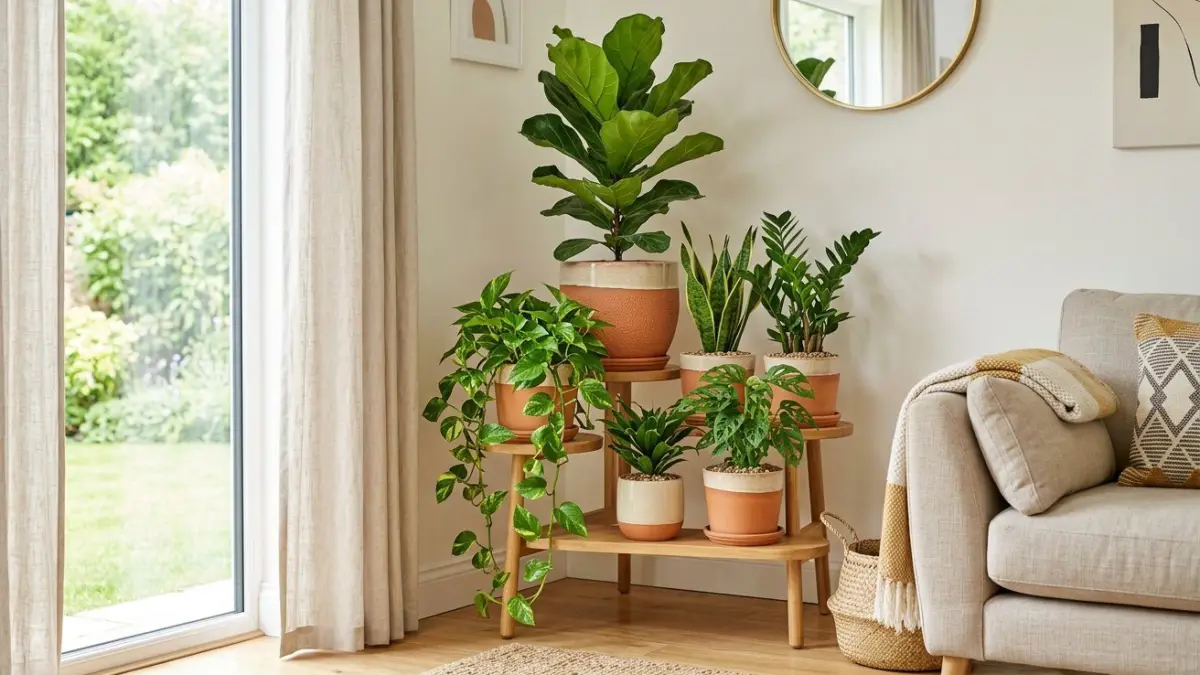
Quick answers
- What humidity do houseplants need?
- Most thrive at 40–60% relative humidity. Tropical plants like calatheas, ferns and orchids prefer 60% or more; succulents and cacti are happy at 30–40%.
- Does misting raise humidity?
- Only for a few minutes. Misting does not meaningfully raise room humidity and can encourage leaf spots on some plants. A humidifier or grouping plants works far better.
- What are signs of low humidity?
- Crispy brown leaf tips and edges, curling leaves, flower buds that drop, and spider mites on the undersides of leaves.
- Do pebble trays work?
- Barely. The extra humidity is limited to the area right around the pot. They are fine as a small boost, but a humidifier makes a real difference.
Key takeaways
- Measure first. A cheap hygrometer takes the guesswork out of humidity.
- Aim for 40–60% for most houseplants and higher for tropical species.
- A humidifier is the most effective tool. Place it near plants and run it on a timer.
- Group plants together. They create a more humid micro-climate through transpiration.
- Do not rely on misting. It lasts minutes and can cause spotting and disease.
- Winter heating dries air sharply. Move sensitive plants away from radiators and vents.
Table of contents12 sections
Houseplants that look glorious in the shop often decline at home for a reason people rarely think about: the air. Most popular foliage plants come from rainforests, where humidity rarely drops below 70%. Many homes, especially in winter with heating or in summer with air conditioning, sit at 20–30%. The leaves cannot cope, and the tell-tale brown tips begin.
This guide explains how much humidity each type of plant wants, how to measure it, and which fixes work. It is part of the Indoor Plants pillar and goes hand in hand with How to Water Houseplants Correctly and Houseplant Problems & Fixes.
Why humidity matters
Plants lose water through tiny pores in their leaves. When the air is dry, they lose water faster than the roots can supply it, especially in warm rooms. The leaf edges, furthest from the veins, dry out first and turn brown. Low humidity also stresses plants and makes them more attractive to spider mites, which thrive in dry air.
Measure it: get a hygrometer
A digital hygrometer costs very little and replaces guesswork. Place it near your plants at leaf height, away from direct heat sources. Check it at different times of day and in different rooms; bathrooms and kitchens are often more humid than living rooms and bedrooms.
| Plant group | Target humidity | Examples |
|---|---|---|
| High-humidity tropicals | 60–80% | Calathea, maranta, ferns, orchids, alocasia, carnivorous plants |
| Medium | 45–60% | Monstera, philodendron, pothos, fiddle-leaf fig, rubber plant, peace lily |
| Tolerant of dry air | 30–45% | Snake plant, ZZ plant, spider plant, cast iron plant, jade, cacti and succulents |
1. A humidifier
The most effective solution by far. A cool-mist ultrasonic humidifier near a group of plants can raise local humidity by 10–20 percentage points. Use a humidistat or a timer so you do not overshoot, clean it weekly to prevent mould, and use distilled water if your tap water is hard (it leaves white dust on leaves).
2. Group plants together
Plants release moisture through their leaves. Clustering several of them creates a more humid pocket around them. Keep a little space for air circulation so leaves do not stay wet and invite fungus.
3. Choose the right room
Bathrooms with a window are naturally humid and ideal for ferns and calatheas. Kitchens can work too. Keep thirsty tropicals away from radiators, fireplaces, heating vents, air conditioners and draughty doors.
4. Terrariums and cloches
Glass cabinets, closed terrariums and cloches create a sealed micro-climate where humidity stays above 80%. They are perfect for fittonia, small ferns, orchids and other fussy species.
5. Water trays (with limits)
A tray of pebbles with water below the pot (never let the pot sit in the water) adds a small amount of humidity right at leaf level. It is a useful boost for a single plant, but it does not change the humidity of a whole room.
Misting gives plants water on their leaves for a few minutes, but the humidity returns to its original level quickly. It can also leave water spots on fuzzy leaves (African violets) and encourage fungal disease. Use it only as a quick cleaning wipe-over, not as a humidity strategy.
Step by step: a humidity-friendly setup
- Measure humidity near your plants for a few days.
- Sort plants into high, medium and low humidity groups, and move high-humidity plants together.
- Choose a spot away from heating and draughts, with bright, indirect light.
- Add a humidifier on a shelf near the group, set to 50–60%.
- Keep air moving with a gentle fan or an occasional opened window to prevent mould.
- Re-measure and adjust every season.
Plants that cope with dry air
If you do not want to manage humidity, choose plants that are happy in dry rooms: snake plant, ZZ plant, cast iron plant, spider plant, rubber plant, hoya and most succulents. See 15 Best Low-Light Houseplants for tough, forgiving options.
Where most people go wrong
- Misting daily and expecting results
- Placing a humidifier directly beside furniture or electronics
- Letting pots stand in water on a pebble tray, which rots the roots
- Putting calatheas next to radiators
- Ignoring dirty humidifier tanks, which spread mould and bacteria
Practical tips from experience
- Cut off brown tips with clean scissors, following the natural leaf shape; trimmed leaves look neat and heal.
- Rain or filtered water prevents mineral build-up that adds to leaf tip burn.
- Check the undersides of leaves for fine webbing; early spider mite damage often means the air is too dry.
Keep going from here
Balance humidity with correct watering, choose pots with repotting advice, and arrange plants beautifully with Styling with Indoor Plants. Back to Indoor Plants.
More in Indoor Plants
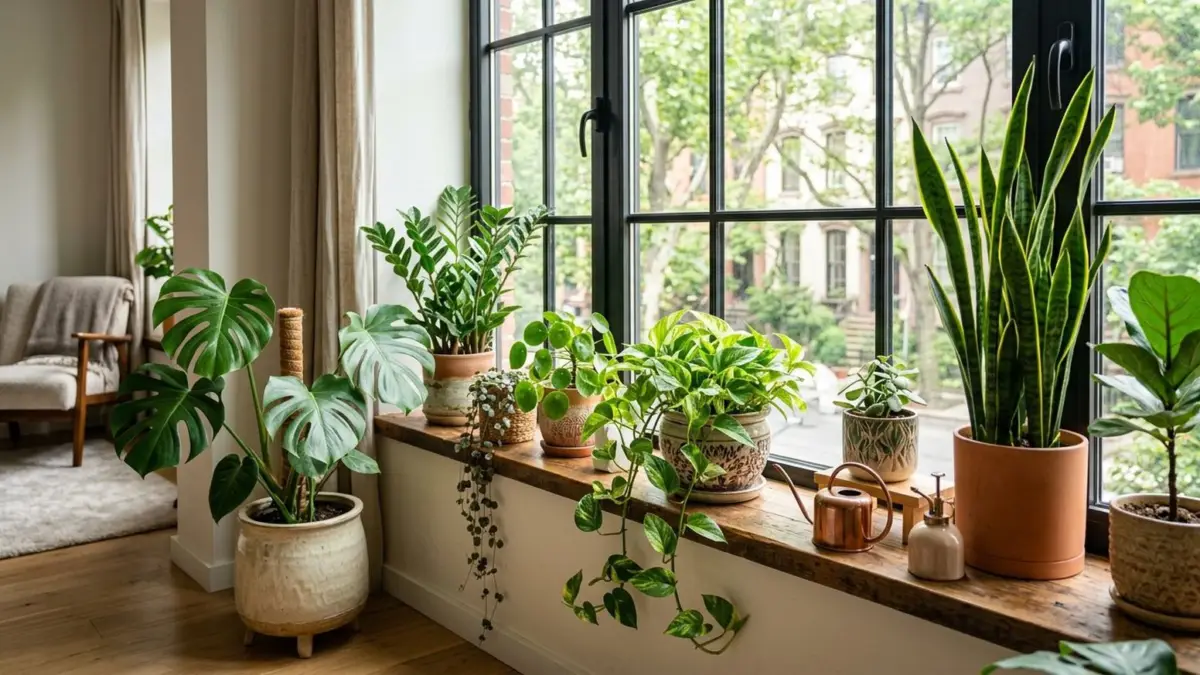
Pet-Safe Houseplants: Non-Toxic Options for Dog and Cat Owners
A practical list of houseplants that are generally non-toxic to cats and dogs, the common ones to avoid, and what to do if your pet chews…
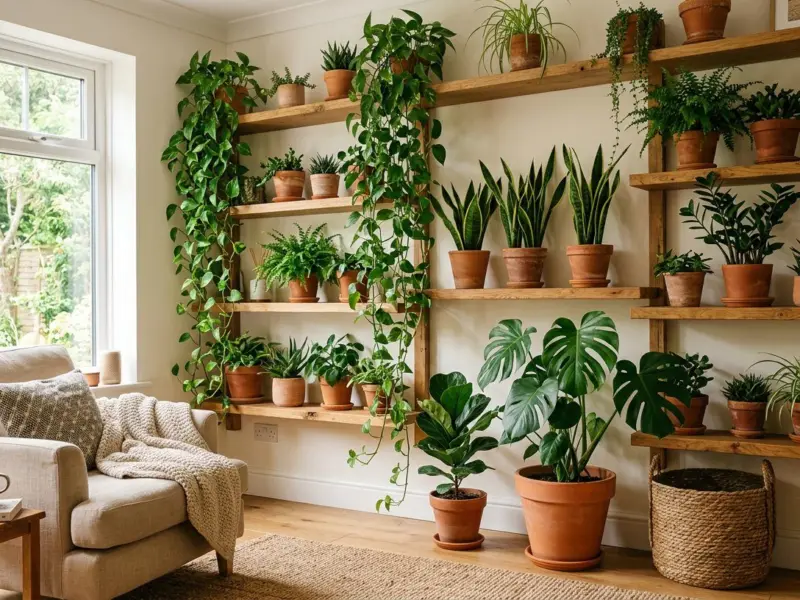
15 Best Low-Light Houseplants (That Actually Thrive)
Snake plants to pothos: the genuinely shade-tolerant houseplants for north windows and dim corners, plus what "low light" really means, honestly.
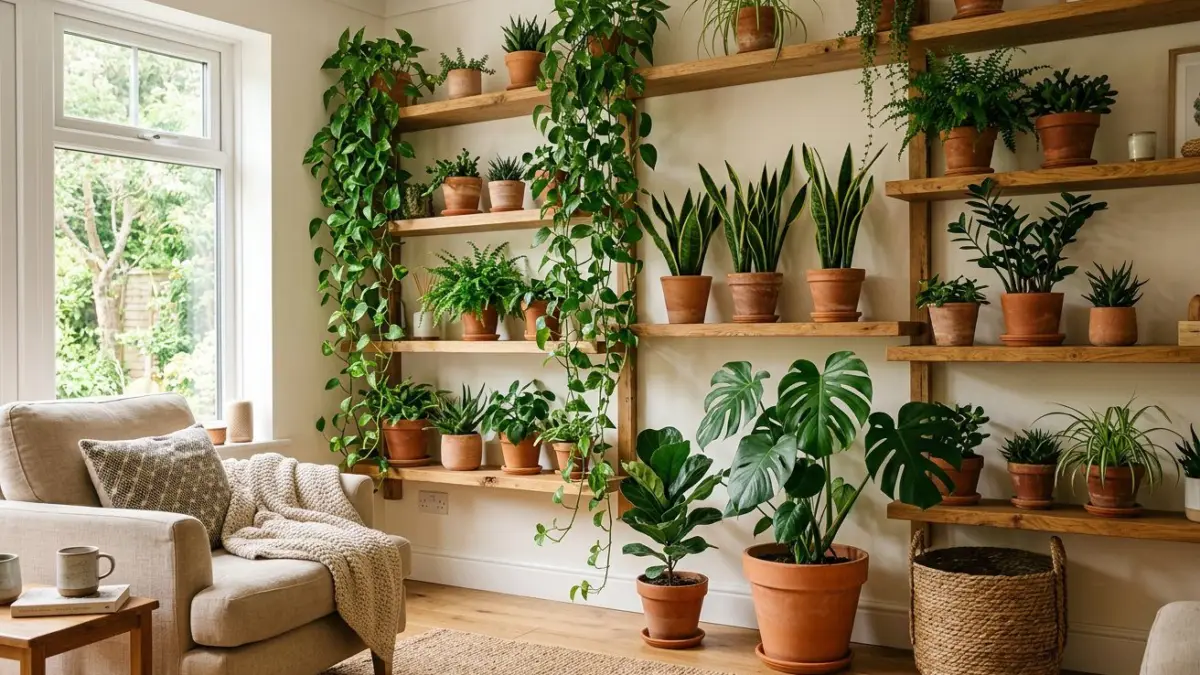
How to Water Houseplants Correctly (The Complete Guide)
The finger test, bottom watering, drain-through technique and why schedules kill houseplants: water by the plant's rules, not the calendar's.