Quick answers
- What are the best low-light houseplants?
- Snake plant, pothos, ZZ plant, cast iron plant, and Chinese evergreen are the most forgiving low-light options. They grow slowly in low light but remain healthy.
- How often should I water my houseplants?
- There is no universal schedule. Water when the top 2-5 cm of soil is dry, depending on the plant. Most houseplants are killed by overwatering, not underwatering.
- Why are my houseplant leaves yellowing?
- Yellow leaves usually mean overwatering (the most common cause), but can also indicate underwatering, nutrient deficiency, or natural aging.
- Do houseplants need fertilizer?
- Yes, but lightly. During active growth, feed every 2-4 weeks with half-strength balanced fertilizer. Reduce in winter.
Key takeaways
- Light is the most important factor. Match the plant to the light you have, not the light you wish you had.
- Water by need, not by schedule. The finger test works for most houseplants. When in doubt, wait.
- Drainage is non-negotiable. Every pot needs a hole. No hole means root rot waiting to happen.
- Humidity matters more for some plants than others. Tropicals want humidity; succulents are fine with dry air.
- Fertilize lightly during growth, rest during dormancy. Half-strength every 2-4 weeks in spring and summer.
- Observe before you act. A yellow leaf might be normal, or it might signal a problem. Check the pattern.
- Repot when roots circle the pot, not on a schedule. Most houseplants are happy being slightly root-bound.
- Pet safety matters. Know which plants are toxic before bringing them home. Check the ASPCA database.
Table of contents47 sections
- Indoor Gardening Is a Light-and-Water Language
- How to Use This Hub
- The Seasonal Rhythm of Indoor Plants
- Your First 30 Days with Indoor Plants
- The Science, Briefly
- 10 Mistakes That Sink Gardeners in This Topic
- Myths Worth Retiring
- The Toolkit: What You Actually Need
- Plain-Language Glossary
- Regional Notes
- How This Hub Connects to the Rest of the Site
- The Deeper Why: A Collection Is a Practice
- Advanced Field Notes
- Common Objections, Answered
- Three Field Confessions
- The 7-Day Starter Plan
- What are the three genuinely hardest houseplants to kill?
- How do I rescue an overwatered plant?
- Is tap water safe for all houseplants?
- Why is my brand-new plant dropping leaves?
- Do grow lights replace windows?
- Are grow lights obvious or ugly?
- How do I know if my plant wants more light?
- Should I repot immediately after buying?
- What's the honest truth about plant subscriptions?
- Why do my terracotta pots go white?
- Can houseplants live on a covered balcony in summer?
- Guides at a Glance
- Revision Cards: The Guides at a Glance
- Seasonal Checklist, Condensed
- Pace Yourself: The Long View
- Advanced Vocabulary, Applied
- Study Notes: The Guides in Brief
- Frequently Asked: The Index
- Practice Drills for This Week
Houseplants fail for exactly three reasons, wrong light, wrong water, wrong pot, and every guide in this hub attacks one of them. Together they form the complete indoor path: choosing plants that fit your light, watering correctly, repotting without stress, diagnosing problems, air-purifying picks and styling plants like a designer.
Start with the light audit if you are choosing your first plant; jump to the problem-solving guide if a current plant is sulking. Each guide cross-links to this hub and its siblings, and connects to the pots and potting mix guide because indoors, the container is half the plant’s world.
Indoor Gardening Is a Light-and-Water Language
Houseplants fail in threes, not dozens: wrong light, wrong water, wrong pot. Nearly every dying pothos, sulking calathea and over-loved snake plant traces back to one of those three, which is excellent news, three variables are learnable in a season. This hub teaches them as a language, then adds the fun parts: problem diagnosis, air-quality reality, and styling that makes a room look curated rather than crowded.
The indoor environment is more extreme than any window hides. A sunny sill is a fraction of outdoor light; heated rooms are deserts; pots are tiny islands that swing from flood to drought in days. Plants that thrive indoors are not lucky; they are chosen and managed with these physics in mind. That is the entire secret of this hub: match the plant to the window, water by need rather than schedule, and pot modestly with drainage.
The six guides below form a complete path: choose by light, water by need, repot without tears, diagnose by symptom, breathe the (honest) air-quality benefits, and arrange everything like a designer. Work them in order and the plant vocabulary, leggy, crispy, root-bound, stops being mysterious and starts being a conversation.
Start with the low-light guide to shop honestly, or jump to problem-solving if a current patient needs triage. Both doors lead to the same fluency.
How to Use This Hub
| Guide | What you will learn | Time to apply |
|---|---|---|
| Best Low-Light Houseplants | Honest light definitions and the fifteen genuine survivors | One shopping trip |
| How to Water Houseplants | Finger test, drain-through watering, saucer discipline | One month of practice |
| Repotting Houseplants | Signals, one-size-up rule, root pruning, aftercare | 30 minutes per plant |
| Houseplant Problems & Fixes | Symptom-first diagnosis: yellow, crispy, leggy, dropping | Ongoing skill |
| Air-Purifying Indoor Plants | What the science actually supports, honestly | One honest read |
| Styling with Indoor Plants | Triangles, odd groupings, statement plants, pot logic | One afternoon |
Shopping by Window
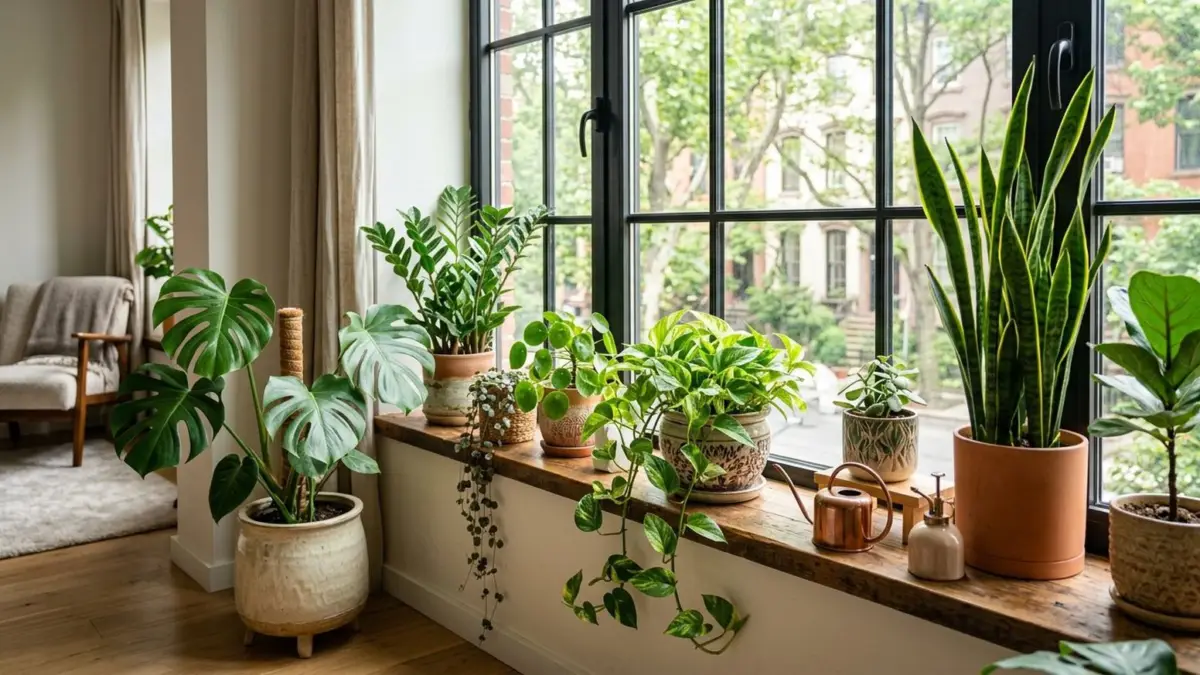
The low-light guide’s core is definitional honesty: low light means comfortable reading light at midday, not decorative darkness. It then matches fifteen proven plants to real windows, snake plant and ZZ for the dim interior, pothos and philodendron for east light, peace lily for a bloomer in modest brightness, and warns that the classic killers of ‘low-light’ plants are overwatering in dim rooms and believing no window counts as low light. Rotation through brighter spots every few weeks is the survival habit nobody teaches.
Water by Need, Never by Date
The watering guide converts overwatering’s statistics into a habit: check, then pour. The finger test at 2-4 centimeters, weight-lifting for small pots, and the drain-through-and-empty-saucer method replace the fatal Sunday routine. It maps plant groups to dry-down targets, succulents fully dry, tropicals slightly dry, ferns never fully, and reads environment as the real calendar: the same plant drinks every four days in a hot sunny room and every twelve in a cool dim one. Water quality notes cover the fluoride-sensitive few.
Repotting Without Tears
Repotting fails on two errors only: wrong timing and giant pots. The guide teaches the signals (circling roots, water rushing through, stalled growth), the season (spring, when roots heal), and the one-size-up rule that prevents the swamp-in-a-pot failure. The ten-minute method, support the stem base, tease circling roots, same planting depth, one thorough watering, plus a no-feed aftercare month covers ninety percent of situations, with root-pruning-and-return for the giants that cannot go larger.
Diagnosis by Symptom
The problem guide turns leaf language into a short suspect list: lower-leaf yellow with wet soil means overwatering; crispy edges mean dry air, buildup or thirst; all-over pale with leggy stems means light poverty; sudden mass drop means shock. Pest profiles follow, fungus gnats from wet soil, spider mites in dry heat, mealybugs’ cotton tufts, each with the exact fix and the follow-up schedule. Its meta-lesson: change one variable and watch a week; plant rescue is iteration, not a shopping spree.
Air Quality, Honestly
The air guide separates the documented from the marketed: plants do absorb volatile organics, raise humidity and measurably improve focus and mood, but the effect scales with biomass and airflow, two plants are decoration, eight healthy mid-size plants are a contribution. It names the repeat performers (peace lily, spider plant, snake plant, pothos), the bedroom candidates that release oxygen at night, and the dust-wiping habit that keeps the machinery working. The strongest documented benefit stays the least hyped: plants in view reduce stress and sharpen attention.
Styling as Design
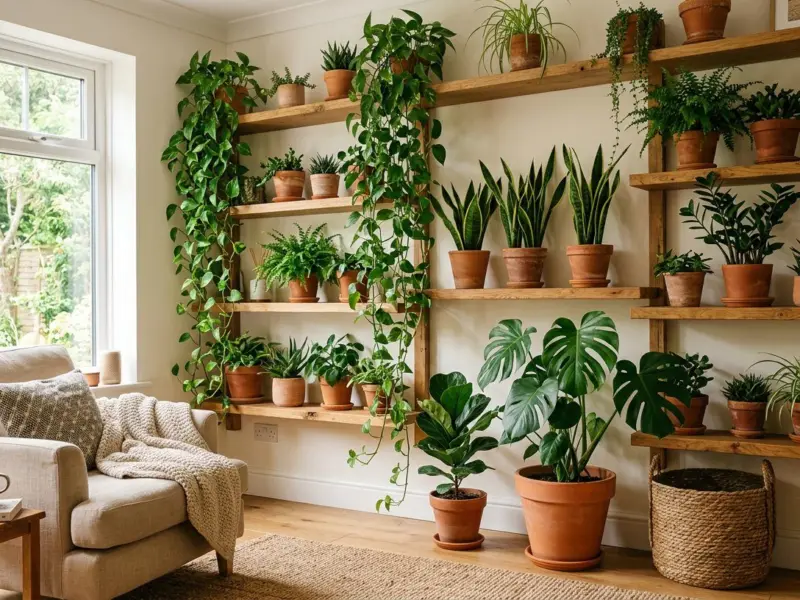
The styling guide treats plants as living sculpture with four rules: odd-number groupings, height triangles (vertical, mid, trailing), one statement plant per room, and containers unified to two or three tones. Shelves are for cascades, floors are for anchors, and every beautiful arrangement begins with light-matching first and looks second, a gorgeous dead plant is not a style. Rotation keeps one-sided plants honest, and the cachepot-over-nursery-pot system keeps watering clean without sacrificing drainage.
The Seasonal Rhythm of Indoor Plants
Late winter. The repotting and propagation window opens as day length triggers growth. Check root health, refresh top-dressing on giants, and take the year’s first cuttings.
Spring-summer. The growth engine: regular feeding at half strength, more frequent watering as light rises, and the year’s repottings. Watch for spider mites in heat and scale on new purchases.
Autumn. Taper feeding as growth slows; bring summering outdoor plants inside after a pest-inspection quarantine. Light drops fast: begin the window shuffle early.
Winter. The season of restraint: less water, no feed, watch for cold drafts and heating deserts. Dust leaves monthly so scarce photons all count. Group plants to share humidity.
Your First 30 Days with Indoor Plants
Weekend one: audit your windows hour by hour and name each honestly. Buy one plant per window type from the survivor lists, not one plant for all windows.
First month: run the finger test on every watering, empty every saucer, and photograph one problem plant weekly as your diagnostic diary. No repotting, no feeding, just correct water.
First season: repot one root-bound plant by the book, root three cuttings in water, and style one shelf with a cascade. By season’s end you will read leaves the way you read weather, automatically.
The Science, Briefly
Indoor plant care is applied physics in three acts. Light: window glass and distance obey the inverse-square law, a plant one meter from a bright window may receive a quarter of the light at the sill, which is why ‘bright room’ often means ‘dark shelf’. Water: overwatering kills by suffocation, not drowning per se, saturated media displace oxygen and roots metabolize it continuously. Humidity: most homes in heating season sit below 30% relative humidity while tropicals prefer 60%+, explaining crispy edges in perfectly watered calatheas. Every technique here adjusts one of those three dials.
10 Mistakes That Sink Gardeners in This Topic
- Watering on a schedule instead of by need, the Sunday massacre.
- Choosing plants for looks while ignoring the window they must live in.
- Potting small plants in giant containers 'so they can grow into them'.
- Leaving pots standing in full saucers overnight.
- Believing 'low light' means no light, nothing photosynthesizes in the dark.
- Misting as a humidity strategy; minutes of wet leaves, hours of nothing.
- Fertilizing a struggling plant: food is not medicine.
- Repotting sick plants as a 'fix' before diagnosing the actual cause.
- Skipping quarantine for new plants; pests tour the whole collection within weeks.
- Never rotating; every plant leans its own window into lopsidedness.
Myths Worth Retiring
“Misting keeps tropicals happy.” Humidity rises for minutes, not hours. Grouping, pebble trays and humidifiers do the real work; misting mainly spreads leaf-spot spores.
“Snake plants thrive on neglect in bathrooms.” They tolerate neglect; windowless bathrooms are darkness, and even snake plants have a light bill.
“Yellow leaves always mean water problems.” Usually, but not always, age, light poverty and root shock yellow leaves too. Read the pattern: which leaves, how many, how wet the soil.
“Cactus soil is only for cacti.” Any plant that hates wet feet, lavender, many herbs, appreciates the mineral-heavy mix.
The Toolkit: What You Actually Need
- A long-spout watering can that reaches back shelves without dismantling them
- A moisture meter for calibration month, then your own calibrated finger
- Neem oil, pure liquid soap and a spray bottle, the pest triage kit
- Terracotta pots in two or three unified tones, with saucers you will actually empty
- Fresh potting mix plus perlite for the repotting season
- Sharp snips for cuttings and cleanup, wiped with alcohol between patients
- A small humidifier for the truly tropical shelf
- Grow lights for winter: the difference between surviving and growing
Plain-Language Glossary
- Leggy
- Stretched, sparse growth from insufficient light.
- Cachepot
- The decorative outer pot; the inner grow pot lifts out for watering.
- Root-bound
- Roots circling the pot, displacing soil; time to repot or root-prune.
- Drainage layer myth
- Gravel at pot bottoms raises, not lowers, the water table.
- Fluoride sensitivity
- Leaf-tip burn in dracaena, spider plant and calathea from treated tap water.
- Transpiration
- Water vapor leaving leaves; the plant's cooling and transport engine.
- Photoperiod
- Day length; some plants bloom or sleep by it.
- Etiolation
- Extreme stretching in darkness: pale, weak, space-seeking growth.
- Top-dressing
- Replacing the top layer of mix to refresh nutrition without repotting.
- Quarantine
- The 1-2 week isolation new plants serve before joining the collection.
- PEST triage
- Soap-and-neem weekly for a month: the standard indoor treatment rhythm.
- Crispy edge
- Leaf-margin burn from dry air, salt buildup or water stress.
Regional Notes
Hot and dry climates: indoor humidity runs desert-low: grouping, humidifiers and terracotta’s evaporation become core equipment; succulents thrive where tropicals crisp. Humid regions: the overwatering margin shrinks: dry-down discipline doubles, and fungus gnat prevention is constant. Cold winters: the light cliff after autumn defines the year, grow lights or slowed expectations; heating drafts map like weather fronts. Tropical homes: houseplants are outdoor plants wintering indoors only for storms; the collection migrates with the weather.
How This Hub Connects to the Rest of the Site
Indoor skills mirror outdoor ones: the watering doctrine applies at pot scale, propagation runs identically on a windowsill, and the container physics chapter is the same science whether the pot sits on a balcony or a bookshelf. Indoor gardening is gardening: the weather is just smaller.
The Deeper Why: A Collection Is a Practice
Houseplant keeping looks like ownership and functions like practice, the horticultural equivalent of a musical instrument kept in tune. The weekly rounds of checking, watering by need, wiping, rotating, are short, repetitive and oddly settling; the collection responds to attention with a directness few hobbies offer. This is why the focus-and-mood effects in the air-quality guide keep replicating in studies: the plants in view are proof of care taken, and the care itself is the active ingredient.
The practice deepens with every skill: propagation turns one plant into a lineage; diagnosis turns symptoms into conversations; styling turns care into composition. None requires talent: the hub’s entire argument is that light, water and pots explain nearly everything, and all three are learnable in a season of honest attention.
Advanced Field Notes
- Water by weight, not by looks: lift each pot weekly; the calibration is faster than any meter and works through foliage too dense to finger-test.
- Quarantine is a shelf, not a concept: one windowsill four meters from the collection, new plants served last, tools wiped, the pest front line costs nothing.
- Semihydroponics for the chronic overwaterer: inert leca plus a reservoir makes drowning impossible and roots visibly healthy, the training wheels that teach root-oxygen logic.
- Repotting season is propagation season: the roots and tips trimmed at repotting are the cuttings’ raw material, nothing wasted, everything rooted.
- One plant per watering personality: grouping by dry-down speed (not by look) is the arrangement that survives both vacations and forgetful weeks.
Common Objections, Answered
“My home is too dark for plants.” Your home is too dark for the plants you are choosing. Fifteen species on the low-light list prefer exactly the light most homes actually have, and one LED bar extends the palette indefinitely.
“I forget to water.” Then your collection is ZZ, snake plants, and pothos, the drought-tolerant trio, plus self-watering pots for the rest. Memory is a solvable design problem, not a character flaw.
“Pet-safe limits everything.” Parlor palm, calathea, spider plant, peperomia, cast iron, many ferns, the non-toxic list is long, lush and largely beginner-proof. Chewers just reshape the shopping list, not end the hobby.
Three Field Confessions
The Sunday watering massacre. A decade of loyal weekly watering, one dead plant at a time. The finger test felt like an insult to routine, until the first month of testing showed half my ‘watering day’ plants were still wet from the week before. The schedule was killing them politely.
The pothos in the dark. A gorgeous variegated pothos moved deeper into the room for looks, and reverted to solid green, stretched, and sulked within a season. Looks chose the corner; physics vetoed it. The plant moved back; the lesson moved in.
The repot that nearly killed what it saved. A struggling calathea ‘helped’ into a much larger pot with rich fresh soil, the classic rescue that drowns. It survived one step from the bin: roots trimmed, tiny pot, gritty mix, patience. Rescue means diagnose first; the pot was never the problem.
The 7-Day Starter Plan
Day 1: map every window by compass and hour. Day 2: finger-test every plant you own and empty every saucer, the overwatering audit. Day 3: buy one plant per window type from the survivor lists. Day 4: mix the rescue kit, soap, neem, wipe cloth, and inspect leaf undersides collection-wide. Day 5: take three pothos cuttings in water; your first propagation. Day 6: style one shelf: three plants, odd numbers, one trailing. Day 7: write the monthly routine on the calendar, wipe, rotate, flush, inspect.
One week from anonymous pots to a mapped, audited, propagating, styled collection with a maintenance system. That is the entire hobby, working.
What are the three genuinely hardest houseplants to kill?
Snake plant, ZZ plant and pothos, in descending order of forgiveness. All three forgive dim light and forgotten waterings.
How do I rescue an overwatered plant?
Stop watering, lift the root ball, trim brown mushy roots, repot in fresh airy mix, and hold water a week. Yellow lower leaves plus wet soil is the signature.
Is tap water safe for all houseplants?
Mostly; calathea, spider plant and dracaena show fluoride tip-burn. Let water sit overnight or filter for the sensitive few.
Why is my brand-new plant dropping leaves?
Transport shock plus environment change. Keep care boring and steady, no repotting, no feeding, and most plants settle within a month.
Do grow lights replace windows?
Yes, decisively. A 20-watt LED panel 30 cm above a shelf outperforms most windows and turns winter survival into winter growth.
Are grow lights obvious or ugly?
Neither anymore: clip-on and bar LEDs slot into shelves and look like task lighting. Plants cannot tell the difference; guests rarely notice.
How do I know if my plant wants more light?
Speed of dry-down plus new growth size: soil drying in days and robust new leaves mean the light is right; weeks-wet soil and small pale growth mean move it closer.
Should I repot immediately after buying?
Only if the soil is broken, waterlogged, or crawling with gnats. Otherwise let it settle a month, nursery pots drain fine and the plant is adjusting anyway.
What's the honest truth about plant subscriptions?
Cute, but they ship plants before you have windows mapped. Buy for your light, not for surprise boxes.
Why do my terracotta pots go white?
Mineral salts wicking through the clay, harmless to plants, scrub or soak off. Its porosity is the feature: it breathes away your overwatering mistakes.
Can houseplants live on a covered balcony in summer?
Most tropicals love it: bright shade, fresh air, humidity. Transition gradually to avoid leaf scorch, and check for pests before bringing them home.
Guides at a Glance
- Best Low-Light Houseplants: Honest light definitions and the fifteen genuine survivors
- How to Water Houseplants: Finger test, drain-through watering, saucer discipline
- Repotting Houseplants: Signals, one-size-up rule, root pruning, aftercare
- Houseplant Problems & Fixes: Symptom-first diagnosis: yellow, crispy, leggy, dropping
- Air-Purifying Indoor Plants: What the science actually supports, honestly
- Styling with Indoor Plants: Triangles, odd groupings, statement plants, pot logic
What does “Leggy” mean in practice?
Stretched, sparse growth from insufficient light.
What does “Cachepot” mean in practice?
The decorative outer pot; the inner grow pot lifts out for watering.
What does “Root-bound” mean in practice?
Roots circling the pot, displacing soil; time to repot or root-prune.
What does “Drainage layer myth” mean in practice?
Gravel at pot bottoms raises, not lowers, the water table.
What does “Fluoride sensitivity” mean in practice?
Leaf-tip burn in dracaena, spider plant and calathea from treated tap water.
What does “Transpiration” mean in practice?
Water vapor leaving leaves; the plant's cooling and transport engine.
Revision Cards: The Guides at a Glance
Best Low-Light Houseplants: Honest light definitions and the fifteen genuine survivors. Budget: One shopping trip.
How to Water Houseplants: Finger test, drain-through watering, saucer discipline. Budget: One month of practice.
Repotting Houseplants: Signals, one-size-up rule, root pruning, aftercare. Budget: 30 minutes per plant.
Houseplant Problems & Fixes: Symptom-first diagnosis: yellow, crispy, leggy, dropping. Budget: Ongoing skill.
Air-Purifying Indoor Plants: What the science actually supports, honestly. Budget: One honest read.
Styling with Indoor Plants: Triangles, odd groupings, statement plants, pot logic. Budget: One afternoon.
Seasonal Checklist, Condensed
- Late winter. The repotting and propagation window opens as day length triggers growth.
- Spring-summer. The growth engine: regular feeding at half strength, more frequent watering as light rises, and the year’s repottings.
- Autumn. Taper feeding as growth slows; bring summering outdoor plants inside after a pest-inspection quarantine.
- Winter. The season of restraint: less water, no feed, watch for cold drafts and heating deserts.
Pace Yourself: The Long View
- Weekend one: audit your windows hour by hour and name each honestly.
- First month: run the finger test on every watering, empty every saucer, and photograph one problem plant weekly as your diagnostic diary.
- First season: repot one root-bound plant by the book, root three cuttings in water, and style one shelf with a cascade.
Advanced Vocabulary, Applied
- Photoperiod: Day length; some plants bloom or sleep by it.
- Etiolation, Extreme stretching in darkness, pale, weak, space-seeking growth.
- Top-Dressing: Replacing the top layer of mix to refresh nutrition without repotting.
- Quarantine: The 1-2 week isolation new plants serve before joining the collection.
- Pest Triage: Soap-and-neem weekly for a month: the standard indoor treatment rhythm.
- Crispy Edge: Leaf-margin burn from dry air, salt buildup or water stress.
Study Notes: The Guides in Brief
- Shopping by Window: The low-light guide's core is definitional honesty: low light means comfortable reading light at midday, not decorative darkness.
- Water by Need, Never by Date: The watering guide converts overwatering's statistics into a habit: check, then pour.
- Repotting Without Tears: Repotting fails on two errors only: wrong timing and giant pots.
- Diagnosis by Symptom: The problem guide turns leaf language into a short suspect list: lower-leaf yellow with wet soil means overwatering; crispy edges mean dry air, buildup or thirst; all-over pale with leggy stems means light poverty; sudden mass drop means shock.
- Air Quality, Honestly: The air guide separates the documented from the marketed: plants do absorb volatile organics, raise humidity and measurably improve focus and mood, but the effect scales with biomass and airflow, two plants are decoration, eight healthy mid-size plants are a contribution.
- Styling as Design: The styling guide treats plants as living sculpture with four rules: odd-number groupings, height triangles (vertical, mid, trailing), one statement plant per room, and containers unified to two or three tones.
Frequently Asked: The Index
- What are the three genuinely hardest houseplants to kill?
- How do I rescue an overwatered plant?
- Is tap water safe for all houseplants?
- Why is my brand-new plant dropping leaves?
- Do grow lights replace windows?
- Are grow lights obvious or ugly?
- How do I know if my plant wants more light?
- Should I repot immediately after buying?
- What's the honest truth about plant subscriptions?
- Why do my terracotta pots go white?
- Can houseplants live on a covered balcony in summer?
Practice Drills for This Week
- Drill 1: Leggy: find this concept in your own garden this week and write one line about it in the log.
- Drill 2: Cachepot: find this concept in your own garden this week and write one line about it in the log.
- Drill 3: Root-Bound: find this concept in your own garden this week and write one line about it in the log.
- Drill 4: Drainage Layer Myth: find this concept in your own garden this week and write one line about it in the log.
- Drill 5: Fluoride Sensitivity: find this concept in your own garden this week and write one line about it in the log.
- Drill 6: Transpiration: find this concept in your own garden this week and write one line about it in the log.
- Drill 1: Leggy: find this concept in your own garden this week and write one line about it in the log.
- Drill 2: Cachepot: find this concept in your own garden this week and write one line about it in the log.
- Drill 3: Root-Bound: find this concept in your own garden this week and write one line about it in the log.
- Drill 4: Drainage Layer Myth: find this concept in your own garden this week and write one line about it in the log.
- Drill 5: Fluoride Sensitivity: find this concept in your own garden this week and write one line about it in the log.
- Drill 6: Transpiration: find this concept in your own garden this week and write one line about it in the log.
- Drill 1: Leggy: find this concept in your own garden this week and write one line about it in the log.
- Drill 2: Cachepot: find this concept in your own garden this week and write one line about it in the log.
- Drill 3: Root-Bound: find this concept in your own garden this week and write one line about it in the log.
- Drill 4: Drainage Layer Myth: find this concept in your own garden this week and write one line about it in the log.
- Drill 5: Fluoride Sensitivity: find this concept in your own garden this week and write one line about it in the log.
- Drill 6: Transpiration: find this concept in your own garden this week and write one line about it in the log.
All Indoor Plants guides
15 Best Low-Light Houseplants (That Actually Thrive)
Snake plants to pothos: the genuinely shade-tolerant houseplants for north windows and dim corners, plus what "low light" really means, honestly.
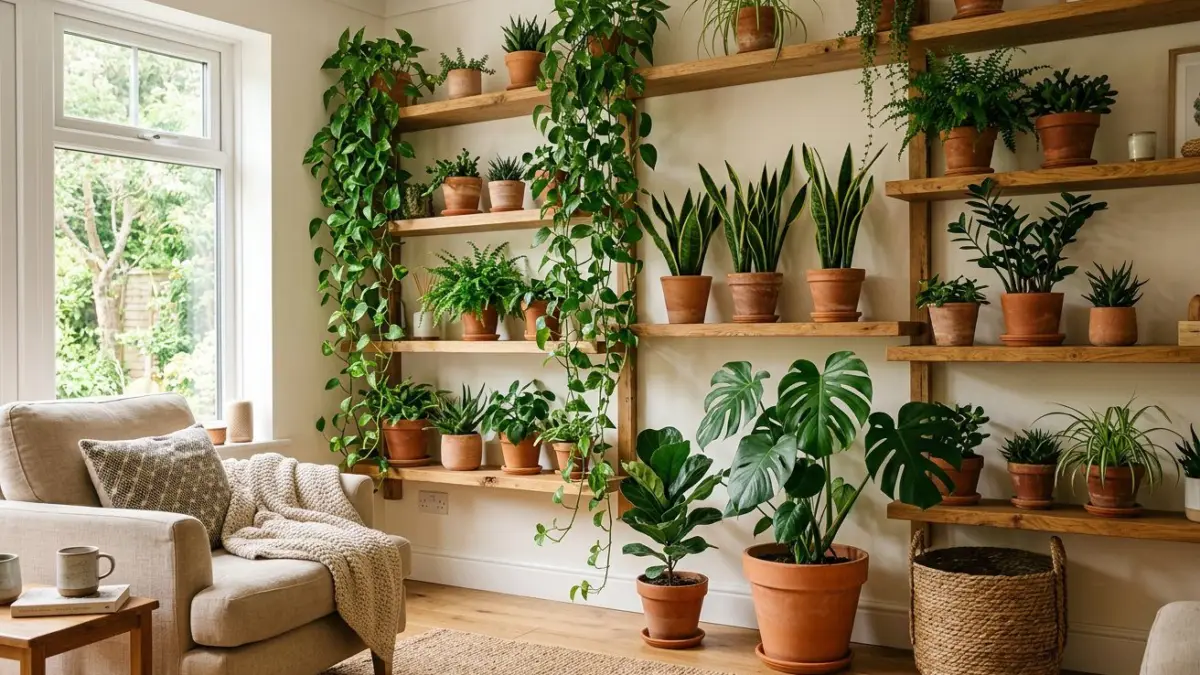
How to Water Houseplants Correctly (The Complete Guide)
The finger test, bottom watering, drain-through technique and why schedules kill houseplants: water by the plant's rules, not the calendar's.
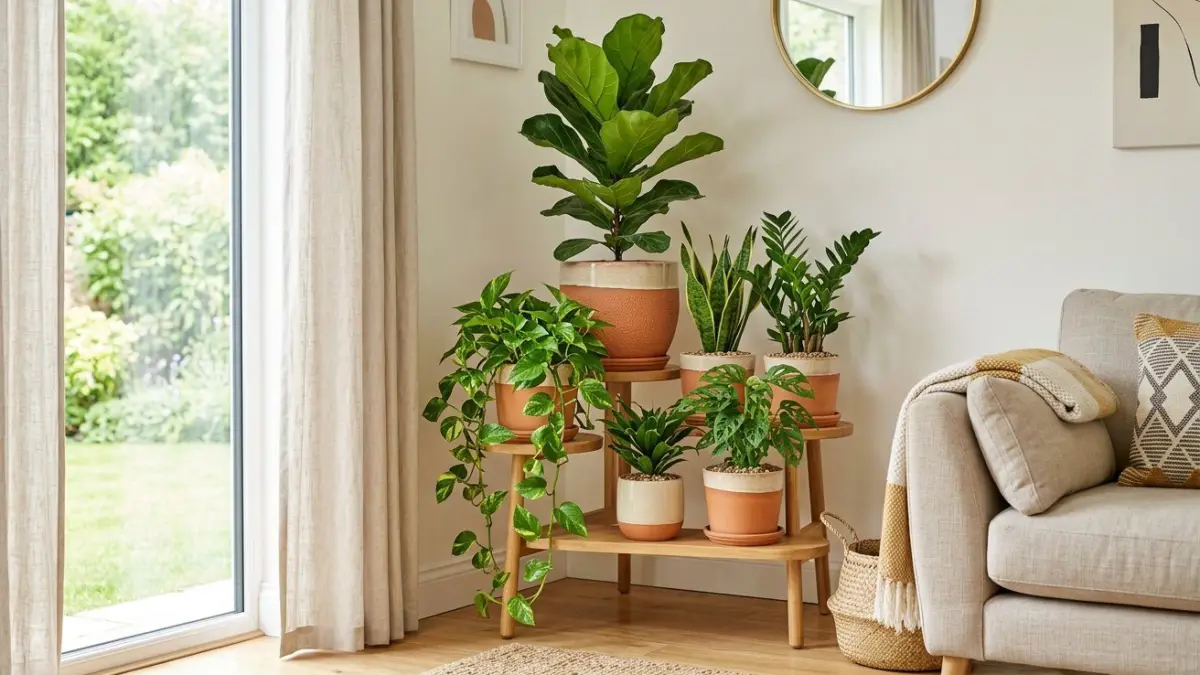
Repotting Houseplants Without Stress (Yours or Theirs)
When to repot, choosing the right pot size, root-pruning fearlessly, and the aftercare week, repot once and right, and your plant doubles its growth.
Houseplant Problems & Fixes: A Visual Diagnostic Guide
Yellow leaves, brown tips, leggy growth, dropping leaves, fungus gnats, read your plant's symptoms like a pro and apply the exact fix.
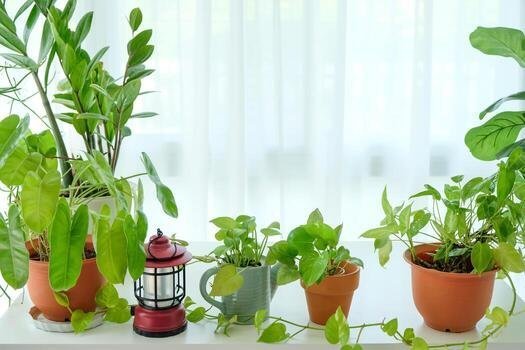
Air-Purifying Indoor Plants: What the Science Actually Says
Which plants measurably clean air, what they really do for your room, and the humidity-plus-psychology benefits no one tells you about.
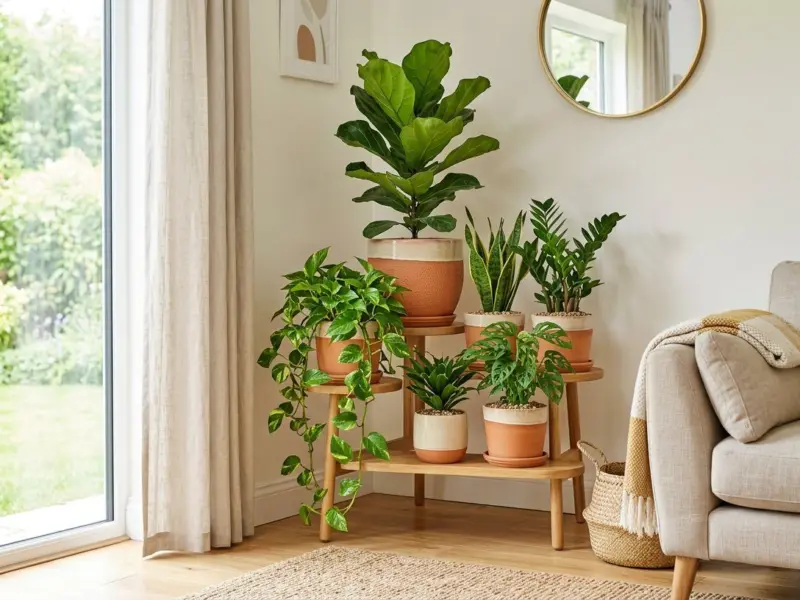
Styling with Indoor Plants: The Designer’s Playbook
Height triangles, odd-number groupings, the shelf-cascade trick and statement plants, arrange your houseplants so your home looks curated, not crowded.
Humidity for Houseplants: What Plants Need and What Actually Works
Learn the right humidity for common houseplants, how to measure it, and which methods genuinely help (humidifiers, grouping, location) and which are myths such as misting.
Pet-Safe Houseplants: Non-Toxic Options for Dog and Cat Owners
A practical list of houseplants that are generally non-toxic to cats and dogs, the common ones to avoid, and what to do if your pet chews…